
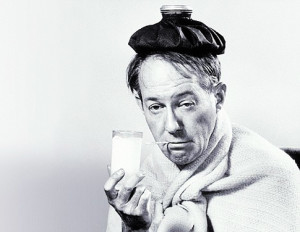
 When we left home two weeks ago yesterday, we got on the plane in Iloilo and I was coughing, spitting, sputtering and sweating like a pig. When we went to bed the night before I was feeling just fine.
What happened in the interim is a puzzlement to me.
Fortunately, we had our appointments with our family doctor to very next morning. My ears were completely blocked, I was so congested I could barely hear. I was so sick that after a chest x-ray, I was told that I had a severe ‘chest infection’ and that it had to be taken care of immediately. Well, after a course of 10 days of an anti-bacterial I have been taken off the critical list. I still have the sniffles, but my ears are clear and my chest is no longer as congested and I can breath freely. The follow-up exam with the Doc is scheduled for next week. I have also had my hearing tested and we now know that I need hearing aids for both ears and that they are going to be very much more powerful than the previous one I had for my left ear only. They will be fitted in about 2 weeks and finally, I’ll be able to hear like a normal person. What a relief and joy that will be!
So now, I’m in residence at my daughter’s home in Eastern Ontario and looking to get out and explore the area so that I can get back to work for the website.
Alexandra and Sebastien, my grandchildren, are acting as my chauffeurs driving me on our visits. Today, we decided to just go exploring; to head out and just follow the road and see where it led us.
As it has been since we arrived it was cloudy and cold – for me at least at 15°C it was positively freezing and I was bundled up in my fleece to try to keep warm and hold this cold at bay. With Allie as the pilot and Sebbie riding shotgun we were off. It was long until we came upon some pretty interesting places along a back country road.

Quite interesting so far. But we’re also primarily about Churches so we needed to see a historic Church. Well, not too far down the road we were on we came upon what we were looking for…it’s a tiny country church that dates back to the 1870s…here it is…
Even as we explored the area of the Church, there was the graveyard across the Concession Road to needed to be explored. And we found some surprises there…
But, who were these people? We discovered that the first family members who can to America were the family of Petrus and Rebecca Meinhard of Elmendingen, Baden, Germany.
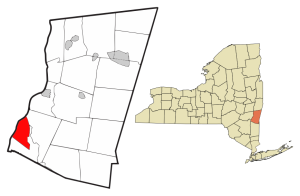
Location of Germantown, New York
They settled in Columbia County New York in what was then called Germantown. The first Europeans to buy property in Columbia County, New York were Dutch. Robert Livingston, a Scots immigrant, bought thousands of acres from the Indians, before buying a huge grant from the Crown. He owned a total of 160,240 acres. He was made lord of the Livingston Manor. In 1710, he sold 6,000 acres of his property to Queen Anne for use as work camps and resettlement of Palatine German refugees. Some 1200 persons were settled at work camps to manufacture naval stores and pay off their passage as indentured labourers. The area was later renamed as Germantown.
Petrus and Rebecca Meinhard had two sons, who were both born in Germantown, Columbia County, New York. Their first son was David who was born in about 1743 and the second was Johann – there are no records of Johann…
There are records indicating the fact that David Manhard (1743) and his wife Elizabeth Blass (1748) lived in Germantown and had two children there: Peter (1775) and William (1777). However, they are not listed on an early roster of families in East Camp, Germantown, New York. They then moved to Hillsdale, New York, about 25 miles northwest of Germantown, in 1778, probably because of actions by the invading British. In Hillsdale, David and Elizabeth had four more children: Elizabeth (1779), David, Jr. (1780), Henry (1782), and Phillip (1783), before deciding to accompany a large migration to Canada in 1784. In 1784, as a result of ‘discrimination’ against them, because of their support of the British Crown during the American Revolution in 1776 they joined the mass exodus of United Empire Loyalist and fled to Canada, where the crown had agreed to grant 200 acres of land to people who had been Loyal to it (the Cr0wn) during the revolution.
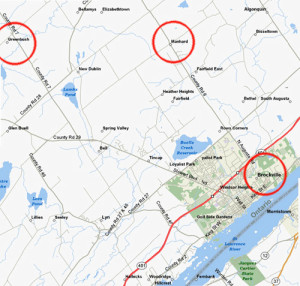
United Empire Loyalist Settlements in the St Lawrence Valley
They travelled to a new settlements along the St. Lawrence River, called Elizabethtown (Brockville), Ontario, where they were given their 200-acres of land although it was not actually transferred to them until 1802. The first plot of Meinhard land was located in-land when the small church we saw earlier is located.
Here David and Elizabeth and their family set roots and had five more children: George (1786), Gertrauth (1788), Catherine (1791), Margaret (1791) and Daniel (1802). From these eleven children of David and Elizabeth who lived in Elizabethtown, we all apparently descend. At one time in the early 1800′s there appears to have been over 100 Manhards living in the area.
After settling in Elizabethtown (i.e., Brockville area), many Manhard family members were able to obtain grants of land from the Queen of England by a process known as Order in Council. They were entitled to this apparently due to the fact that they were children of David, who was a Union Empire loyalist (UEL).
It is interesting to note that the Church at Manhard was actually built in 1871 as a Weslayan Methodist Church. The Weslayan Methodist Church has a fascinating story all to itself. This is a very brief outline of that story. The Methodist branch of Protestant religion traces its roots back to 1739 where it developed in England as a result of the teachings of John Wesley. While studying at Oxford, Wesley, his brother Charles, and several other students formed a group devoted to study, prayer and helping the underprivileged. They were labeled “Methodist” by their fellow students because of the way they used “rule” and “method” to go about their religious affairs.
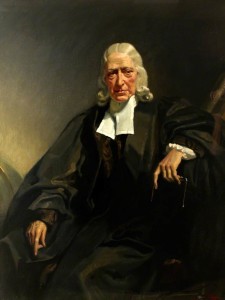
John Wesley
The beginning of Methodism as a popular movement began in 1738, when both of the Wesley brothers, influenced by contact with the Moravians, undertook evangelistic preaching with an emphasis on conversion and holiness. Though both Wesley brothers were ordained ministers of the Church of England, they were barred from speaking in most of its pulpits because of their evangelistic methods. They preached in homes, farm houses, barns, open fields, and wherever they found an audience.
Wesley did not set out to create a new church, but instead began several small faith-restoration groups within the Anglican Church called the “United Societies.” Soon however, Methodism spread and eventually became its own separate religion when the first conference was held in 1744.
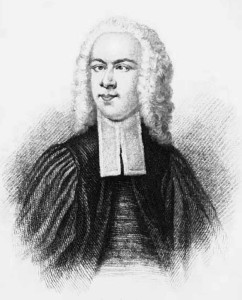
George Whitefield
George Whitefield (1714-1770) was a minister in the Church of England and also one of the leaders of the Methodist movement. Some believe that he more than John Wesley is the founder of Methodism. He is famous for his part in the Great Awakening movement in America. As a follower of John Calvin, Whitefield parted ways with Wesley over the doctrine of predestination.
Several divisions and schisms occurred throughout Methodism’s American history. In 1939, the three branches of American Methodism (the Methodist Protestant Church, the Methodist Episcopal Church, and the Methodist Episcopal Church, South) came to an agreement to reunite under the name “The Methodist Church.” This 7.7 million member church prospered on its own for the next twenty-nine years, as did the newly reunited Evangelical United Brethren Church. In 1968, bishops of the two churches took the necessary steps to combine their churches into what has become the second largest Protestant denomination in America, The United Methodist Church.
It was getting late and we had to get back to that Allie could get to work at her summer job – that’s how she pays for her tuition fees and other expenses at the University of Ottawa’s School of Nursing where she’s entering 3rd year in September.
We’ll be back in a few days with our continuing explorations on the back roads of Southeastern Ontario.


This work is licensed under a Creative Commons Attribution-ShareAlike 3.0 Unported License.
(1)Dislikes(0)