
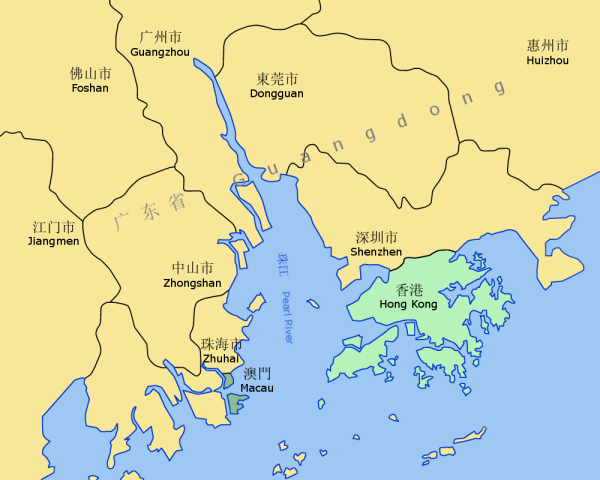
The distance from our jumping off point at the SM City parking lot in Iloilo to Hong Kong is approximately 1,570 kilometres, which translates to 5 to 5½ hours by air.
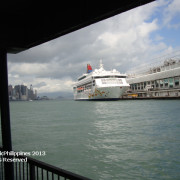
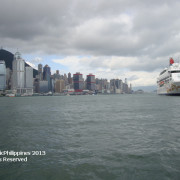
Following a great night’s rest. We met up with Che-che and walked the few blocks to the Ferry Terminal for our visit to Hong Kong from our base in Kowloon. Even on this short walk, we noticed some really interesting sights. And the ferry ride provided interesting vistas.
[right click on any photo to view in larger format]
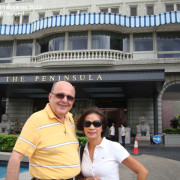
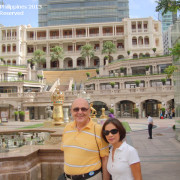
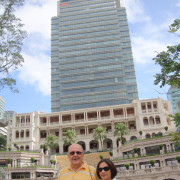
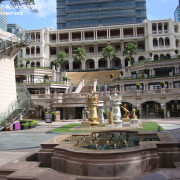
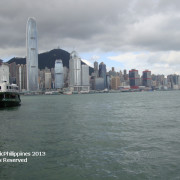
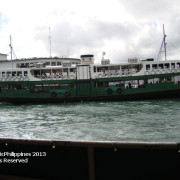
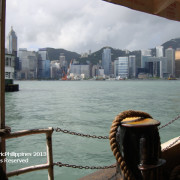
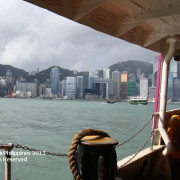
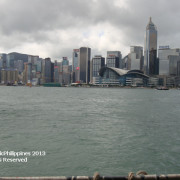
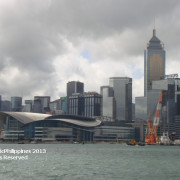
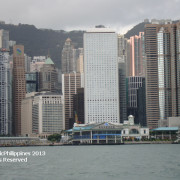
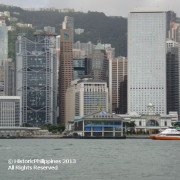
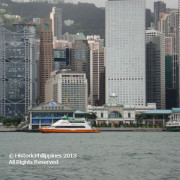
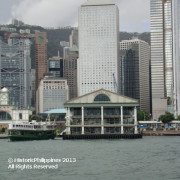
Once we had landed on the Hong Kong side we followed the elevated walkway into the International Finance Centre, a massive complex of of four buildings, one of which IFC 1 has up to 100 stories. The complex includes:
- a very high end shopping mall featuring: Armani, Chanel, Coach, Bulgari, Cartier, Gucci, Hugo Boss, Lanvin, Mont Blanc, Roberto Cavalli, Ferragamo, Tag Heuer, Tiffany & Co., Victoria Secret, Kate Spade and believe it or not, for our friends back home in Canada they have a SAM THE RECORD MAN…along with literally hundreds of other fantastic shops and services on three floors.
- The Four Seasons Hotel, Hong Kong
- Restaurants with everything from a McDonald’s to superb Asian and European Cuisine
- Offices.
[right click on any photo to view in larger format]
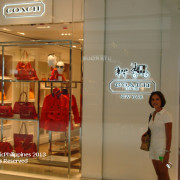
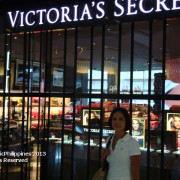
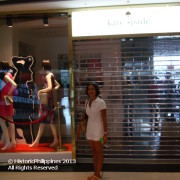
After pausing in this fabulous complex, the stores only open at 11:00am so we continued our exploration towards the centre of the city.
[right click on any photo to view in larger format]
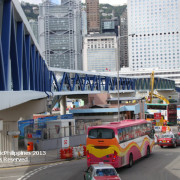
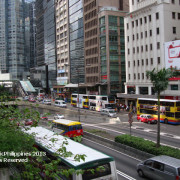
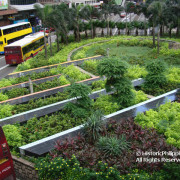
It was getting to be time for as break! So we headed into the World Wide Building which is where, according to Che-che, many of the Filipinos working and living in Hong Kong congregate on their days off. As a result, it wasn’t surprising to find almost every remittance company located there: Metro Remittance, BDO, Philippines National Bank and all the others. In addition, several shops selling Filipino foods and other services.
[right click on any photo to view in larger format]
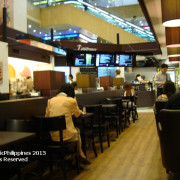
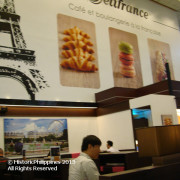
We stopped at the Délifrance for a croissant and a great cup of coffee before continuing. On leaving the building we followed an alleyway up to the next main street. The alleyway was crammed with stalls and small shops mostly catering to the Filipino community – tagalog was spoken every where in this street.
[right click on any photo to view in larger format]
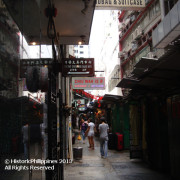
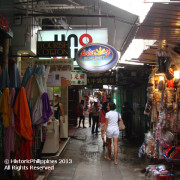
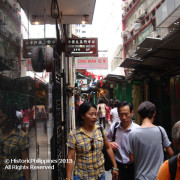
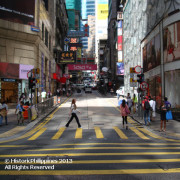
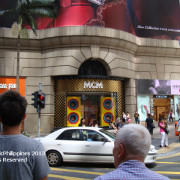
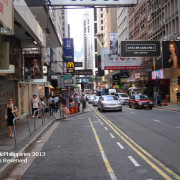
On reaching the main street, Des Voeux Road and heading up to Queen’s Road, Central, I was a little surprised because it was only about 9:30am the street was still quite quiet. Our walk continued and we came upon…The Landmark, Mandarin Oriental Hotel.
[right click on any photo to view in larger format]
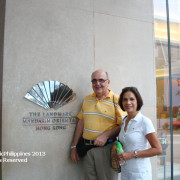
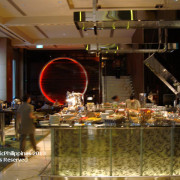
One of my brothers, after graduating from the École hôtellière de Lausanne, Switzerland, worked in Hong Kong for about 5 years before returning to Canada. He was a Manager at the Mandarin Oriental in Hong Kong for much of his time in Asia. But this wasn’t ‘his hotel’, we’ll see that one later in our journey.
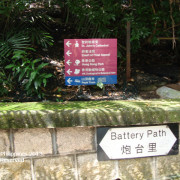
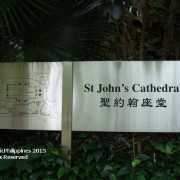
Forward Ho!! We had told Che-che that one of my objectives, while in Hong Kong was to visit one of the most important historical churches in the city so that I could report on it for you. “No problem, Tito”. We followed her up a winding pathway, Battery Path, up the side of a hill, climbing ever higher above the streets below…nearing the top of the climb, we were greeted by this sign:
[right click on any photo to view in larger format]
Followed a few minutes later by this view:
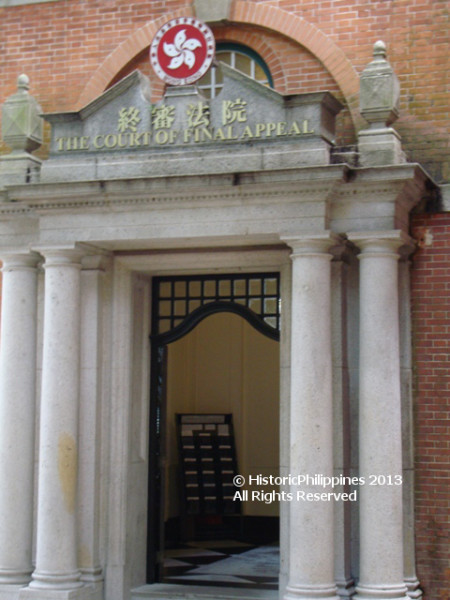
The main entrance of the Hong Kong Court of Final Appeal
Now, what is that? Says I: “Che-che this is not a church!” “No Tito, it is the Supreme Court of Hong Kong”. A beautiful historic building in it’s own right.
[right click on any photo to view in larger format]
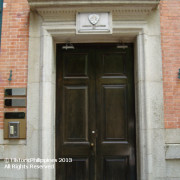
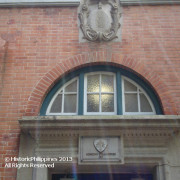
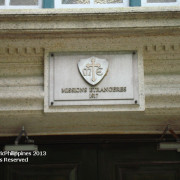
The plaque above the Judges’ Private entrance caught my eye and I just had to find out what that was all about. A little research was done and here’s the story of the building in brief.
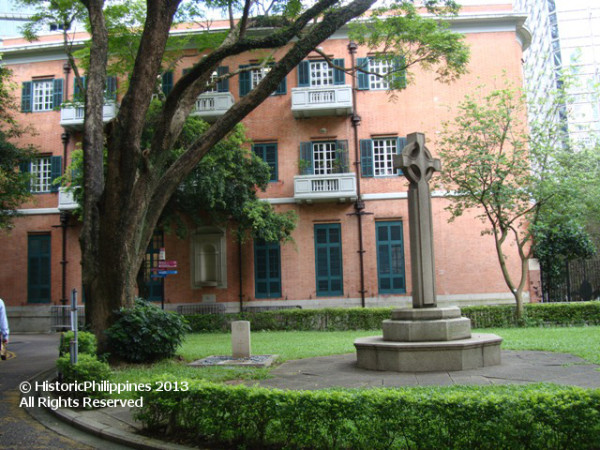
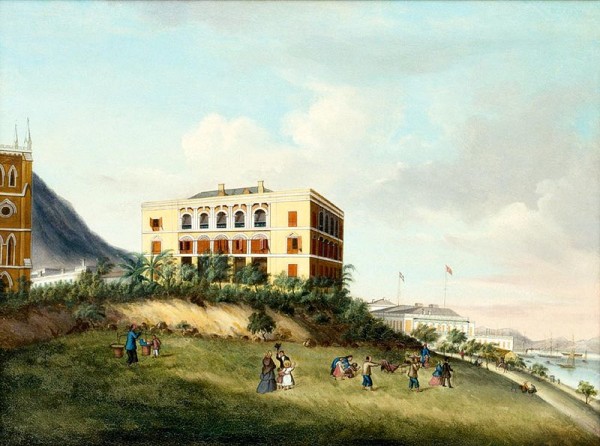
Augustine Heard & Co., Hong Kong c. 1860 (Currently the Court of Final Appeal)
The original structure on this site dated back to 1842. The first Governor of Hong Kong, Sir Henry Pottinger resided there from 1843 to 1846. His successor, John Francis Davis also lived there for a while, before moving to Caine Road. The building likely served as one of the earlier homes of the Legislative Council of Hong Kong during this period (1843–1846). The building then had several owners, including Emanuel R. Belilios, and was occupied among others by the tai-pans of Augustine Heard and Company, a trading firm that went bankrupt in 1876. It was also used by HSBC and was once home to the Russian Consulate.
In 1915, it was acquired by the Paris Foreign Missions Society, which commissioned a major renovation. The architects were Leigh & Orange. In the process, a chapel topped by a cupola was added in the north-west corner, and the building was refaced with red bricks. It reopened in 1917 and became known as the “French Mission Building”. In 1953, it was sold back to the Hong Kong Government.
It was then used successively by the Education Department, the Victoria District Court (1965–1980), the Supreme Court (1980–1983), and the Government Information Services (starting from 1987). It has been used as the Court of Final Appeal since the inception of the Court at the time of the transfer of sovereignty over Hong Kong, on July 1, 1997. Sometime after 2011, the court will then move to the current Legislative Council Building, formerly the Supreme Court Building.
Augustine Heard & Co. was founded in 1840, in Canton, China by Ipswich, MA businessman, traveller, trader and former Samuel Russell & Co. partner Augustine Heard, and his partners, Joseph Coolidge and John Murray Forbes. Throughout its history, it was run in large part by Heard family members, most notably Heard’s four nephews from his brother George Washington Heard: John, Augustine, Albert Farley and George Washington Jr.
In 1841, Augustine Heard, who had previously lived in China but had returned for health reasons to Ipswich, returned to China to head the firm until 1844. There, business flourished, notably because of the use of fast clipper ships and the import of steamships. Tea, one of the main commodities traded, did not provide much profit compared to opium, which enabled the firm’s finances to soar, Augustine Heard & Co. becoming the third largest American firm in China in the mid-nineteenth century. The firm also introduced steamships to China, and imported them through its sister firm in the U.S. The firm also became the main trading agent for several large firms, including Liverpool firm John Swire & Sons Limited. in 1861.
In 1844, Heard began travelling extensively, and handed control over the firm to his partners. Among Heard’s partners, his four nephews we most active and ably directed the firm. John Heard led the firm until his departure in 1852; Augustine Heard II then took over the leadership of the firm and became the first Westerner permitted to trade in Siam in 1855. When his brother John returned to take the leadership again, the younger Augustine became the firm’s representative to Europe. Albert Farley later took over the firm and, finally, George Washington Jr. who remained in China until the firm’s collapse.
The firm prospered until the 1870s when, just like its rivals, it encountered financial difficulties, and finally went bankrupt in 1875.
But where’s the church?
“Che-che”, says I, starting to get a little impatient, which I am reputed to do, quite often…: “show me the Church”. SWMbO and Che-che both reply soothingly: “Relax! It’s just a few more steps up the pathway, see, there it is!”
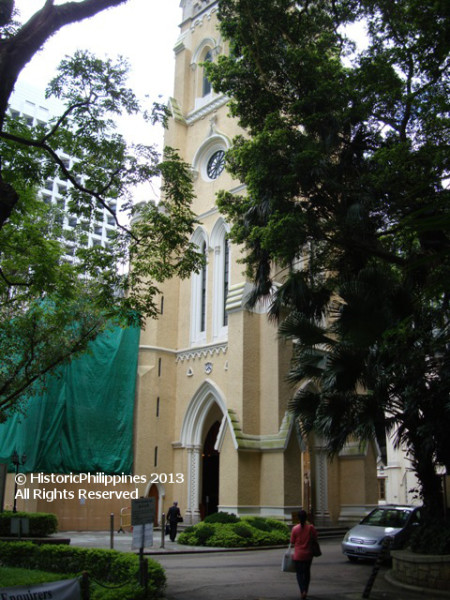
My goodness, what a magnificent and beautiful sight it is.
We’ll have The Rest of the Story on this unique and historic Church for you in just a few days.

This work is licensed under a Creative Commons Attribution-ShareAlike 3.0 Unported License.
 (0)Dislikes(0)