That’s right! HistoricPhilippines.com was judged the best Expat Blog in Philippines for 2013 in a recent competition. And we thank our visitors who have recorded almost 3,000,0000 hits in the past two years for our success. It’s all because of you! Thank you all!
Here is our winning entry.
The Aftermath of the Recent Disasters in Philippines.
by: Fergus JM Ducharme, www.historicphilippines.com
A month and more has passed since we, in Philippines, were subjected to the wrath of nature in the forms of the Bohol Earthquake and the Super Typhoon Haiyan. The novelty has worn off and many, if not most people have moved on to other things of greater interest.
This is in no way meant to minimize the personal, human suffering of those millions of people affected by the disasters. I am particularly sympathetic to the people in both areas who have suffered immeasurably as a result of both of these disaster.
Nevertheless, I have wondered what has happened and what will happen to the old and historic Churches of the Philippines, which have been of particular interest to me since we settled here, in retirement, three years ago.
I hasten to add, that as of today, a month since Haiyan and almost two months since the Bohol Earthquake, I haven’t yet had the opportunity to travel extensively in the disaster zones but the reports that I have read and seen are truly saddening. I base my writings and observations on the work of others who have “been there and seen it”…
I decided that I would investigate just one of the churches we have already reported on to see what effects it had been subjected to.
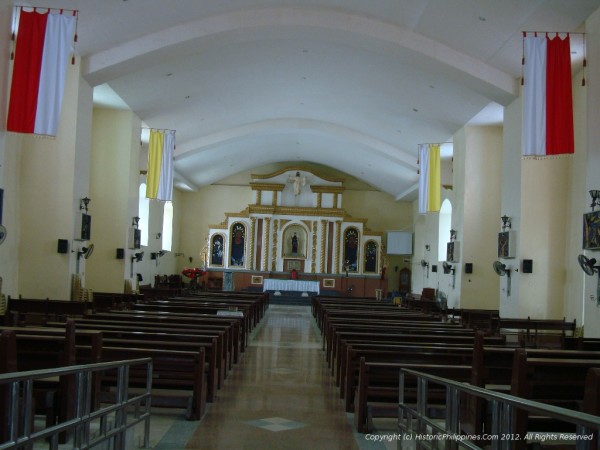
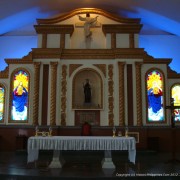
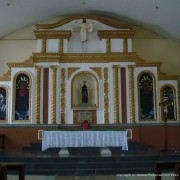
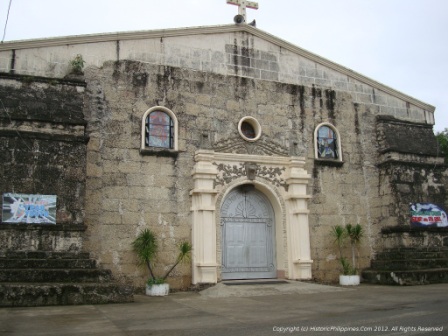
One of the first churches, we visited when we first started our adventure of exploring the old, historic churches of our region on Panay Island was the Church of St William in Passi City, Iloilo Province.
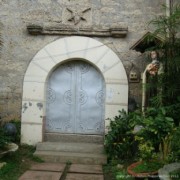
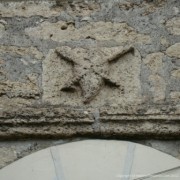
The present Church was built by Friar Apolinario Villanueva, an Augustinian Friar, who was the town’s ‘Parish Priest’ between 1821 and 1837. My exploration team and I have made a sort of game of trying to find proof that the church was in fact built by the Augustinians. They always made sure to place their Augustinian ‘crest’ somewhere on the lintels of the church. This one is Passi City was difficult to find, but find it we did.
(left click on either photo to view it in larger format)
This is one of the many “fortress churches” built in our region to protect the village residents in the event of a raid by raiders and slave traders from the south, especially from the area of Mindanao and Sulu – primarily Moro Raiders.
In addition, as with all churches built of that era, this church was built using forced labour or ‘folio’ whereby the local residents were effectively forced to be the unpaid labourers for the ‘priests’ in the construction of the churches in the region. The priests were actually quite severe and unforgiving if residents shirked their responsibilities. They would physically abuse, humiliate and in some cases tortured any of the workers who to meet their imposed quotas.
Although, this specific site is not in Passi City; an example from nearby Cabatuan, shows graphically what could happen to the errant few and the punishment that the ruthless priests would impose.
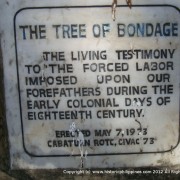
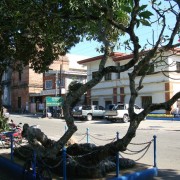
The Tree of Bondage in Cabatuan, mere steps away from the Church, it is said is where punishment was meeted out. An errant worker would be tied to the tree for a week at a time as punishment for not meeting his quotas or trying to evade the work imposed by the priests. The work they had to perform could mean hauling large stones for use in construction for 10 to 15 kilometers from the quarries to the actual construction site.
(left click on either photo to view it in larger format)
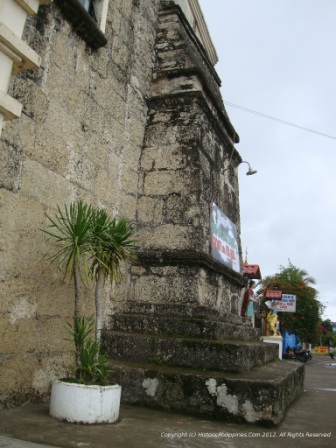
St William’s Church in Passi City is indeed a classic example of a fortress church and this can be confirmed by the huge buttresses on each side of this massive building.
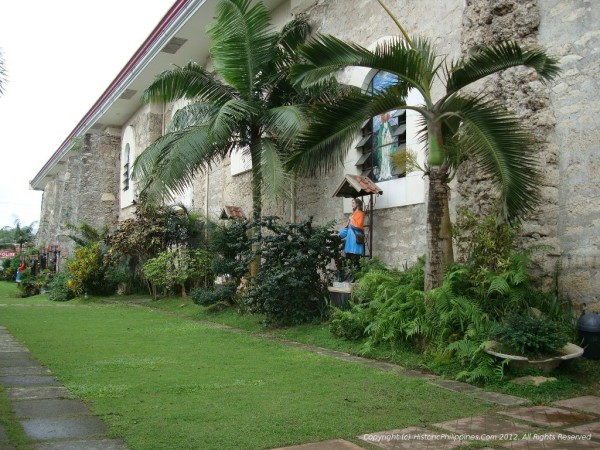
The Church has been a virtual state of renovations since it was originally consecrated in 1837. The first church was reported to have been built in 1612. It was razed by fire shortly after consecration. The various other iterations, over the years, were reduced to piles of rubble by earthquakes and fires.
The present church is actually the work of Friar Pedro Ceberio, who undertook to repair and refurbish Friar Apolinario Villanueva’s work of art that had fallen into serious disrepair since it was originally opened in 1837, some 20 years previously. Ceberio’s church is in fact pretty well what we see today. As we mentioned earlier, there has been almost constant renovations
taking place in and about the church since 1857 and in fact it was re-consecrated in late 2010 once work had been fully completed.
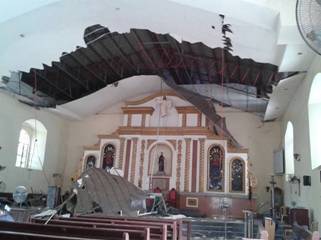
As a result of the Super Typhoon, there was some fairly serious damage about the property and within the church itself. We’ve been able to report that the ceiling in the sanctuary area of the church was seriously damage and fell into the Apse. This would indicate some serious damage to the roof. A site inspection is definitely called for.
(left click on either photo to view it in larger format)
The damage to St William’s is clearly not as serious as that suffered in other communities throughout the region where literally hundreds of the historical churches suffered irreparable damage. Restoring many of these ‘relics’ of a glorious past will obviously not be possible. In some rare cases such as with St William’s restoration is possible and will be accomplished within the next year or so.
As we speak, Heritage ‘experts’ from Government, Academia and UNESCO are meeting to discuss and plan the possible restoration of these cultural icons. But it is sad to say that many will never be returned to their former glory and these icons which range from 350 to 400 years old are lost to future generations.
(left click on either photo to view it in larger format)
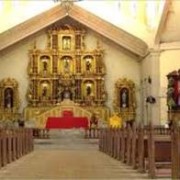
Before Interior of Cathedral of Palo, Leyte.
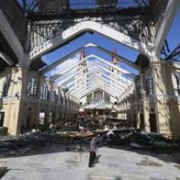
After Interior of Cathedral of Palo, Leyte.
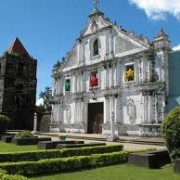
IMMACULATE Conception Church of Guiuan, Eastern Samar in the aftermath of ‘Yolanda.” one of the oldest churches in the country (inquirer.net)
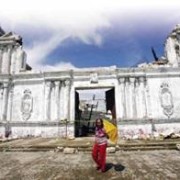
IMMACULATE Conception Church of Guiuan, Eastern Samar in the aftermath of ‘Yolanda.” one of the oldest churches in the country (inquirer.net)
In closing, though, a hero has emerged from all of this. The man is Executive Secretary of the Philippines Government, Paquito Ochoa who is an amateur photography enthusiast.
Julie Yap Daza a reporter for the Manila Bulletin, reported in a December 1, 2013 story “When a magnitude -7.2 earthquake left some of the country’s oldest churches in ruins in Tagbilaran, Bohol, last October, it also wiped out centuries of religious art.
Felipe de Leon Jr., Chairman of the National Commission for Culture and the Arts, grimly noted that “no amount of restoration” of the province of Bohol will bring back those relics, mostly paintings, and mostly ceiling paintings.
The good news is that in 2008 a photography enthusiast by the name of Paquito Ochoa took an interest in those colonial-era paintings. Using a Nikon camera with a wide lens, he photographed the churches, their interiors and their precious paintings, and put up an exhibit in partnership with Filipino Heritage Festival Inc. and the diocese of Tagbilaran.
Five years later, the subjects of his exhibit were destroyed by the earthquake of 2013, but the memory of those churches, specifically their painted ceilings, has been saved to live on in Executive Secretary Ochoa’s pictures. “Kisame: Visions of Heaven on Earth” was thus restaged for three days last month by the Ayala group of companies at Greenbelt, to share and keep alive the memory of those “heavenly” ceilings (kisame) and raise funds to restore the heritage churches.
Against the glittering Christmas lights of Makati’s business center, guests toasted the photographer for his “sixth sense” in shooting those pictures when he did, thereby preserving
a piece of church art and a piece of colonial history that can never be restored, not ever again”.
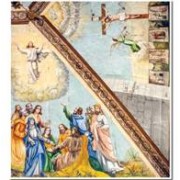
Painted ceilings in the churches of Tubigon and Loboc, Bohol, ruined by earthquake but preserved in photographs taken by Executive Secretary Paquito Ochoa
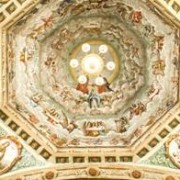
Painted ceilings in the churches of Tubigon and Loboc, Bohol, ruined by earthquake but preserved in photographs taken by Executive Secretary Paquito Ochoa
We are fortunate indeed to have many others such as Paquito Ochoa who have had a long standing interest in these historical and cultural icons of the Philippines, since without him and those many others these priceless relics would be completely lost for posterity.
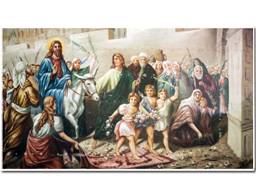
Part of painted ceiling, church of Dauis. Picture by Paquito Ochoa
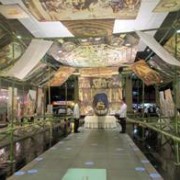
Ayala Museum’s ceiling-like presentation of pictures of Bohol’s church art, as photographed by Paquito Ochoa
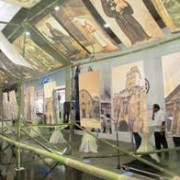
Ayala Museum’s ceiling-like presentation of pictures of Bohol’s church art, as photographed by Paquito Ochoa
Many of our regular readers will rightly wonder what churches are the ones that we should be concerned with…the ones that are lost and the ones that may be next when, not if, something like this series of disasters ever happens again?
Here is my “bucket list” of those churches that I must see and report on as soon as humanly possible:
Church of Santo Tomas de Villanueva in Miagao, Iloilo which is a UNESCO World Heritage Site and on which we have previously reported.
Basilica Minore of Santo Nino in Cebu, which is reputed to be one of the first if not the first Church to be built in the Philippines and the ‘resting place’ of the Statue of Santo Nino which dates back to the early 1500′s. It is also where we find Madgellan’s Cross – the cross planted by Ferdinand Madgellan when he claimed the islands for Spain also in the early 1500s. It was partially destroyed in the 2013 earthquake
Metropolitan Cathedral of Our Lady of Candles in Iloilo. A magnificent Church dating back to the 1600s and a true masterpiece. No reported damage from both the 2013 Earthquake or Typhoon Haiyan. A Must see!
Church of San Jose in downtown Iloilo, another Agustinian Church dating back to 1617. A remarkably beautiful Church on Plaza Libertad in downtown Iloilo.
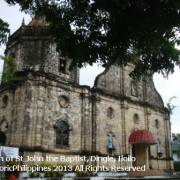
Church of Saint John the Baptist in Dingle, Iloilo. Built in the late 1880s to replace various Chaples that has served area for over 300 years. A truly beautiful example of Agustinian design and construction. Recent interior renovations specifically the ceilings and stained glass windows have only added to it magnificence. There has no apparent damage due to our two recent disasters.
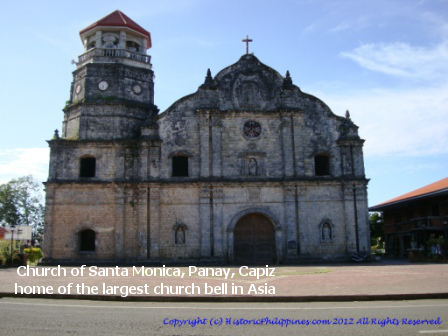
Church of Santa Monica in Pa-nay, Capiz. This is a superbly beautiful massive fortress church. It is said to be the first Church built on Panay Island in or about 1569. It is also know as the ‘home of the largest church bell in Asia’. Some damage has been reported as a result of Typhoon Haiyan, but details are very sketchy. The Typhoon scored a direct hit in this area of Panay Island and the destruction and havoc it caused were monumental. An on site inspection and visit are definitely called for. We have already reported on this Church, but it is one of our favourites and we’ll be headed that way to do a follow up in the not too distant future.
Church of San Sebastian The Metropolitan Cathedral of Bacolod which was built in 1876 and 1882. Another jewel, a must see. Damaged in the Typhoon, but not detailed information available. A site inspection/visit required.
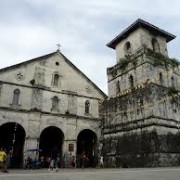
Baclayon Church in Bohol. The Church was established in the area by the Jesuits in the mid-1500s and this church was built in the early 1700s. The Church and its historic Bell Tower were both seriously damaged by the Earthquake of 2013.
There are 60 other historic churches in Bohol that deserve to be visited and reported on, most if not all were levelled in the October 2013 Earthquake – although plans for their possible restorations are presently underway, it is highly doubtful that they will all rise from the ‘ashes’. A lengthy field trip is called for here, to explore the area, the epicentre of the destruction of these magnificent monuments. And not to forget,
St William’s Church in Passi City, Iloilo. One of my favourites which sustained some damage in the Typhoon, but it wasn’t the catastrophic damage seen in other areas closer to the storms path.
It’s important not to forget that on Panay Island, where we live, there are over 400 old, historic Churches that should be included in reporting of this nature. When I started this project 2 years ago I calculated that at the rate of 25 to 30 churches a year (which is not sustainable for an ‘old guy’ like me) I would have at least between 12 and 16 years of work to keep me going. At least I can’t complain about having nothing to do.
Likes (0)Dislikes(0)
Share with your family & friends

 The Church has been a virtual state of renovations since it was originally consecrated in 1837. The first church was reported to have been built in 1612. It was razed by fire shortly after consecration. The various other iterations, over the years, were reduced to piles of rubble by earthquakes and fires.