

The First Voyage, April, 1534 to September, 1534.
The Voyages of Discovery.
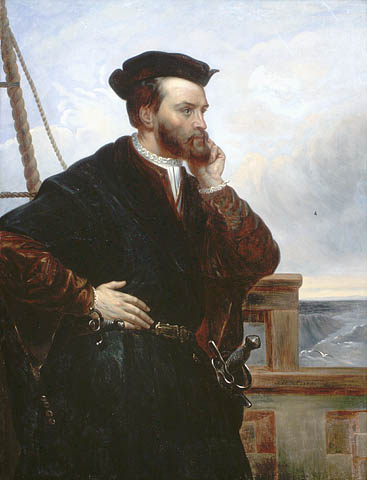
Cartier during his years of exploration was quite different from many of his contemporaries. Where they would have to find work by “selling” their services to the various Monarchs of Europe, Cartier for some reason was ‘fortunate’ to be enlisted by his sovereign to lead each of the three Voyages he was to make to the “New World” and to establish the first French the settlements in America.
The First Voyage: April 20th, 1534 / September 5th, 1534.
Voyages of Discovery, Part 1
In early January 1534, King Francis IV commissioned Jacques Cartier of St Malo to explore the Western Seas to discover a short route to the Spice Islands and China. Cartier, began his preparations immediately and on April 20th, 1534, he set out with a crew of 61 able seamen on his two ships from Saint Malo, France, heading west into the raging and wild North Atlantic Ocean. They had an uneventful crossing and arrived only 20 days later on the shores of what is today Newfoundland at Cape Bonavista.
They replenished their water supplies and fished in the area for a few days before continuing northwest and entered the Strait of Belle Isle between Newfoundland and Labrador. They followed the west coast as far as Cape Race at the extreme south western point of the Island of Newfoundland and then turned south to arrive off today’s Prince Edward Island; which they explored and found it to have abundant berries and seeds to eat and very fertile soils. A week or so later they were exploring in the Bay of Chaleurs and into Gaspé Bay thinking it may be the entrance of the passage to the mysterious East.
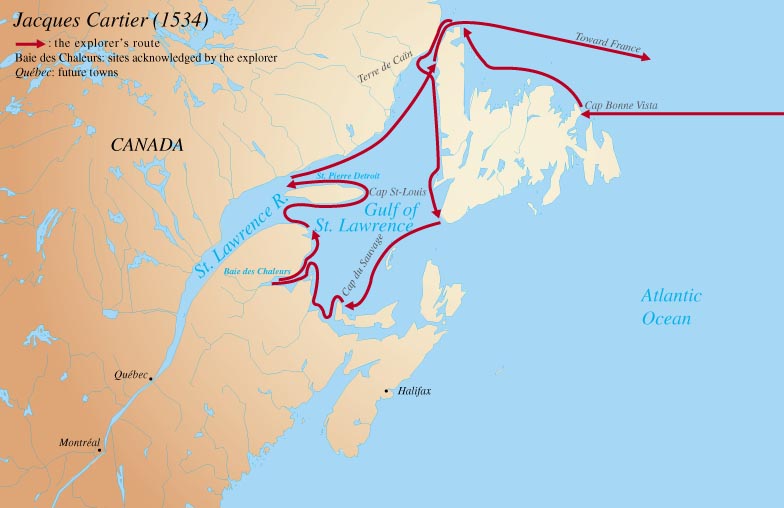
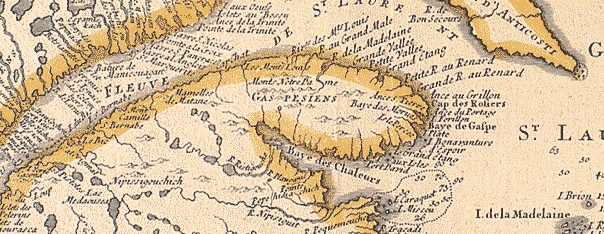
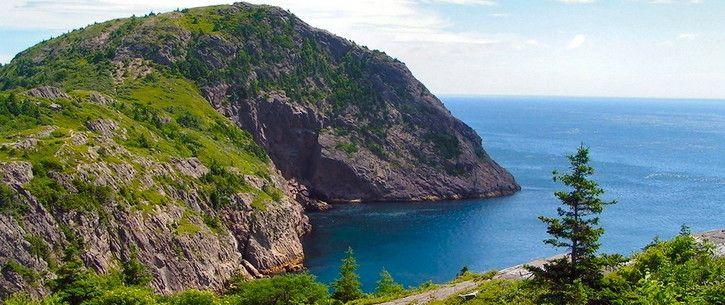
Throughout July, Cartier charted the northern coast of New Brunswick, exploring the shores of Kouchibouguac, Miramichi, Shippagan, and proceeding onward into a large bay which he later named “Baye de Chaleur”.
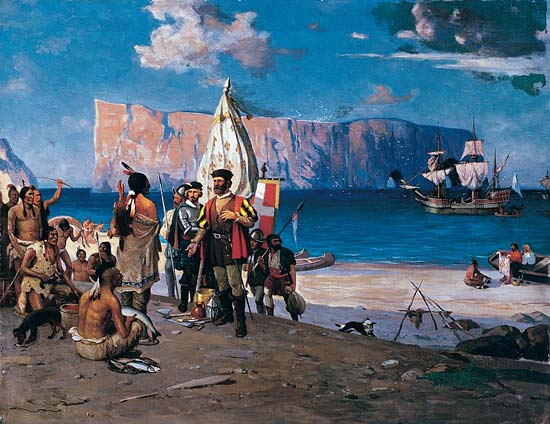
It is in the Bay of Chaleurs that, on July 24, 1534, Cartier took possession of these lands in the name of King Francis IV. From the abundant timber at hand he built, on the point at the entrance to the harbour, a cross thirty feet high.
Under the cross bar he states “we fixed a shield with three fleurs-de-lys in relief and above it a wooden board engraved in large Gothic characters where was written Vive Le Roy De France.”
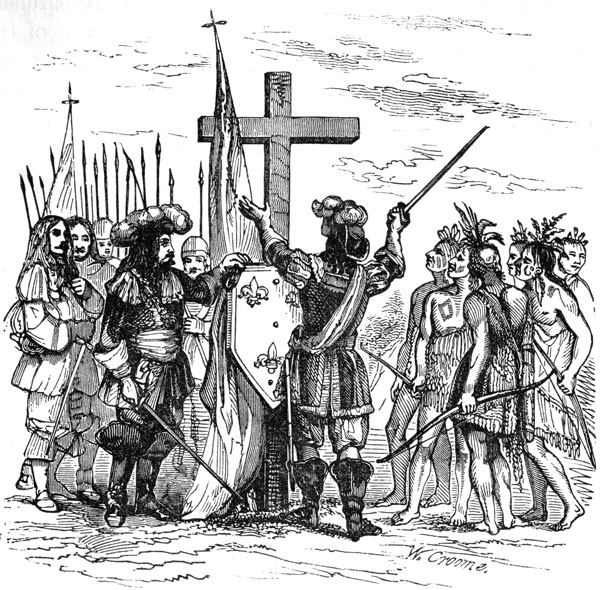
Great ceremony attended the event and the on-looking Indians, who had come from Stadacona (the site of present day Quebec City) to fish and hunt over the summer months, realized instinctively that Cartier was claiming their land.
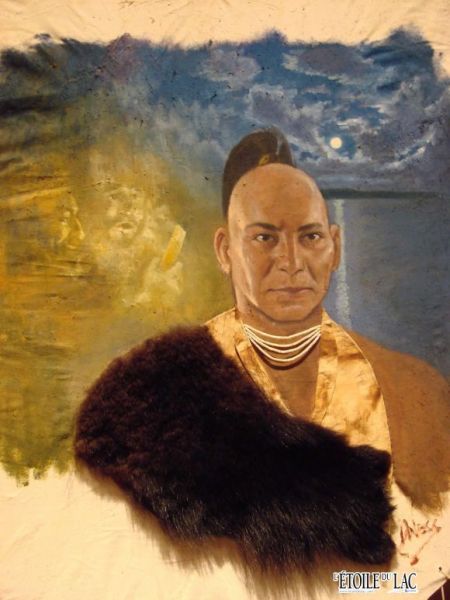
After the ceremony, Donnacona, the local chief dressed in an old black, bear-skin, arrived with his three sons and his brother. The chief pointed to the cross and the land all about and with hand signs and a long harangue attempted to make it clearly understood that the country belonged to him and his people. Before long, however, he was pacified by gifts and other goodies including food and drink.
It is at this point that Cartier decided that he would like to bring some of the natives back to France and asked for the Chief’s consent in allowing two of his sons: Domagaya and Taignoagny, to accompany him on his return to France. The Chief agreed and after the boys had been properly dressed to join the expedition, the ships weighed anchor, the next day, and continued their voyage of exploration into the mouth of the St Lawrence River. It was the middle of August and getting late in the season and the weather was turning colder. At that point just about few leagues west of Anticosti Island, Cartier decided that it was time to turn for home.
Despite being tossed about by violent storms, the Frenchmen finally found fair weather “and upon the 5th of September in the said year we came to the port of St. Malo whence we departed.” Apart from the two Native youths who created quite a sensation at the Royal Court Cartier had little to show the king for the voyage.
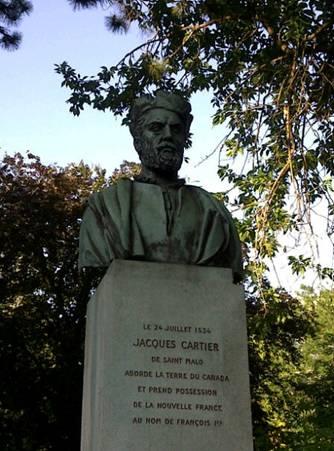
The statue was erected in Limoilou, France just outside St Malo where Cartier lived with his family in their rather large home. The statue’s inscription reads: The 24th of July, 1534, Jacques Cartier of Saint Malo, landed on Canadian Shores and took possession of “New France” in the name of Francis IV.
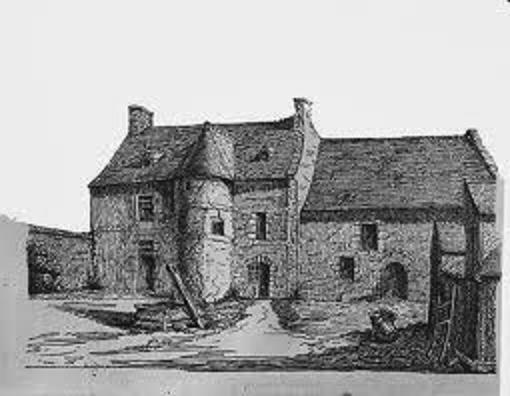
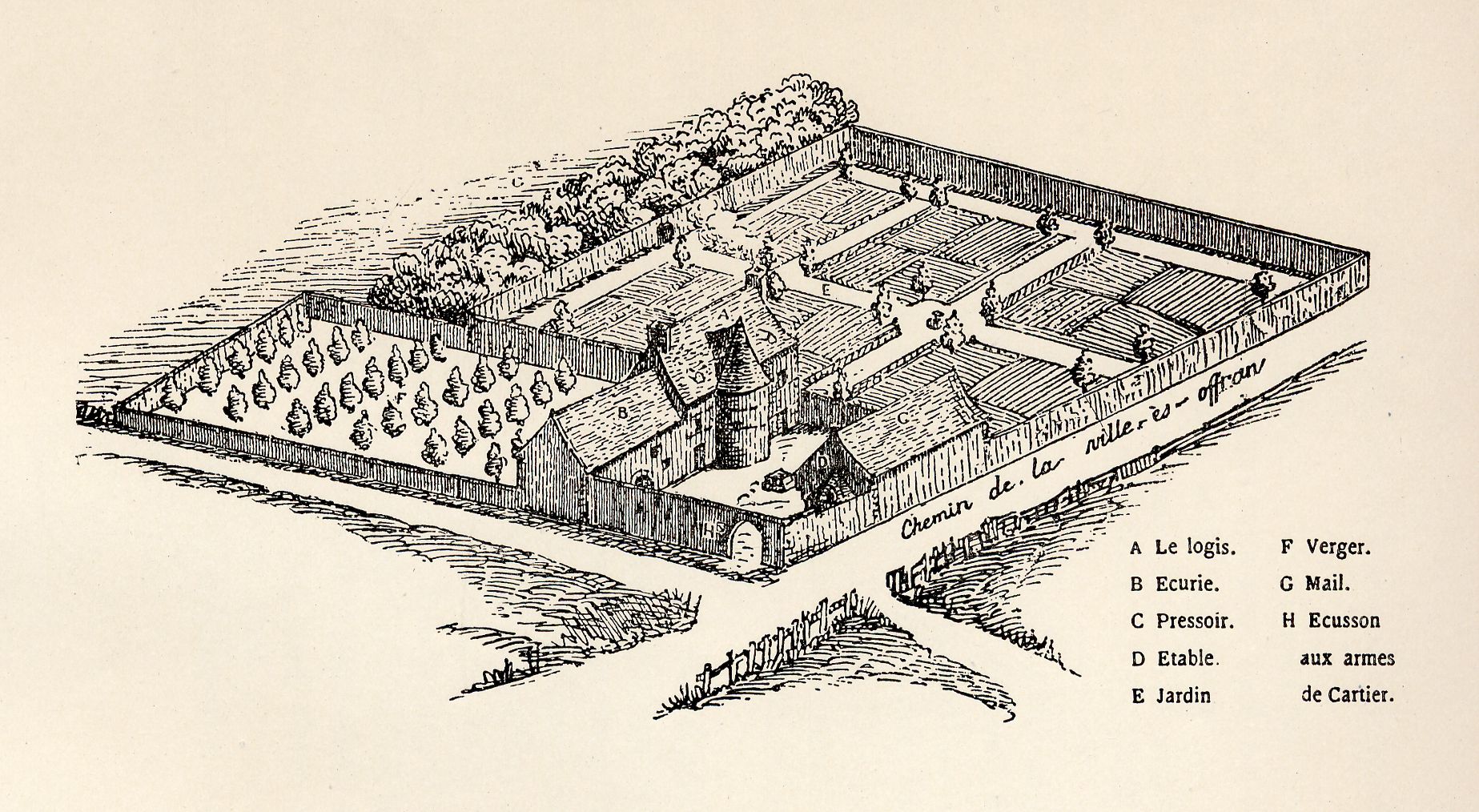
Although the King was not overjoyed with the results of the Cartier’s first voyage, he re-commissioned Cartier to prepare for a second trip and urged him to be ready to leave by the beginning of April the following year with the objective of finding the elusive northern route to China.
Part 2 of Cartier’s Voyages is coming soon.
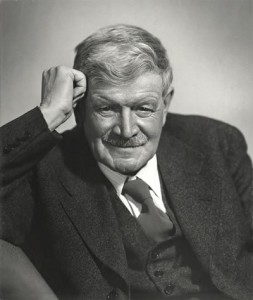
To learn more about Cartier’s Voyages of Discovery – we have provided a direct link, below, to a short book on the subject by the renowned Canadian Author and Humorist Stephen Leacock written in 1914.
left click the link to read: “The Rest of the Story”

This work is licensed under a Creative Commons Attribution-ShareAlike 3.0 Unported License.
 (0)Dislikes(0)