

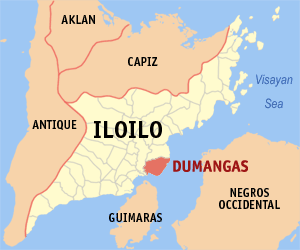
The driving distance from our jumping off point at the SM City parking lot in Iloilo to the Church of St Augustine’s in Dumangas is approximately 27 kilometres. This translates into a driving time of about 45 minutes to 1 hour.
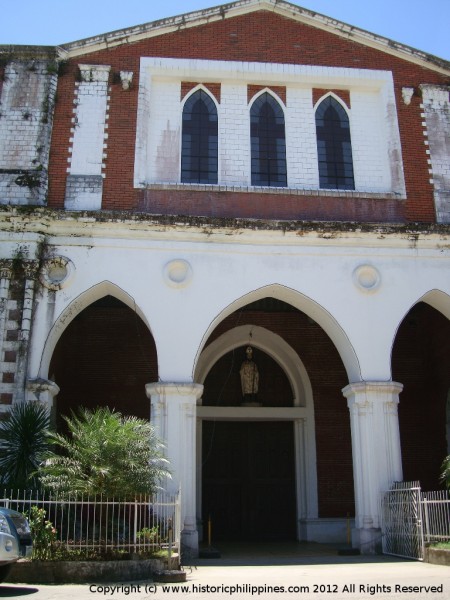
This is another, Augustinian built church, but we found no proof of it when we explored it. Nevertheless, the history of the Church in this area goes back to the late 1566 and Friar Martin de Rada who came to the Araut (now Dumangas) area to evangelize the ‘natives’ after landing in Pan-ay, Capiz with Miguel Lopez de Legaspi, the leader of the Spanish Expedition. de Rada initially helped to establish the Church in that region before being sent south.
Friar de Rada was followed by Friar Juan de Alva who became the first official Parish Priest in 1569. Friar de Alva actually built the first stone ‘mission church’ in 1572 at a small place called Ermita (means Chapel), which was located in Araut and is a part of the present day Town of Dumangas. This Chapel/Church was reported to have been the first stone Church on Panay Island.
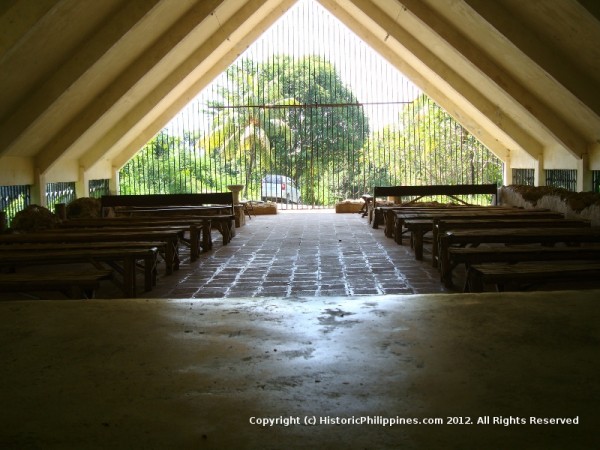
We paid a visit to the Chapel at Ermita and were pleasantly surprised that the people in the region would have taken all the necessary steps to ensure that the site was protected for future generations. What we found as we approached the site on a typical very rough country road and up a paved driveway was a sort of tent like roof structure over the ruins.
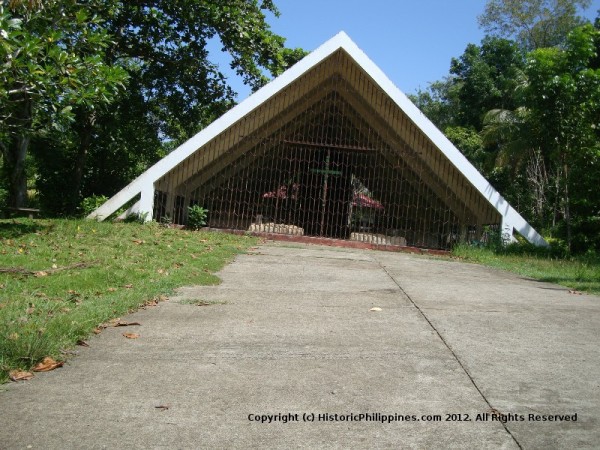
As we approached the structure, we found that the entry gate was locked. In despair, we walked around the building only to find a small rear entrance that was unlocked. In we went and marvelled at the state of the ruins.
This is what we observed:
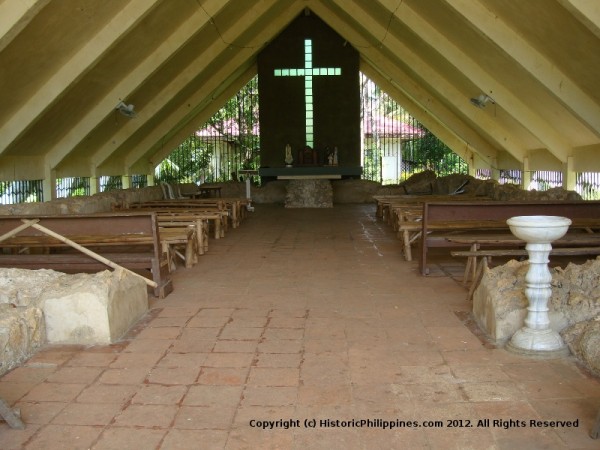
The original chapel would have measured 10 or 11 meters long and 5 or 6 meters wide, more or less. It is quite a small chapel compared to the massive churches we have visited to date. As you can see in the foreground the remaining ‘walls’ have been treated to ensure that they survive intact for many years to come. The floor tiles appear to be original, that is to say laid in about 1572 by Friar de Alba the then parish priest who had taken up residency in the area in 1569. The Chapel was declared to be the first stone church built on Panay Island.
The walls appear to be limestone and loose rock that we piled in rows on top of one and other with a sort of cement made of crushed limestone and egg which possibly accounts for the yellowish tinge of the walls.
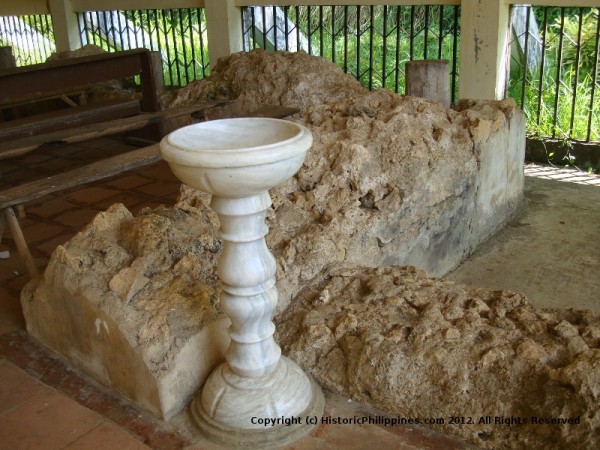
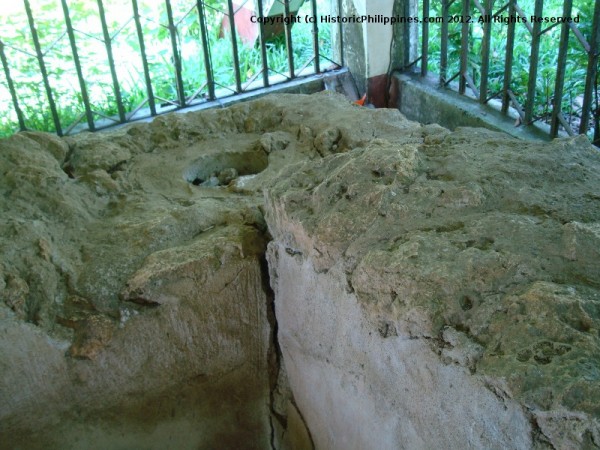
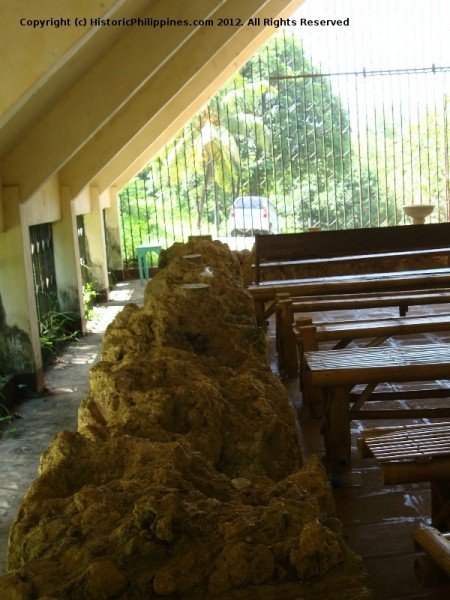
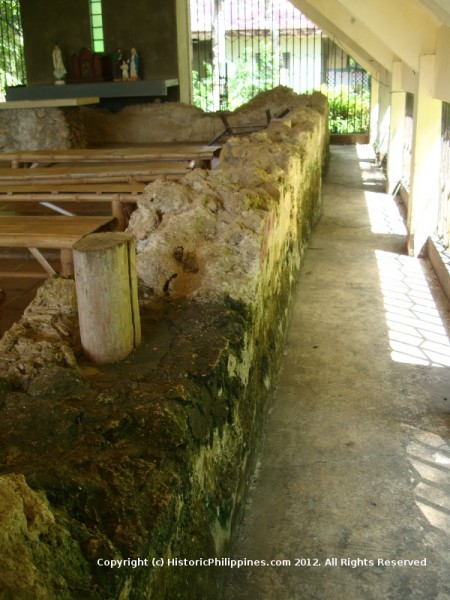
The present altar appears to be built of the same stone as the original walls and but it appears to be of much more recent construction than the remaining portions of Friar de Alva’s Chapel.
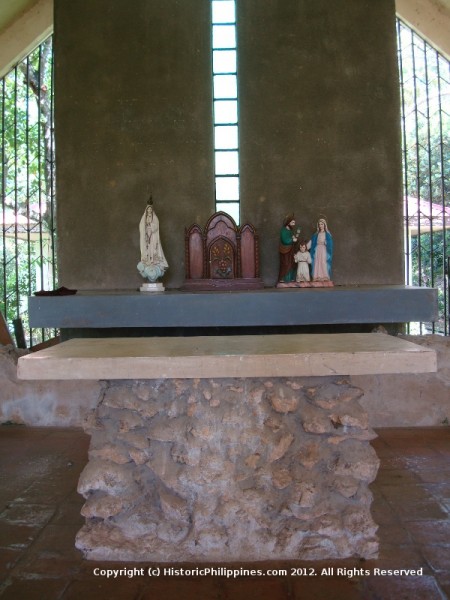
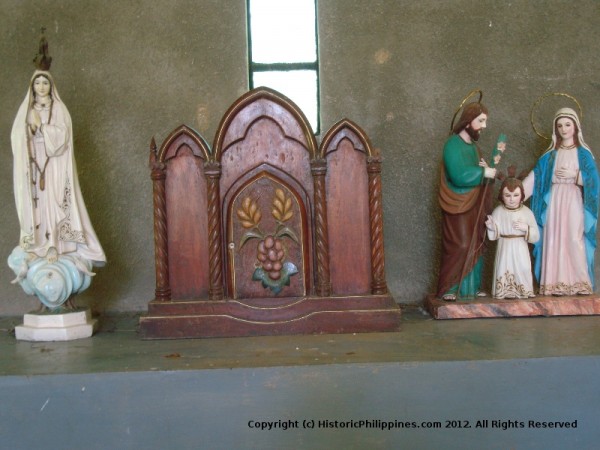
The tabernacle and the statues of the Holy Family and the Blessed Virgin appear to be of recent vintage.
Before we took our leave of this Chapel site, I had been told that on the hill immediately adjacent to the Chapel that there was a pathway up the hill along which had been placed the Stations of the Way of the Cross.
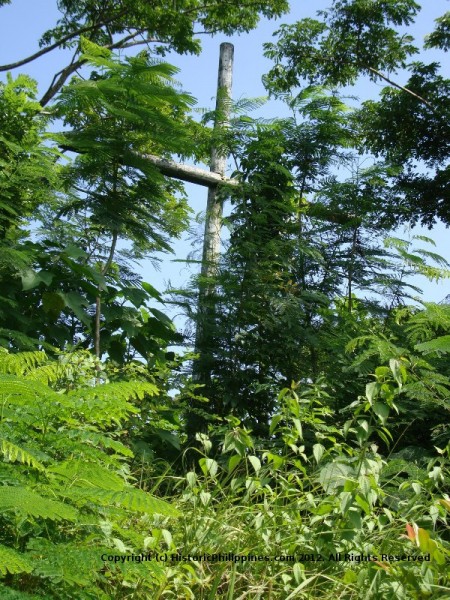
We left the Chapel and slowly climbed to path to the summit of the hillock and found no evidence of the Stations of the Cross, but did see several stone benches along the way in quiet little alcoves along the path. At the top of the hill we did spot a rather large Crucifix made of simple timbers hidden among the trees and brush at the top of the hill. That’s the only indication that there might have been or might be developed a devotional area for the Way of the Cross at some time in the future.
As we moved back down the hill, I took a side path that was only 20 or 30 meters long and ended abruptly at a cliff overlooking the valley below and in the distance we could spot the town site of Dumangas and the large red roof line of St Augustine Church in the town.
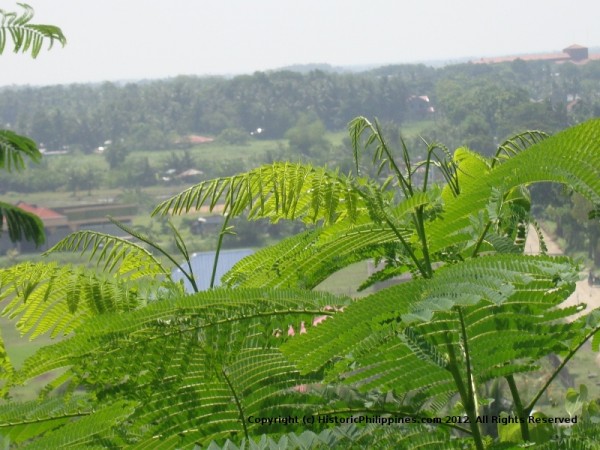
[red roof line of St Augustine’s Church in Dumangas town is seen through the mist in upper right corner of the photo]
On leaving Ermita, we headed into Dumangas town to explore St Augustine’s Church.
But, before starting our visit we dropped by the Parish Offices and spoke with a few people about our project in the hopes of getting as much historical information on it as possible. We were introduced to Dan P. Pomarin, a member of the Parish Pastoral Team who went to great pains to help us. Unbeknownst to us, Dan had contacted Mrs. Rosemarie Doromal, a former Vice-Mayor of the Town (1998-2001) and the current Chair of the Parish Pastoral Council. She is the daughter of Ramon Divinagracia Duremdes, the former Mayor of Dumangas (1960-1969) and Vice-Governor of Iloilo Province (1972-1991).
Unbelievably and almost immediately, Mrs Doromal dropped what she was doing and kindly came down to the church to meet with us. Both she and Dan spent a few hours with us and escorted us around the old church highlighting some interesting bits of information which we have included here and there through this account of our visit.
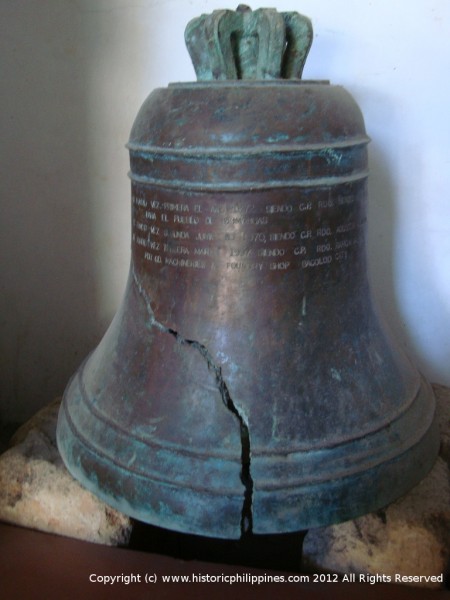
As we waited for Mrs. Doromal, we explored the Convento which is undergoing extensive renovations at this time. We were shown various items throughout that are of interest including:
The bell is reputed to be one of the original church bells that was severely damaged in the Lady CayCay Earthquake of 1948.
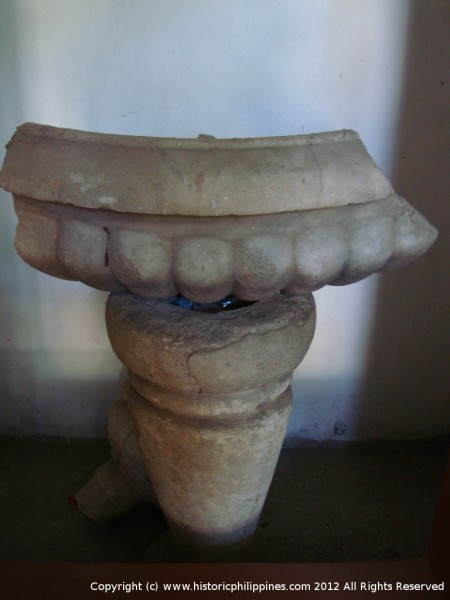
This is the original baptismal font from the original church’s Baptistery which was also damaged by Lady CayCay.
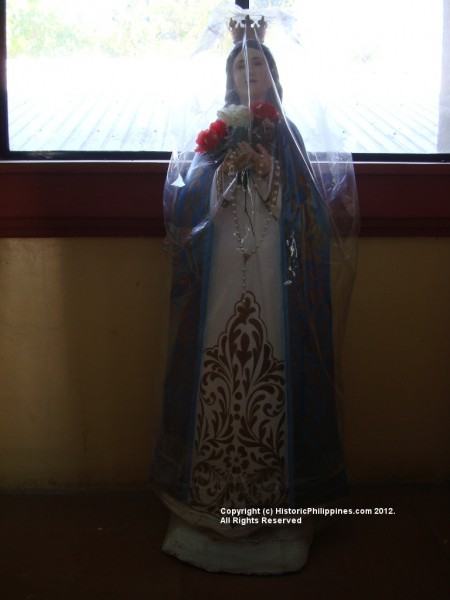
Just a few steps up from the landing where we found the above Baptismal Font we spied a statue of the Blessed Virgin and wrapped in plastic wrap to protect it from the dust and dirt of the construction taking place on the second level of the Convento.
The statue of the Blessed Virgin had just arrived from being completely refurbished and had just been freshly repainted. It apparently dates back to the original opening of the church on the Town Square of Dumangas between 1887 and 1895 when the present church was officially opened.
We proceeded into the Church. Construction of the present day church was in fact started in 1887 under the direction of Friar Fernando Llorente and was finally completed in 1895 under the direction of Friar Rafael Murillo. The church was built in the “Gothic Style of Architecture”. This incarnation of the church was built to replace various churches that had been built and rebuilt over the years since the move from Ermita in 1606.
For example:
1628 the church and convento were burned to the ground; then subsequently rebuilt;
1687 the church was again destroyed by fire and again rebuilt;
1787 the church and convento were destroyed by a massive earthquake;
1887 construction of the present church was started and completed as noted in 1885.
At the time of its completion, the church was considered to be on of the most ‘artistic’ churches in the islands, because of its interior decorations.
During the Spanish American war, the American occupiers in accordance with their “scorched earth policy” completely razed the church and convento to deny its use to the partisans.
A the entrance of the church is a Philippines National Historical Marker which was installed to commemorate the naming of the Church as a National Historic Treasure in 1973 and in 1974 which reads:
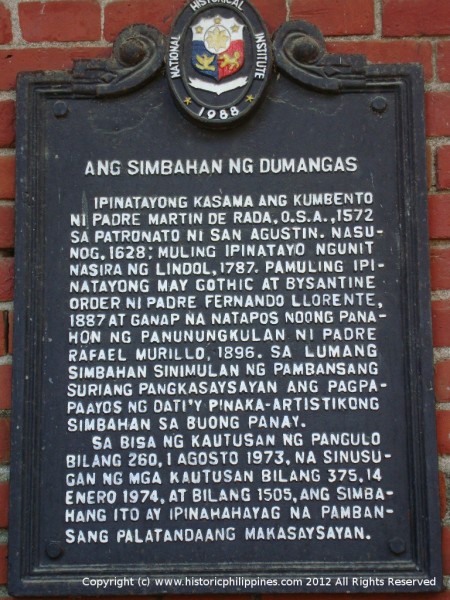
That can be translated to read:
“Constructed together with a convent by Fr. Martin de Rada OSA in 1572 under the patronage of St. Augustine. Burned in 1628 and rebuilt but later destroyed by earthquake on 1787. Reconstructed with Gothic and Byzantine influence by Fr. Fernando Llorente on 1887 and completed at the administration of Fr. Rafael Murillo on 1896. Restoration of the old church was initiated by the National Historical Institute to revive the former most artistic church in the entire Panay Island.
By the power of Presidential Decree No. 260 dated 1 August 1973, PD No. 375 dated 14 January 1974, and PD No. 1505, this church is hereby proclaimed as a national historical treasure.”
The building was largely intact as a result of World War II although it was still in a state of general disrepair. It had been used as a refuge for Americans servicemen who were trying to evade the occupying Japanese troops. Mrs. Doromal indicated to use that on the inside ‘lip’ of the flower boxes at the front of the church that the names of the Americans who had been hidden from the Japanese in the church were inscribed. Unfortunately, these historical reminders of the heroism of some of Dumangas’ residents now lies buried by the garden plots in those locations.
Following the war, some minor repairs to the church was undertaken in 1946 and 1947 to ‘upgrade’ the building to make sure it was still serviceable. These were not what we would consider full fledged renovations. The were actually on undertaken gradually in the 1950s to the 1970s and even into the 1980s
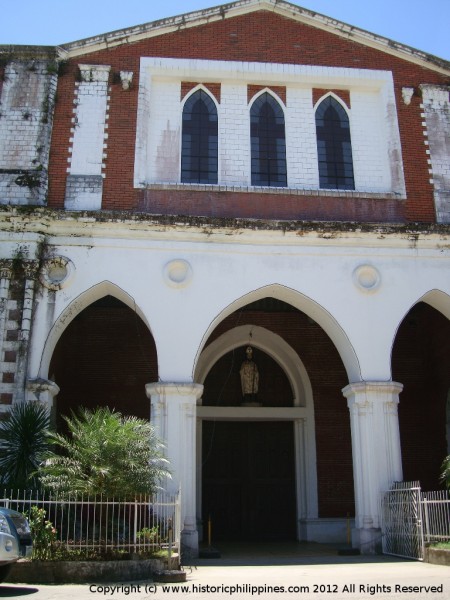
The names of ‘hidden’ American WWII Soldiers are inscribed on the
garden plot walls behind the wrought iron fences in this photo
The parish priest in the 1990s Father Ramon Pet was instrumental in raising the funds needed to institute the on-going renovation and rehabilitation programs which in fact continue at the present time. With the naming of the Church as a National Historic Site, the National Historic Institute of the Philippines started to actively participate monetarily in the redevelopment of the Church.
In the 2000s the parish priest Father Rolando S. Suplido organized various fund raising campaigns for the church which included primarily Dumangasanons residing the Americas as well as the Arabian Gulf States. It is said that currently, in 2012, that restoration and rehabilitation work on the church and convento are almost 95% complete.
As we moved into the church itself, one of our ‘guides’ Dan Pomarin, immediately bought us over to a window on the northwest side of the church and indicated to us damage that had occurred as a result of the 6.6 magnitude earthquake that had taken place several weeks before and that shook most of Negros and Panay Islands. We questioned Dan about any additional damage and he told us that engineers had inspected the church in some details to ensure that it was safe and they in fact confirmed that no other damage had been sustained.
The damage can be seen in the next photo just above the left side panel of the stained glass window. There is a fairly extensive crack in the wall just above that particular glass – it is only perhaps less than a meter in length. Again we stress that this is the only damage that was identified by the engineers after the fact.
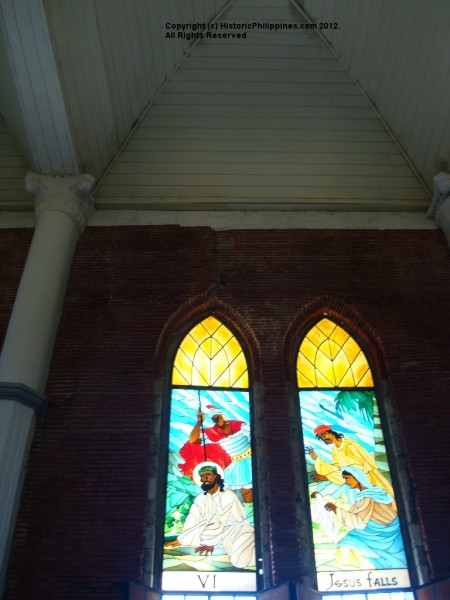
Earthquake damage on the northwest wall adjacent to the west side
entrance of the church
I was awed by the site of the interior, as we mentioned earlier about 95% of the restoration work has been completed and it is apparent from the photos that follow:
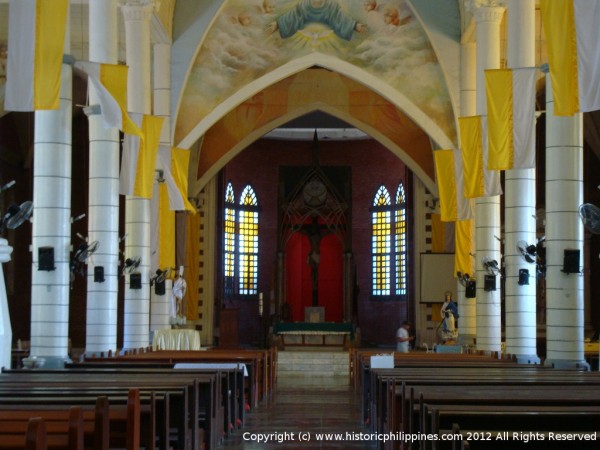
view of the Sanctuary from mid way up the main central aisle of the church
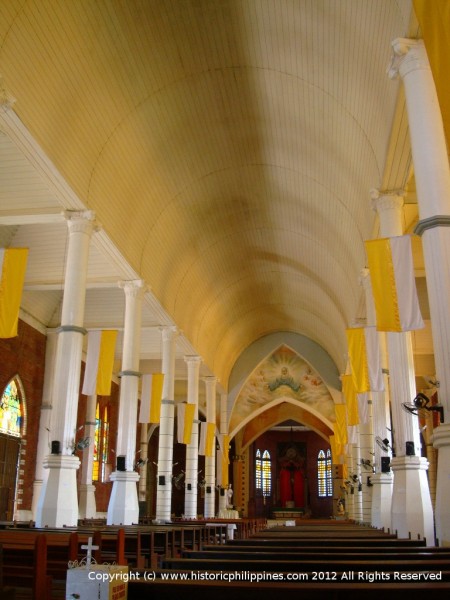
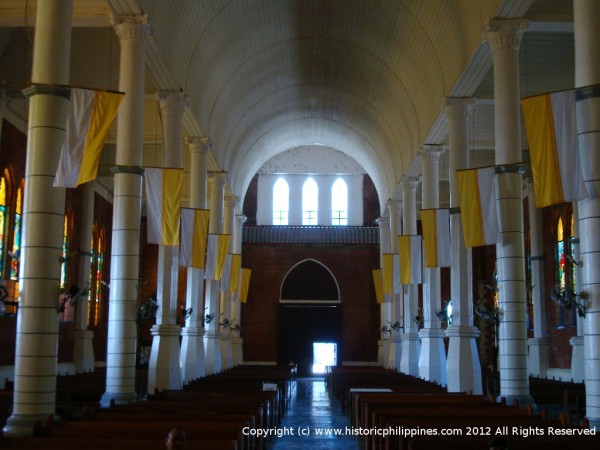
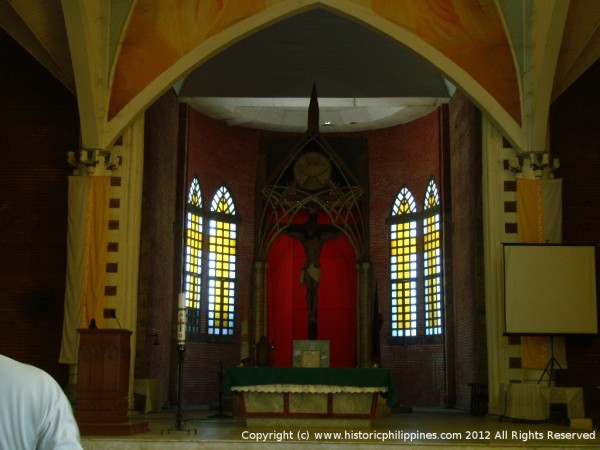
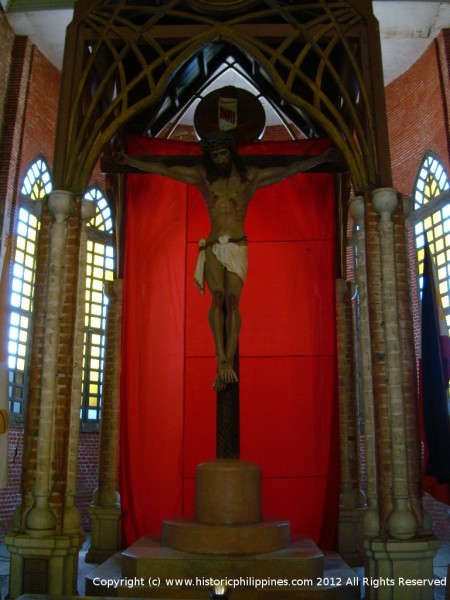
The life sized crucifix in the Sanctuary
As can be clearly seen from these preceding 5 photos much of the interior refurbishment has been completed including the ceilings, the columns, the Sanctuary itself, the main area flooring and the pews…
The Sanctuary in the church is massive, witnessed by the oversized altar.
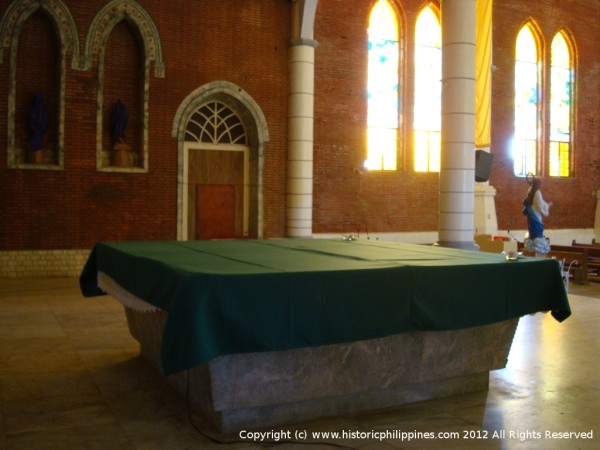
The oversized main altar
There is a tomb marker at the rear of the church, marking the tomb of Tomas D. Buenaflor Jr. who died on January 19th, 1943 at the age of 27.
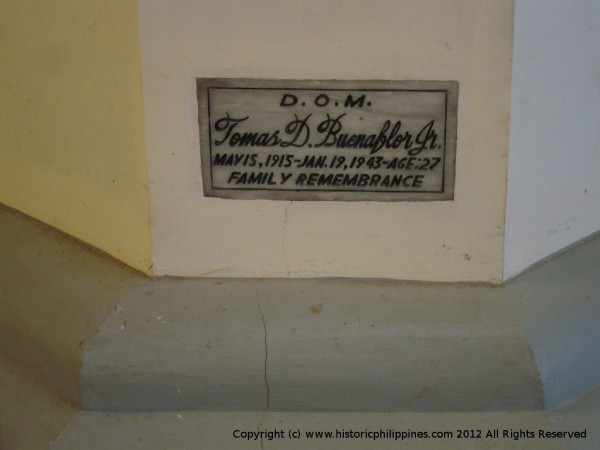
We were able to trace Tomas Jr as possibly the man who was appointed Chief of Police during the Japanese occupation. Eventhough he had been appointed to the Japanese it appears that he was involved with the Resistance and apparently helped to ‘protect’ many citizens of the town from Japanese ‘atrocities’. This may explain his untimely death at age 27. He may have been the son of Tomas Buenaflor Sr. who was a member of the 1st and 2nd National Assemblies of the Philippines (1st Assembly November 25, 1935 until August 15, 1938) (2nd Assembly January 24, 1939 until December 16, 1941) and a representative of the Iloilo area . The Buenaflor family has figured greatly in the politics of the town and area starting as early as during the Revolution of 1898 and in fact until recently..
The other thing that impressed us immensely was the statuary throughout the church, there are several very beautiful statues throughout some of which are
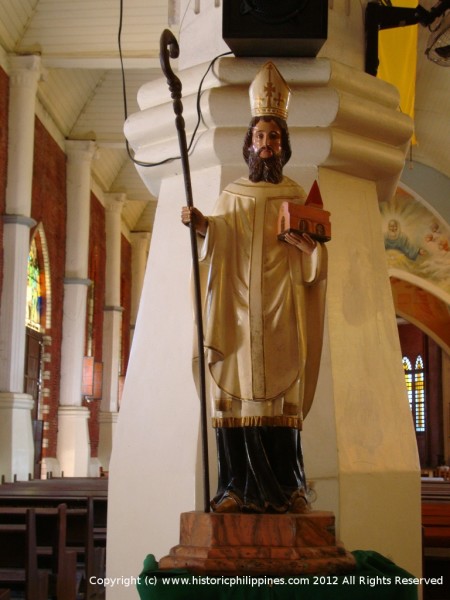
St Augustine
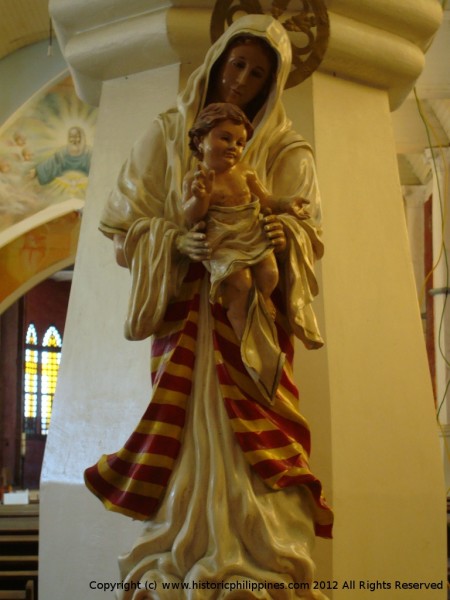
The Virgin of the Barangay
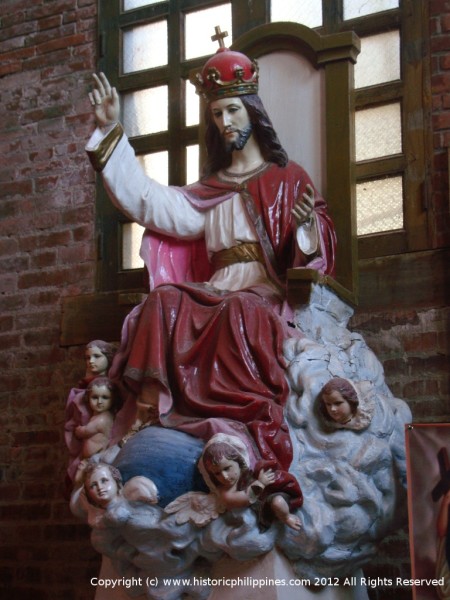
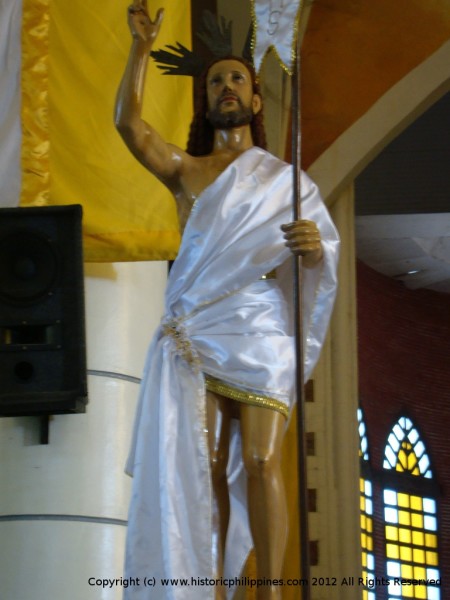
There is an Adoration Chapel just adjacent to the massive Sanctuary depicted in the photos below, this space also serves as the Baptistery:
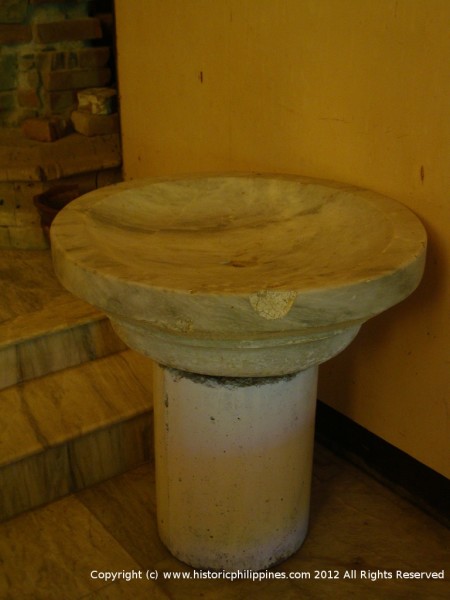
The Baptismal Font
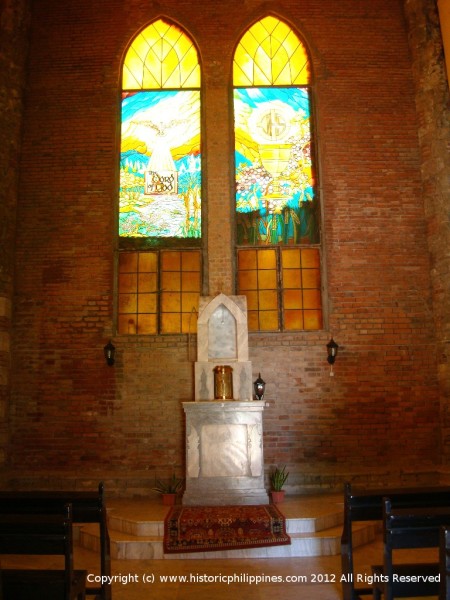
The Adoration Chapel
As we leave this space we again enter the Sanctuary and marvel at the exquisite stained glass windows throughout the church:
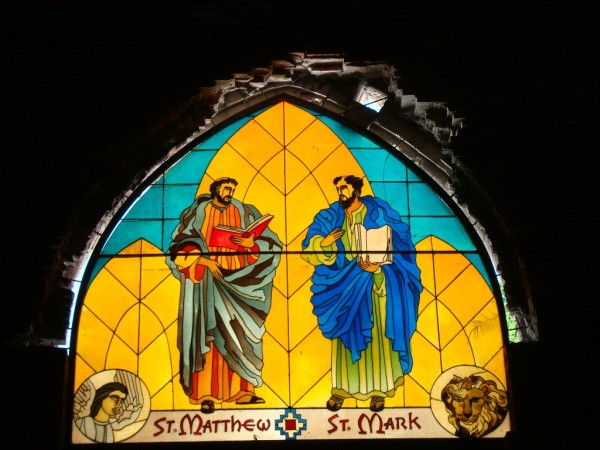
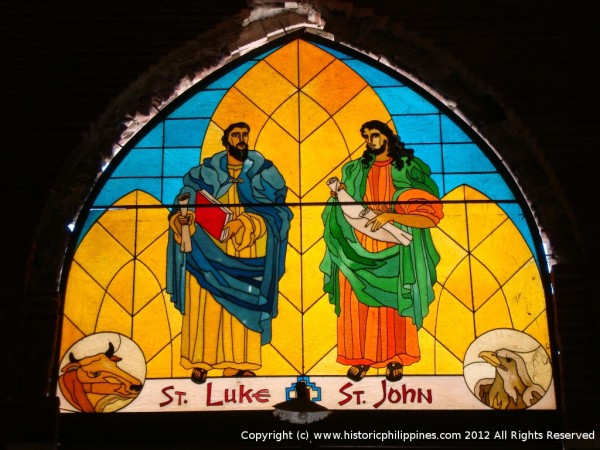
As well as the dome over the Sanctuary:
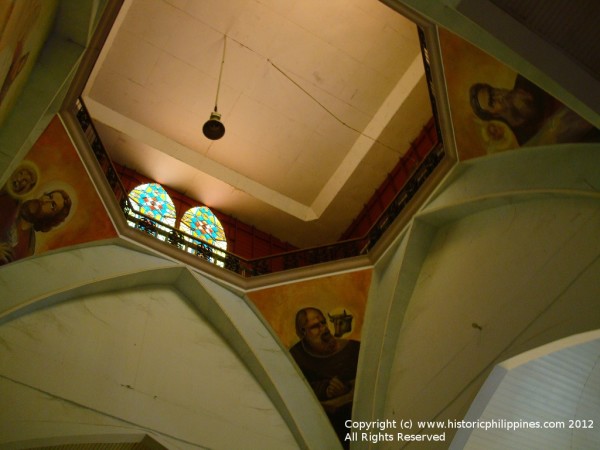
And as we head to the main entrance we have a magnificent view of the entire church.
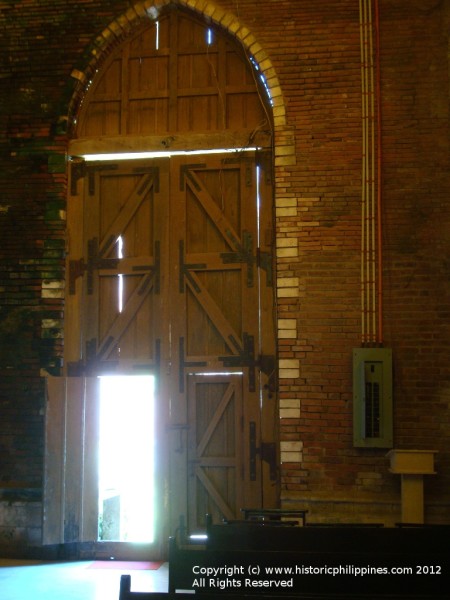
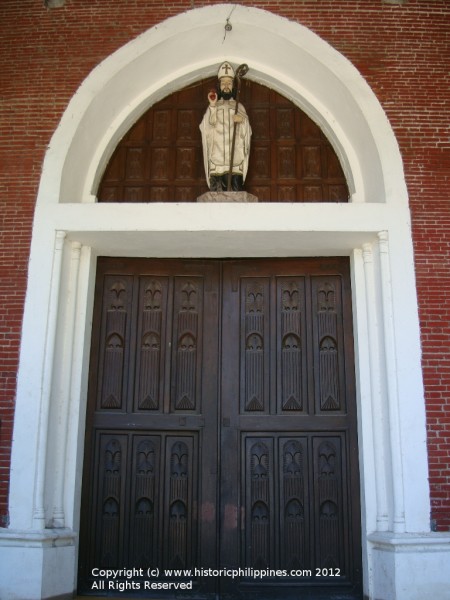
And the massive wooden entry:
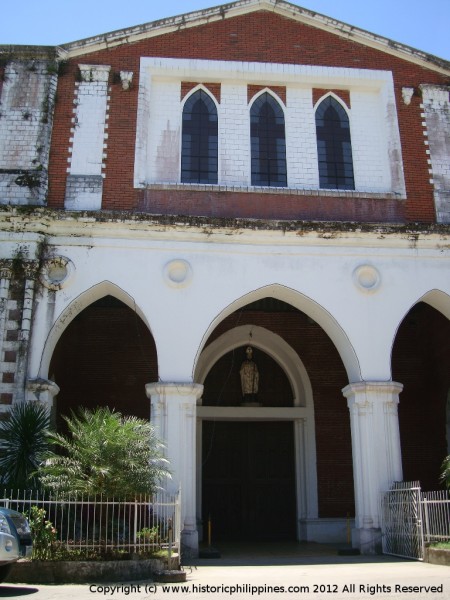
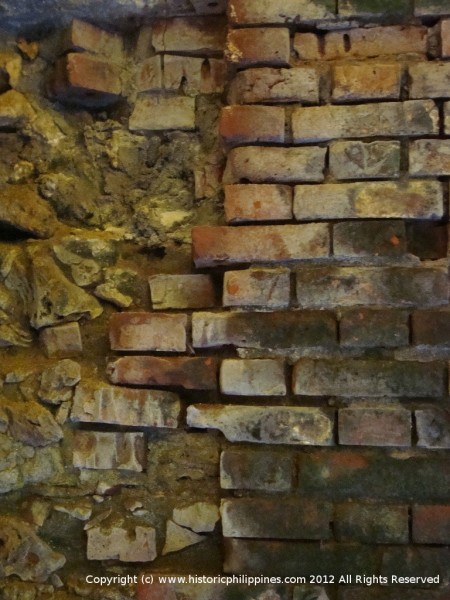
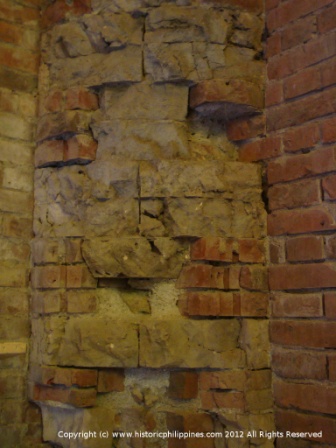
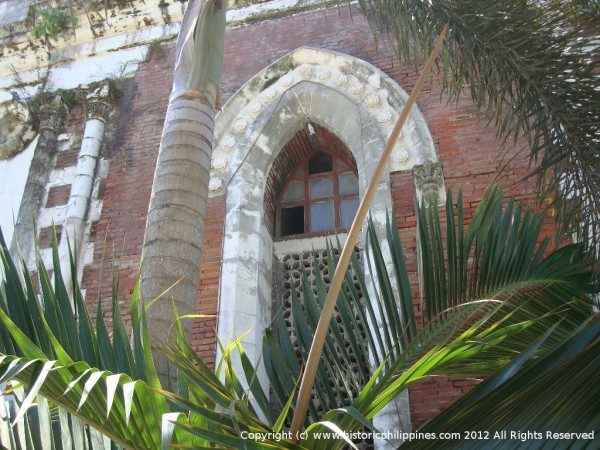
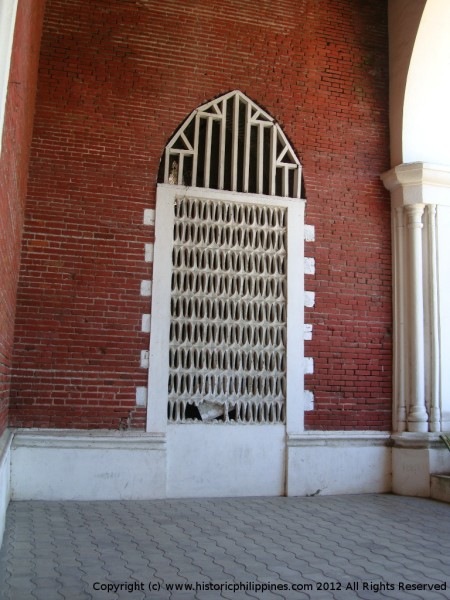
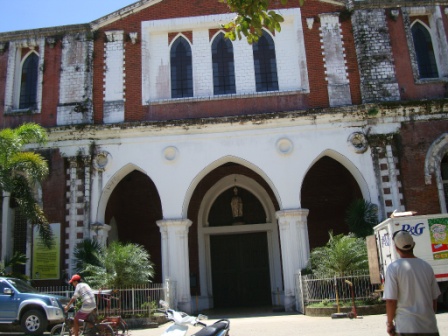
The view of the church from the outside can be a little disappointing because it is the area which so far has not been touched by any of the refurbishment work and the need becomes apparent as you inspect the exterior…

This work is licensed under a Creative Commons Attribution-ShareAlike 3.0 Unported License.
 (0)Dislikes(0)