

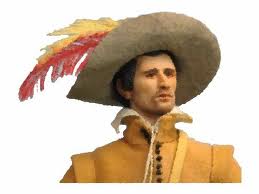
García Jofre de Loaísa
García Jofre de Loaísa (1490 – 20 July 1526) was a 16th-century Spanish explorer ordered by King Charles I of Spain to command an expedition to Asia, known as the Loaísa expedition, which in 1525 was sent by the western route to colonize the Spice Islands in the East Indies, thus crossing the Atlantic and Pacific oceans. More than 450 men were aboard, including different kinds of trades and administrative staff, intended to establish a permanent Spanish settlements in the Spanish East Indies.
A fleet of seven ships took part on the expedition: Santa María de la Victoria, Espiritu Santo, Anunciada, San Gabriel, Santa María del Parral, San Lesmes andSantiago. Jofre de Loaísa was appointed captain along with Juan Sebastián Elcano, who had reached the Spice islands in 1521 during the Magellan expedition.
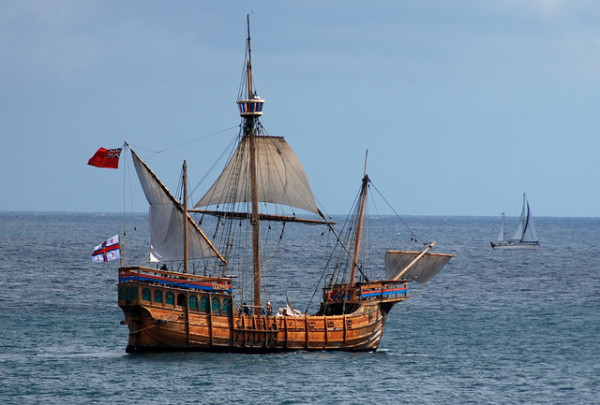
The fleet sailed from Corunna on July, 24 1525 and reached the Patagonian shores in January 1526 and by then two of the ships had lost contact with the fleets. In the following weeks, the fleet alternatively gathered and dispersed due to high winds while trying unsuccessfully to enter the Strait of Magellan. Two ships were wrecked and one tacked into the Atlantic and deserted from the expedition. Eventually the remaining four vessels, in bad weather, reached the Pacific Ocean in May, just to be again dispersed, this time permanently, by another storm. One of the galleons, San Lesmes, disappeared.
The Santiago sailed for the North and in an astonishing 10,000 kilometre sailing reached the Pacific coast of Mexico in July, 1526, achieving the first navigation from Europe to the Western coast of North America. The third ship, Santa María del Parral, sailed the Pacific, and reached Sangir off the northern coast of Celebes, where the ship was beached and its crew were either killed or enslaved by the natives, four of them being rescued in 1528 by another Spanish expedition coming from Mexico. The galleon, Santa Maria de la Victoria, was the only ship to reach the Spice Islands, in September, 1526.
Successive explorers of the expedition died while crossing the Pacific Ocean. Loaísa died of scurvy on July 30, 1526, Elcano died a few days later, Alonso de Salazar died after a month and Yñigez reached the islands of Visayas and Mindanao in the Philippines and the Moluccas, but died of food poisoning, and De la Torre anchored in Indonesia to wait for help from Spain. Only Andrés de Urdaneta and 24 other men survived to land in the Spice islands, just to be caught by the Portuguese, who had travelled there from their outposts in the East Indies. Eventually Urdaneta and a few of his men managed to return to Spain in 1536 in the Portuguese India Armada and under Portuguese guard.
Urdaneta was one of the few survivors of Loaísa Expedition to reach the Spice Islands late in the year 1526, just to be taken prisoner by the Portuguese.
Urdaneta spent the next eight and a half years in and around the Spice Islands, but eventually he managed to return to Europe in the Portuguese India Armada and under Portuguese guard. Upon his arrival in Lisbon on June 26, 1536, he achieved the second world circumnavigation, or rather the third or even the fourth circumnavigation in history, considering that Magellan and some of his men had been in the regions of Malaysia and Indonesia a decade before reaching the Philippines or the route taken by other crew members of Magellan’s expedition and later returned to Europe after Elcano`s ship, who were also brought by the Portuguese from Moluccas and then released in Lisbon. Urdaneta accomplished his trip around the world through a journey which lasted just shy of eleven years.
In Lisbon the Portuguese authorities confiscated his charts and letters. Urdaneta then escaped to Spain, where he recreated much of the confiscated material, and presented it to the Spanish Court. King Charles I of Spain did not give him a very favourable reception either, and, wearied by his many adventures, he returned to New Spain and there entered the Order of Hermits of St. Augustine.
At the death of the viceroy, Don Luís de Velasco, in 1564, New Spain had passed under the government of the Audiencia, one of whose first cares was to equip an expedition for the conquest and colonization of the Philippines.
This had been ordered by Philip II in 1559. Friar Andrés de Urdaneta having been designated as the Commander, the Viceroy had the matter under consideration at the time of his death.
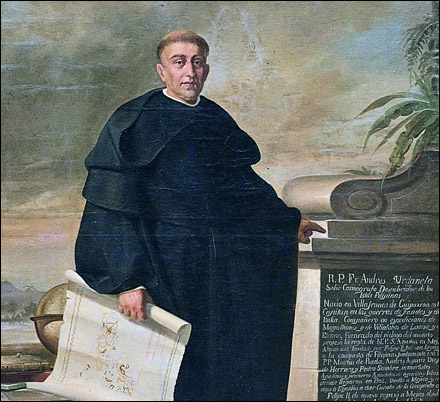
Friar Andres de Urdaneta
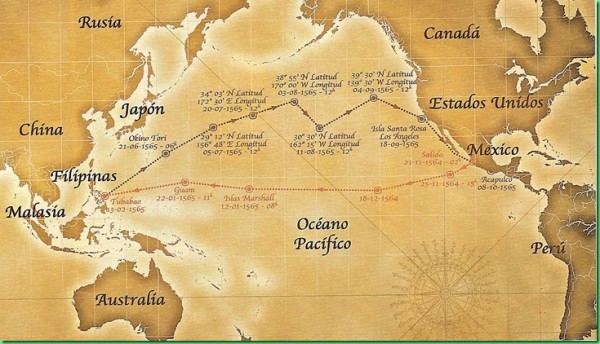
Urdaneta was considered a great navigator and especially fitted for cruising in Indian waters. Philip II wrote urging him to join the expedition and offering him the command. Urdaneta agreed to accompany the expedition but refused to take command; the adelantado, Don Miguel López de Legazpi, was appointed as Commander. The expedition, composed of the Capitana, which carried on board Legazpi and Urdaneta, the galleons San Pablo and San Pedro, and the tenders San Juan and San Lucas, set sail on November 21, 1564.
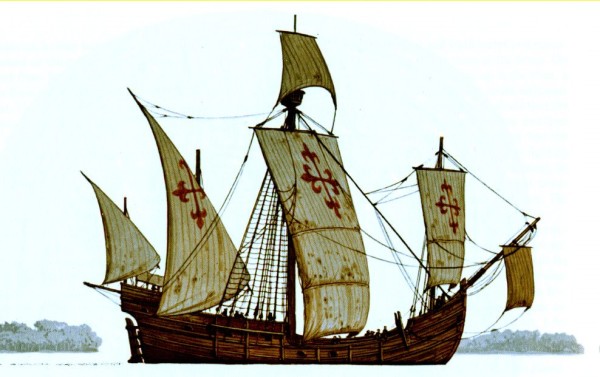
After spending some time in the islands, Legazpi determined to remain and sent Urdaneta back for the purpose of finding a better return route and to obtain help from New Spain for the Philippine colony.
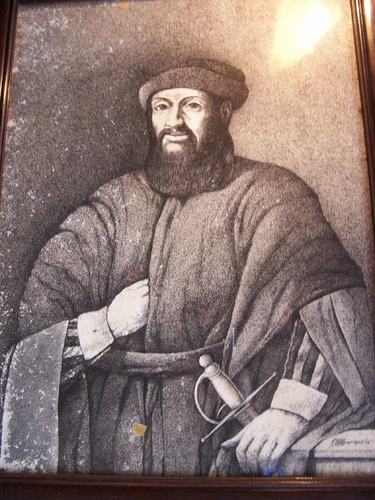
Miguel Lopez de Legaspi
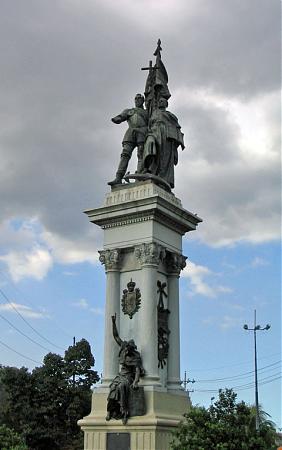
Legaspi Monument in Manila
This is the Legaspi Monument in Manila commemorating the landing of Spanish conquistador Miguel Lopez de Legaspi with Friar Andres de Urdaneta in the Philippine Islands in 1565. It also commemorates the introduction of Roman Catholicism to the Philippine Islands.
Urdaneta set sail from San Miguel (the island of Cebu), on June 1, 1565 and was obliged to sail as far as 36 degrees North latitude to obtain favourable winds. With the voyage in trouble, Urdaneta had to assume command himself. The ship reached the port of Acapulco, on October 8, 1565, having travelled 12,000 miles (20,000 km) in 130 days. Fourteen of the crew had died; only Urdaneta and Felipe de Salcedo, nephew of López de Legazpi, had strength enough to cast the anchors.
Upon arriving, Urdaneta discovered that a member of the crew of his expedition, Alonso de Arellano—who had abandoned them just after leaving the port—had actually beaten them across the ocean, arriving at Barra de Navidad in Jalisco in August of the same year. However, Arellano’s notes were far less precise and professional than Urdaneta’s, and so the latter’s route became the famous and trusted one.
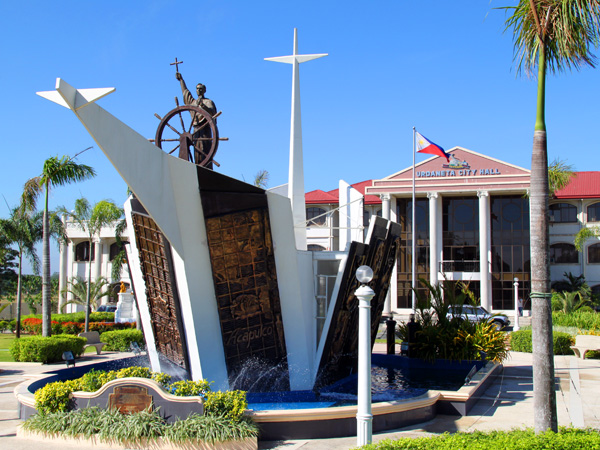
Urdaneta Monument
The Memorial stands in Urdaneta, Pangasinan ( a town named in his honour).
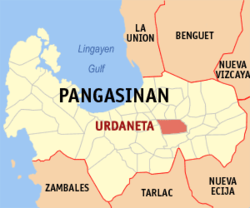
From Mexico, Urdaneta went to Europe to make a report on the expedition and then returned to New Spain, intending to continue on to the Philippines, but he was dissuaded by his friends. He wrote two accounts of his voyages: one giving the account of the Loaiza expedition was published; the other, which gives the account of his return voyage, is preserved in manuscript in the archives of the Council of the Indies.
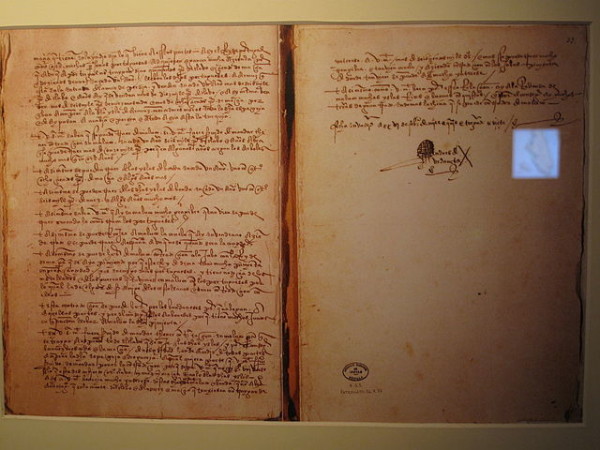
Urdaneta’s Diary
For the remainder of the 16th and 17th centuries, Spanish ships, particularly the annual Manila-Acapulco trading Galleon, used “Urdaneta’s route.”
Urdaneta died in Mexico City in 1568.

This work is licensed under a Creative Commons Attribution-ShareAlike 3.0 Unported License.
 (0)Dislikes(0)