

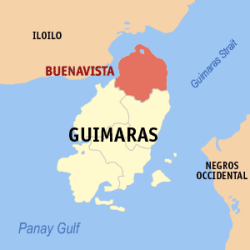
The long awaited Guimaras Island Church visits finally happened! Part IV – San Isidro de Labrador, Buenavista, Guimaras.
Our exploration continued, with a “leisurely drive in the country”…until we arrived at this small church, in Navalas, very close to the shore.
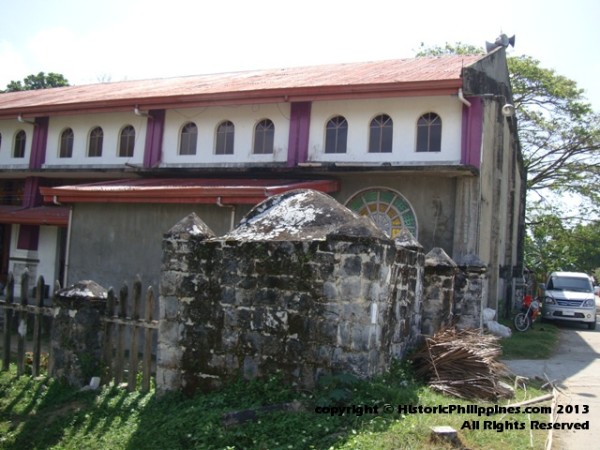
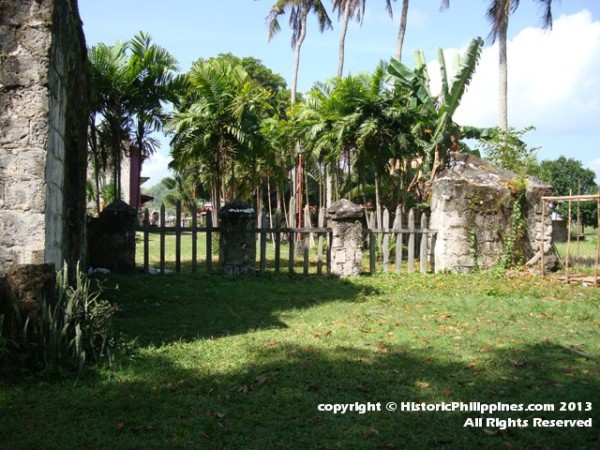
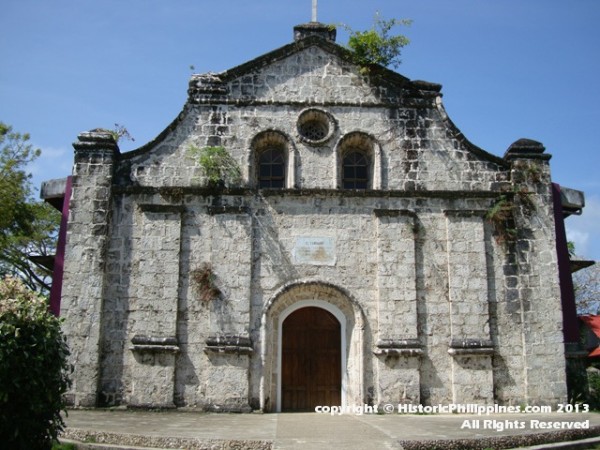
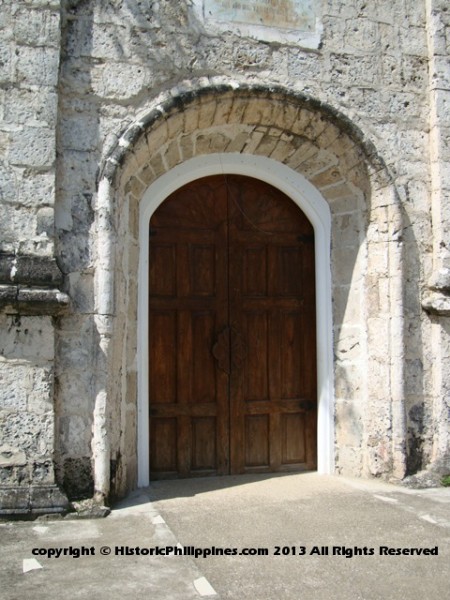
We arrived on the ‘back side’ of the church as can be seen from the photo about. My first reaction was: “OK, so what’s the big deal? It sure doesn’t look like much…” We headed through the stone gate and ran across the Parish Priest, who apparently wasn’t too happy to see us ‘poking around’. We asked if it was OK to look around and photograph the church, he simply mumbled something about “it’s that way” pointing to the front of the church.
It was clear he was in no mood for a visit and to talk to us about this small gem. So we continued our exploration without the benefit of his input. Too bad…but then again everyone has a bad day once in a while…hopefully we’ll be able to visit with him on one of our planned follow-up trips, sometime soon.
When, we did our pre-trip research on the church, we found that there was very little written on this magnificent small church other than the scantest of details.
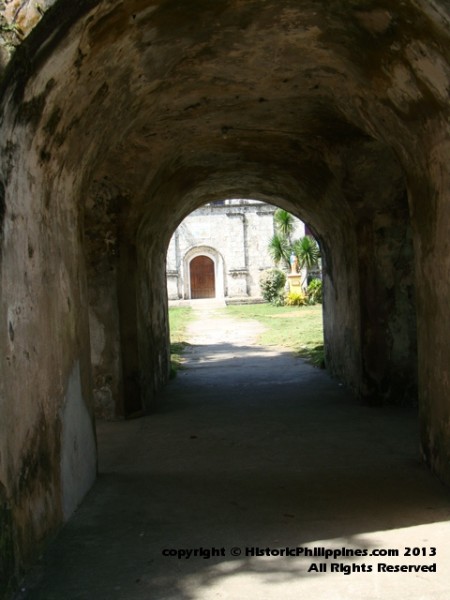
The look of the area provides us with a clear idea of its origins and a “fortress church” since it is completely surround by a stone wall. It was so because of the Moro raids in the area which wreaked havoc with the Guimaras Islanders as well as their counterparts on the mainland all the way to Guimbal and beyond. All these superb fortress churches were originally built to defend the population from the attacking Moro Raiders, who would rape and pillage and more often than not enslave and sell any captives they were able to get…
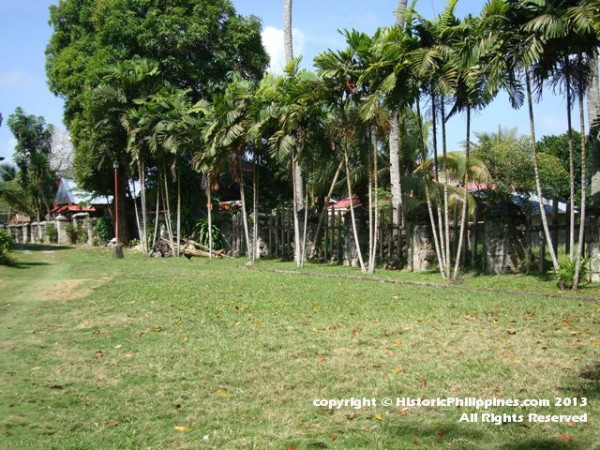
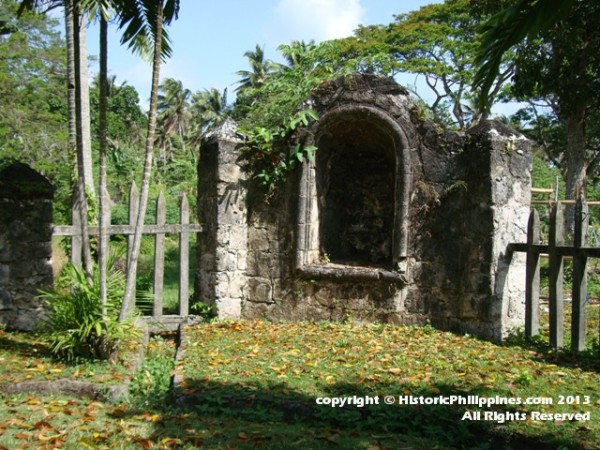
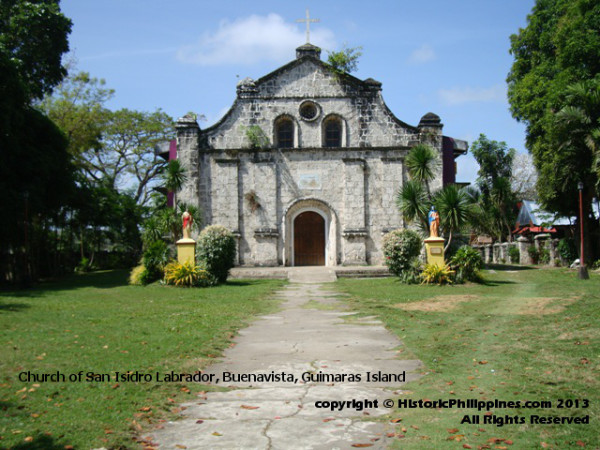
The Church is reputed to be the oldest church on Guimaras and was built between 1880 and 1885 on land that was donated by: Don Miguel Jayme and funded in collaboration with: Doña Carmen Javellana. Those facts are recorded on the ‘cornerstones’ which are an integral part of the building at this time.
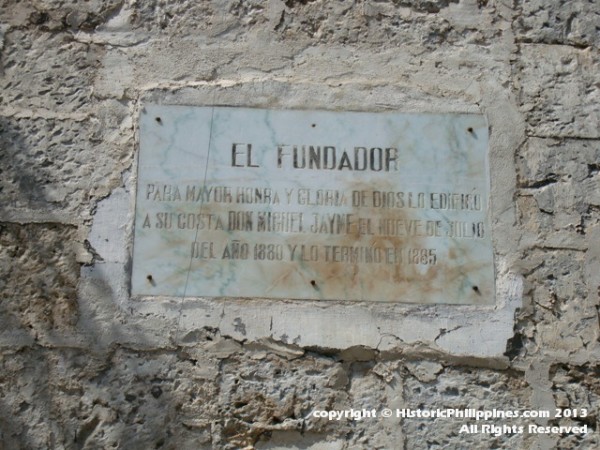
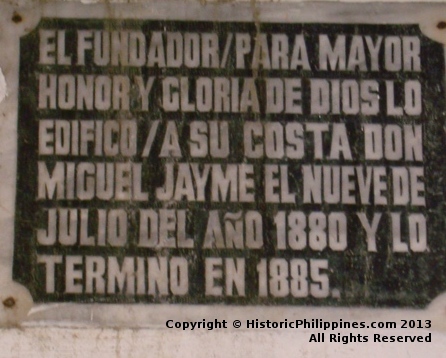
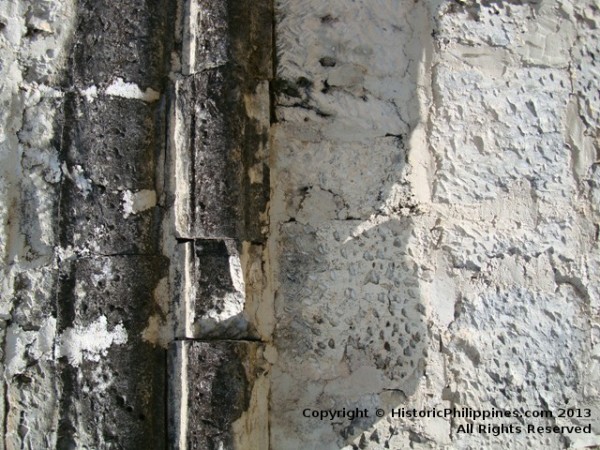
The parish priest at the time of construction was Francisco Consing. The church was built from coral stone gathered from the seashore which is close at hand and it was built as was usual at the time though ‘forced labour’.
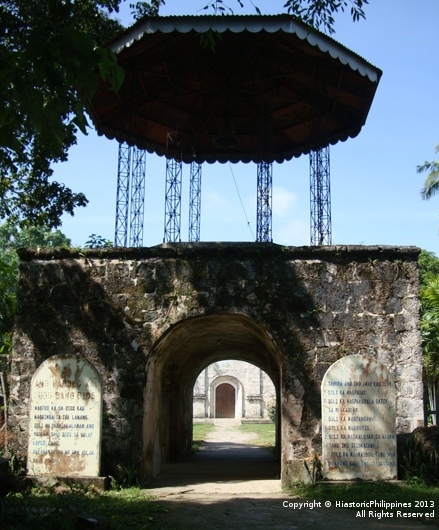
The belfry was constructed separate from the church and appears to anchor the wall which must have ‘fortified’ the church against the Muslim Raiders of the time. It now forms an interesting entry point onto the church grounds. Originally, it housed a fairly large bell, which was said to have been a meter in diameter and a meter and a half in height. As with other fortress churches in the region the bell tower and bell were in place to be sounded when the Raiders had been spotted approaching and warning the inhabitants to seek refuge in the church.
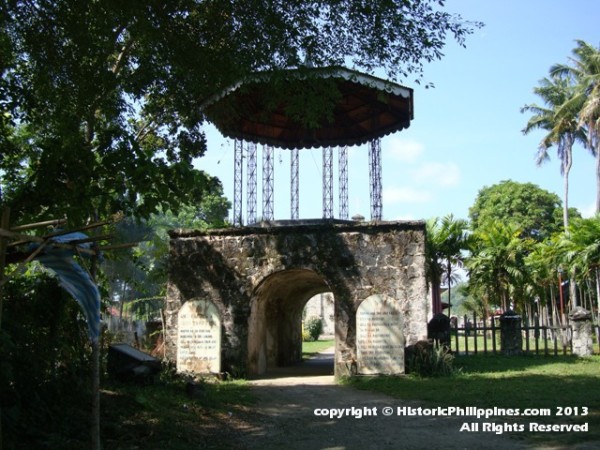
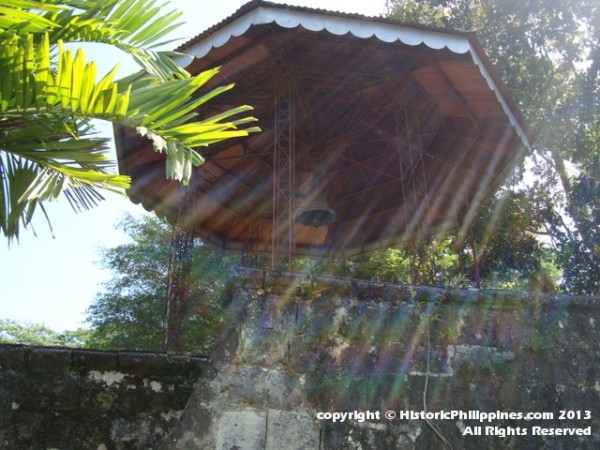
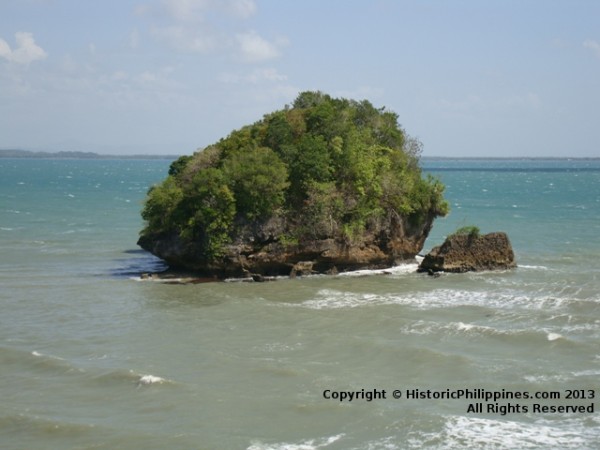
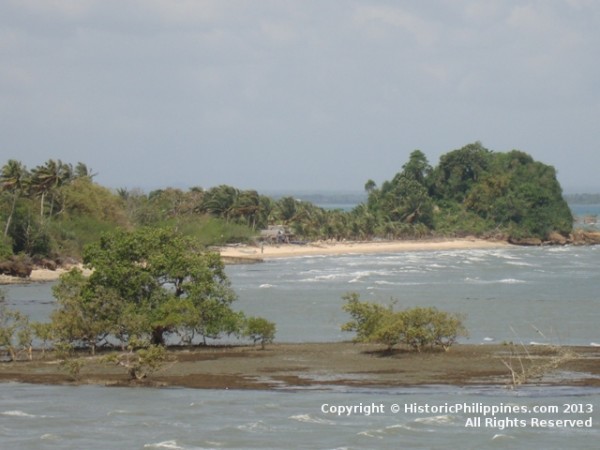
The original bell is said to have been struck of gold and silver and was stolen by the Moro raiders and unceremoniously dumped into the sea not far from the Siete Pecados Islands just up the ‘straits’ from the beach in front of the church. We’ll see more about these islands at the end of this report.
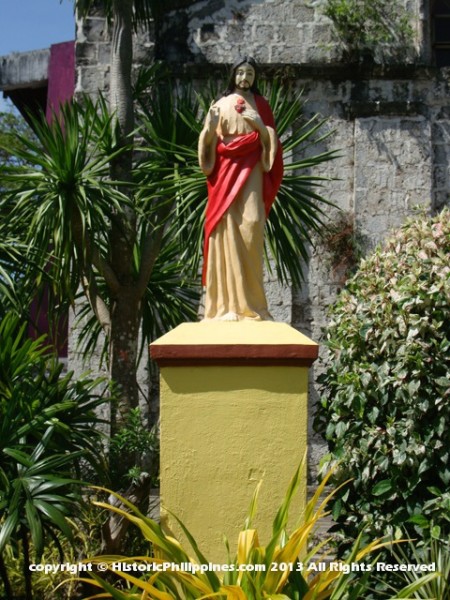
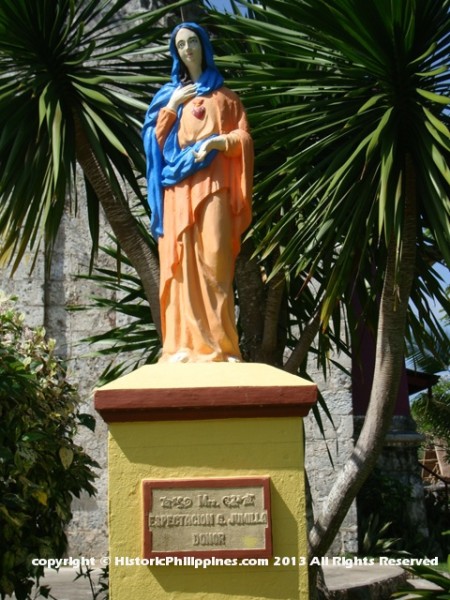
At this time the only parts of the church and compound that are original are in fact the bits of wall surrounding the church and the actual façade. Everything else has been renovated or reconstructed in one way or another during projects that took place in both the early and late 1970’s.
[Left click on photos to view in larger format]

We reluctantly, packed up and left this wonderful small church and took to the road once again. Nilo, our pilot, took us down a dusty small road that looked like someone’s laneway…which in fact I guess it was. We drove through a Resort, through a small settlement and no more than 10 minutes later we arrived at the most surprising site I have laid my eyes on since arriving in Philippines.
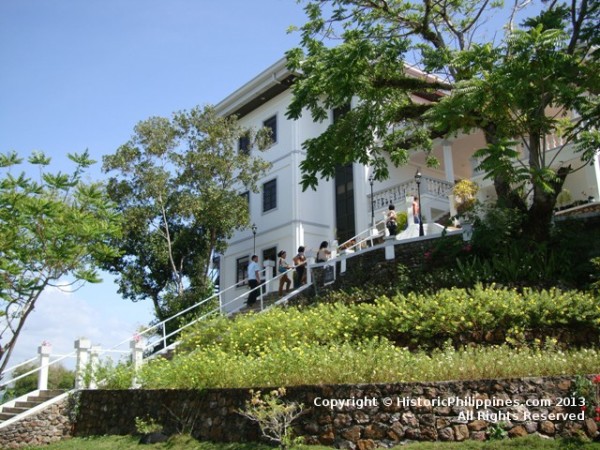
It was a mansion, sitting on a hill overlooking the sea. Wow, I couldn’t believe my eyes. Nilo, just drove through the gates, as if he owned the joint and parked at the bottom of the stairway up to the main house (some might say the “stairway to heaven…”).
On the left side of the road as we drove on we spied this lovely compound.
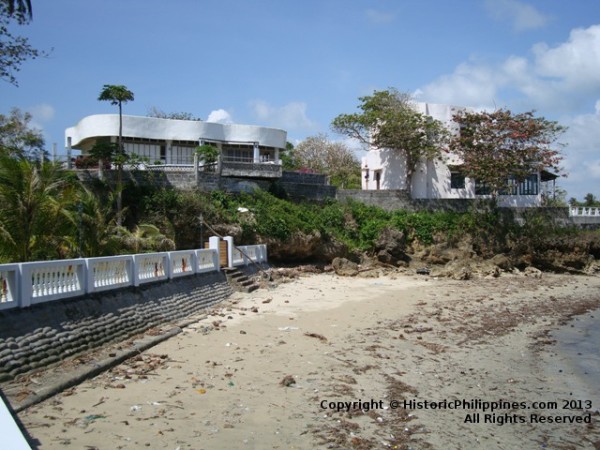
On the right side of the laneway this majestic mansion sat immediately off the beach…
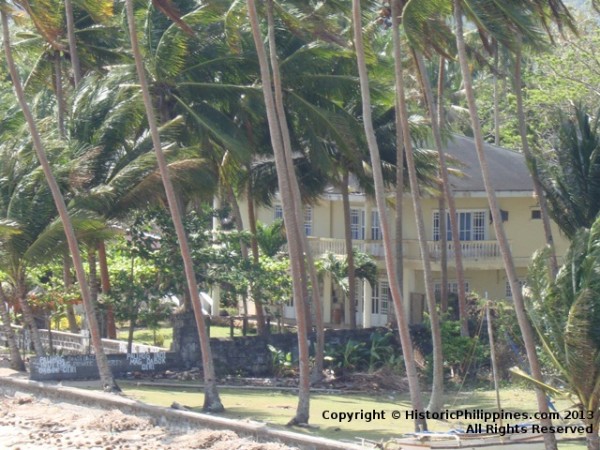
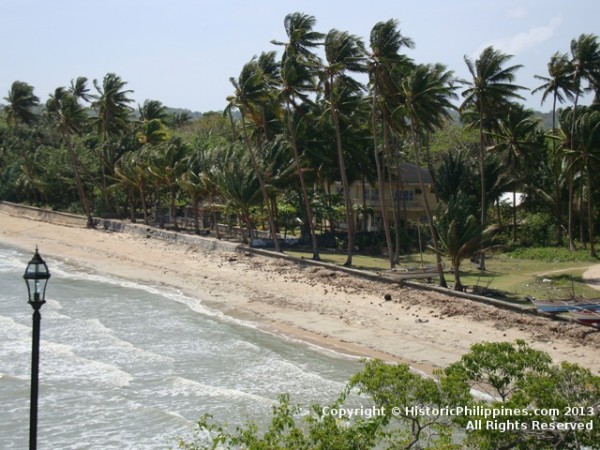
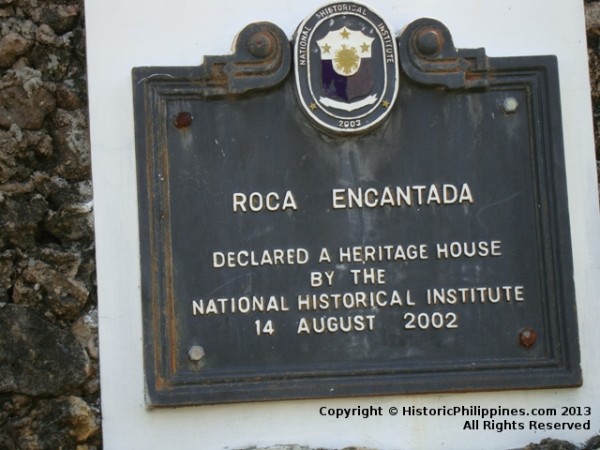
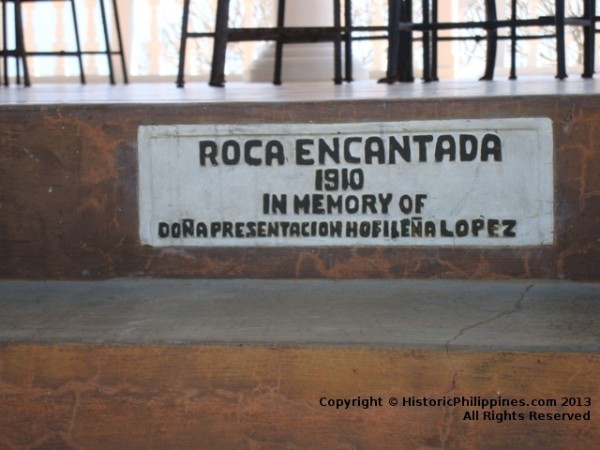
But the ‘piece de resistance” was this: The Roca Encantada – the summer residence of the Lopez Family. Which was built in the early 1900s and in 2002 was named a National Historic Site. I am told that the family still visits occasionally and is often “in Residence during the Summer months”.
The views from the balcony of the main house are actually breathtaking.
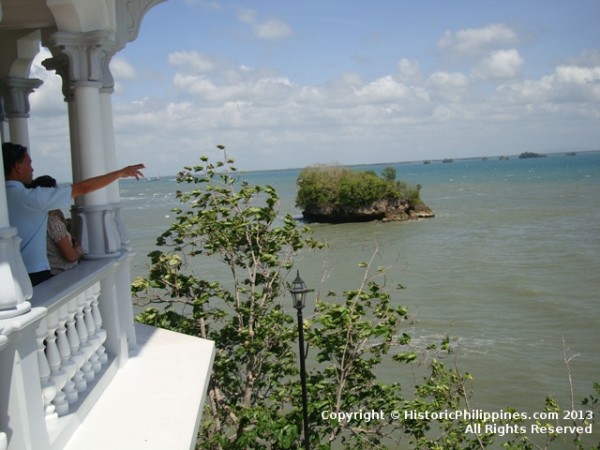
I mentioned earlier, when we were at the Church of St Isidro that we would see more of the Siete Pecados Islands well, that’s them just off the property of Roca Encatada. Legend has it that this is where the Moro Raiders, unceremoniously dumped the silver and gold bell they stole from the church into the sea.
In closing this episode, I just want to say that I have tried to get some additional information on the Lopez Family but have been unable to. They value their privacy and frankly I understand and respect that. Therefore, there will be no additional details on the family or their extensive business holdings in our story. Come back a see us soon, there are at least two more episodes on our Guimaras Exploration coming in the next several weeks.

This work is licensed under a Creative Commons Attribution-ShareAlike 3.0 Unported License.
(0)Dislikes(0)