
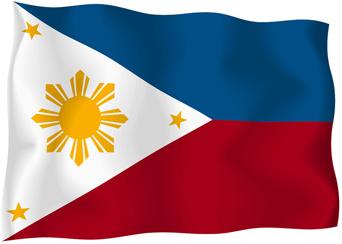
It’s Independence Day 2013.
Happy 115th Birthday Philippines!
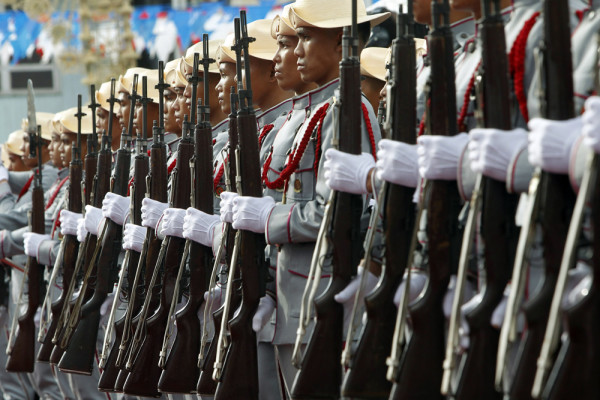
A Philippines military honour guard stands at attention as the nation celebrated its 114th Independence Day in June 2012 {Photo by: Reuters)
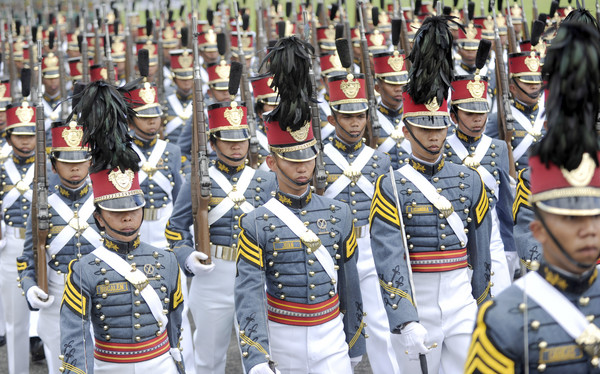
PMA Cadets Marching on Independence Day 2012
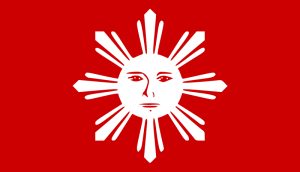
The very first official flag of the Philippines was created by the Katipunan at Naic, Cavite and first displayed in 1897. It features an eight-rayed white sun with a mythical face on a field of red – here’s what it looked like:
On June 12, 1898, the Philippine independence from Spain was first proclaimed from the window of the grand hall of the Aquinaldo mansion.
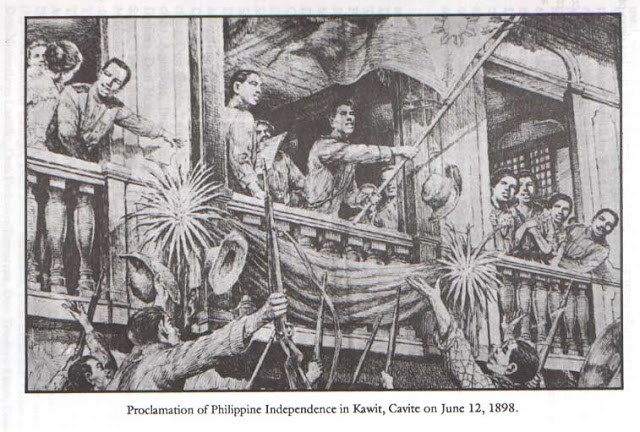
The Act of the Declaration of Philippine Independence was read to the people of the country by its author Ambrosio Rianzares Bautista.
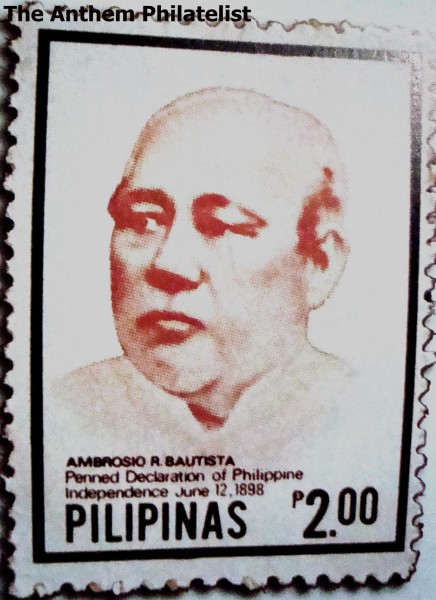
Ambrosio Bautista, wrote the Philippines Decalration of Independence in Spanish in 1898.
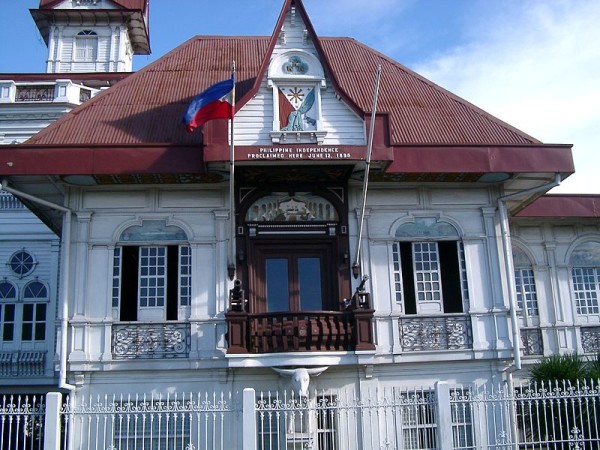
Casa del general Aguinaldo en Kawit, Cavite, Luzón, Filipinas
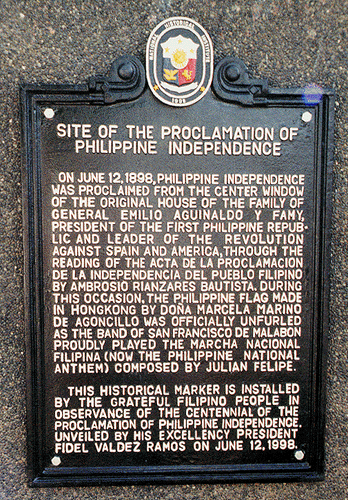
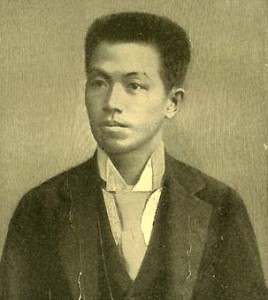
Emilio Aquinaldo y Famy
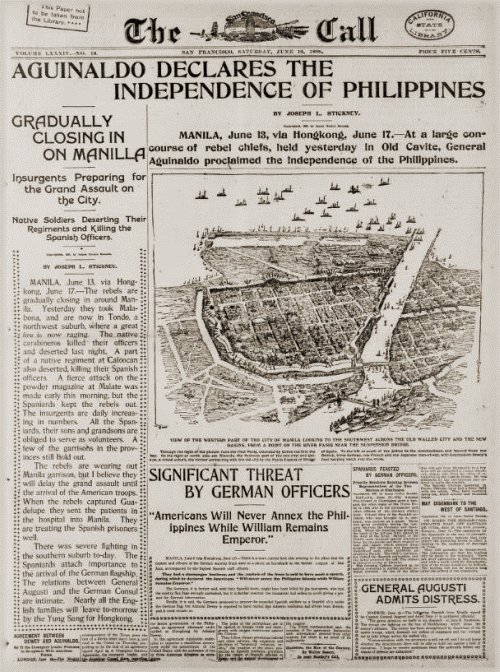
Aquinaldo’s Declaration of Independence reported in the San Francisco Call on June 18, 1898
The Declaration of Independence was ratified by the Malolos Congress on September 21, 1898.
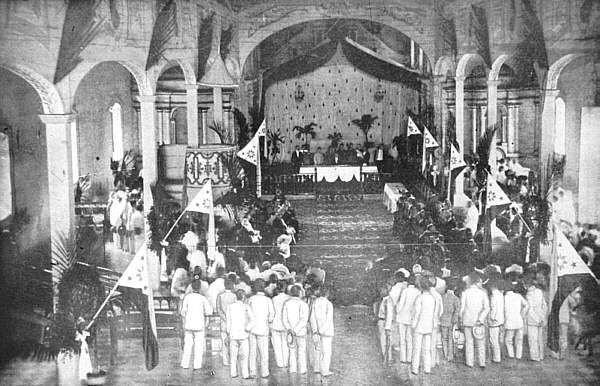
The Malolos Congress, September 1898
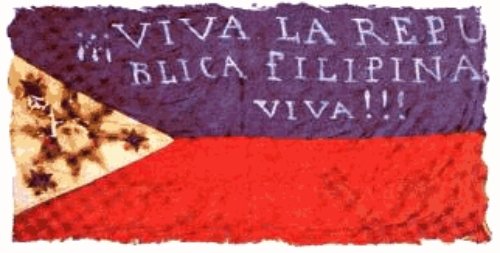
A tattered flag of the First Philippine Republic, one of many used during the struggle for independence. The flag believed by heirs of Emilio Aguinaldo to be that unfurled by the general in Kawit, Cavite, in 1898 is encased in glass at the Aguinaldo Museum on Happy Glen Loop in Baguio City; however, the National Historical Institute has yet to authenticate this flag despite years of probing. In his letter to Capt. Emmanuel Baja dated June 11, 1925, Aguinaldo mentioned that in their Northward retreat during the Filipino-American War, the original flag was lost somewhere in Tayug, Pangasinan Province; the Americans captured the town on Nov. 11, 1899.
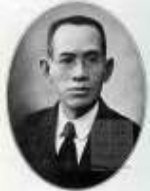 The Philippine National Anthem, then known as “Marcha Nacional Filipina“, was played by the band of San Francisco de Malabon during the declaration of independence. It was composed by Professor Julian Felipe (RIGHT) but it had no lyrics yet. The composition had similarities with the Spanish “Himno Nacional Español.” Felipe admitted that he purposely put into his composition some melodic reminiscences of the Spanish National Anthem “in order to preserve the memory of Spain.”
Felipe was born in Cavite Nuevo (now CaviteCity) on Jan. 28, 1861. A dedicated music teacher and composer, he was appointed by Emilio Aguinaldo as Director of the National Band of the First Philippine Republic.
His composition was adopted as the Philippine national anthem on Sept. 5, 1938.
He died in Sampaloc, Manila on Oct. 2, 1944.
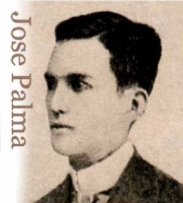 To suit the music of “Marcha Nacional Filipina“, Professor Jose Isaac Palma wrote a poem in Spanish entitled, “Filipinas” which was published for the first time in the first anniversary issue of the revolutionary newspaper “La Independencia” on Sept 3, 1899. It became the lyrics of the national hymn.
Palma was born in Tondo, Manila on June 3, 1876. He was educated at the Ateneo Municipal de Manila. He joined the Katipunan in 1896 as an ordinary soldier but later General Antonio Luna who put up “La Independencia“, which became the official newspaper of the Republic, took him in to edit the Tagalog section.
He wrote “Filipinas” in the house of Doña Romana G. vda de Favis at sitio Estacion (nowBarangay Poblacion West), Bautista, Pangasinan Province (Bautista was the old barrio Nibaliw of Bayambang; on June 24, 1900, Nibaliw was renamed “Bautista”, in honor of San Juan de Bautista or John the Baptist, and upgraded into a separate municipality).
And to conclude some pages from the actual Declaration of Independence.
[print_gllr id=14117 display=short]
References:
Philippine-American War, 1899-1902 by Arnaldo Dumindin
http://philippineamericanwar.webs.com/philippineindependence.htm

This work is licensed under a Creative Commons Attribution-ShareAlike 3.0 Unported License.
 (0)Dislikes(0)