

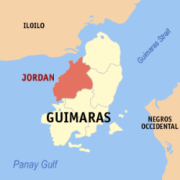
Guimaras Island Church visits Part V – St John the Baptist, Jordan.
This is a continuation of our explorations in Part III of the series.
We crossed the street from the Pagtaltal Office and the smallest Plaza to the St John the Baptist Church only to find Manuel de Villa, the Parish Priest sitting on the front steps supervising some workers installing tiles on the church steps. We started to explore the St John and tried to get some of its history.
The name of the town used to be Nagaba but was changed in 1902 to Jordan. The name Jordán, the Spanish name for the Jordan River, was chosen by the residents in honour of John the Baptist, their patron saint. According to local folklore, St John the Baptist saved the inhabitants from slaughter during the Moro raids of the Spanish era.
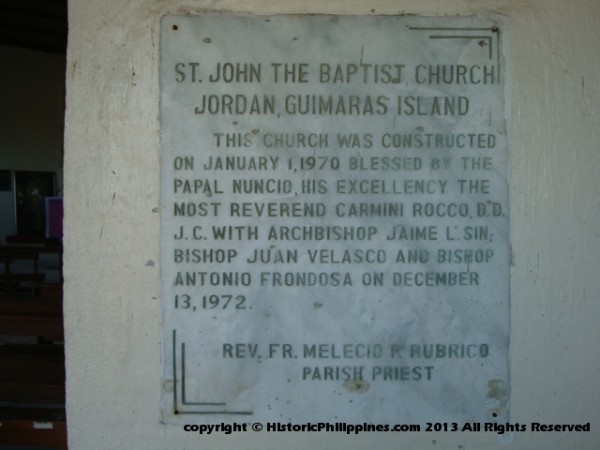
The original parish of St John the Baptist was founded in 1821 and the first stone church was built at around that time by the Augustinians, although little or no information on that original church survives. We are still trying to obtain as much information as possible on it and as soon as we are able to report some new information and details we will do so.
That original church apparently survived until our old friend “Lady CayCay” the massive earthquake of 1948 completely destroyed it. The present day church was built in the 1970’s and is in a constant state of repair and refurbishment.
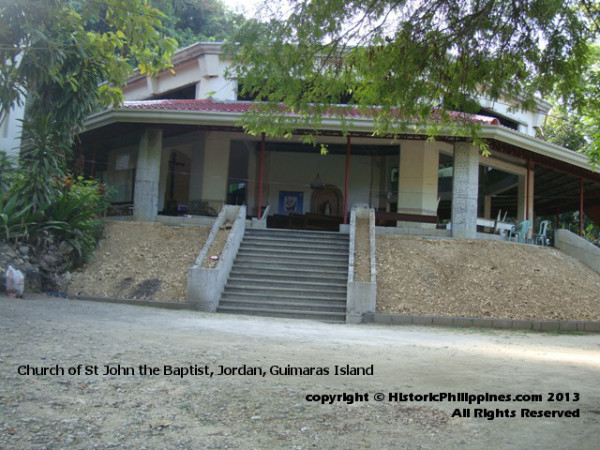
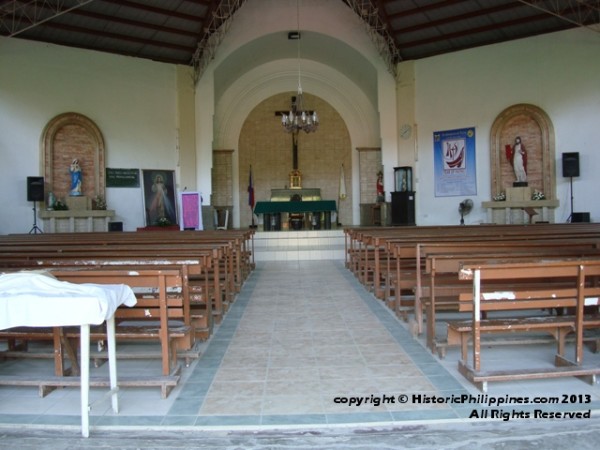
St John the Baptist Church as can readily be appreciated is an open concept church built in semi-circular fashion. It is quite different from any of the previous churches we have visited until now. And I was struck by the fact that this design and layout must have been difficult for people to accept in the early 1970’s.
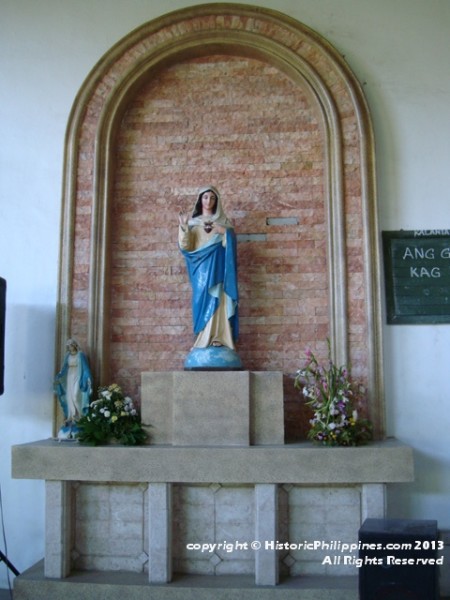
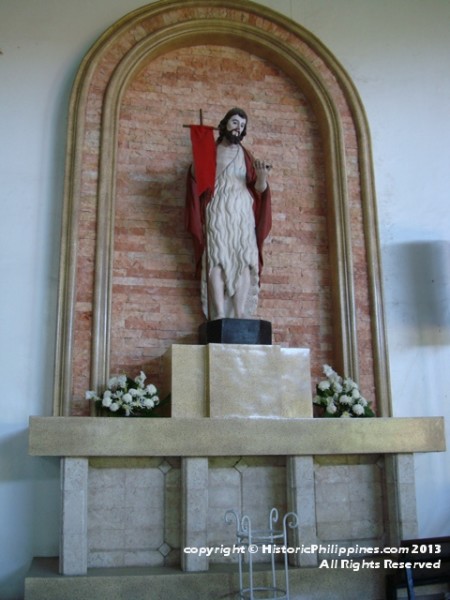
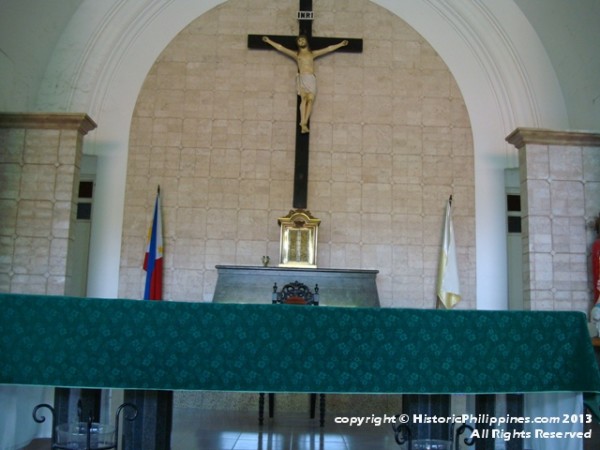
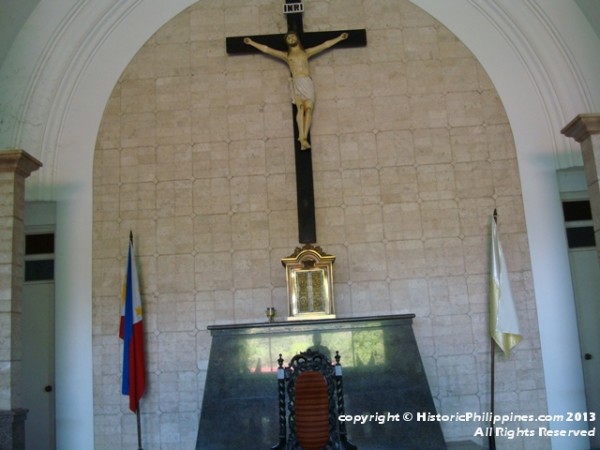
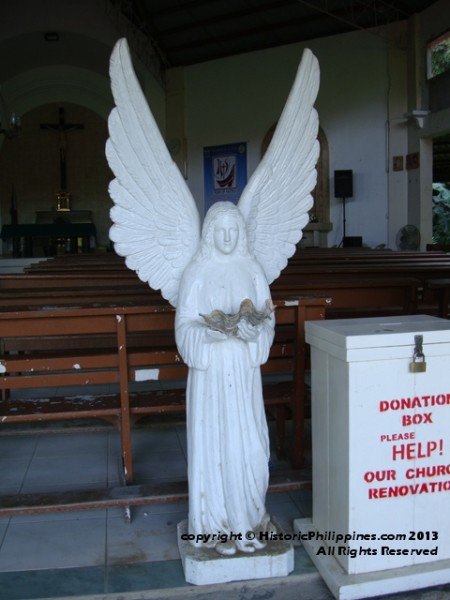
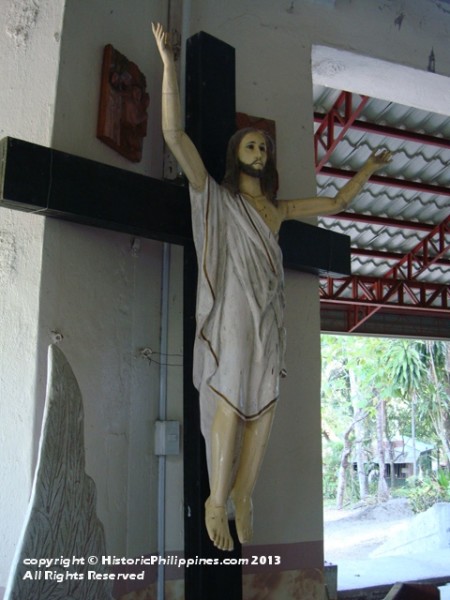
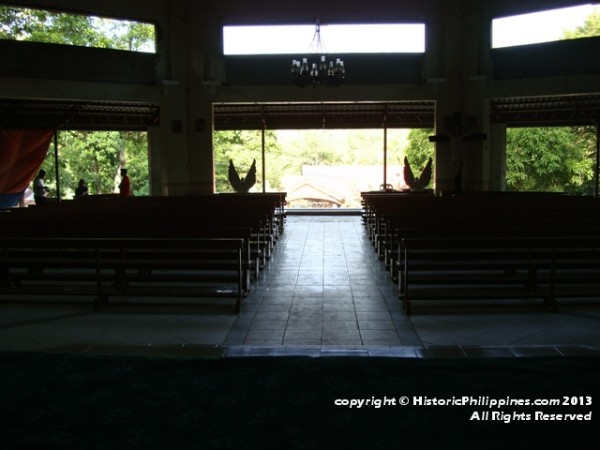
We had only a very few minutes to visit with Father de Villa before he had to leave to go and say mass at the neighbouring school. We did find out that he was originally from Oton, our home base and he also told us that when Lady CayCay struck the entire original 1820s church was completely demolished. Another interesting fact he shared with us was that the old church was oriented differently than the present one.
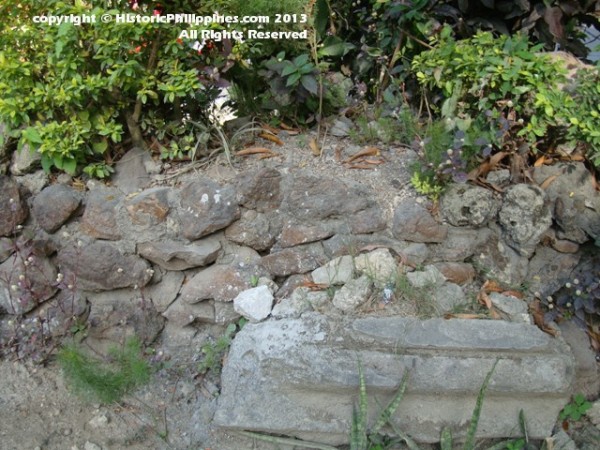
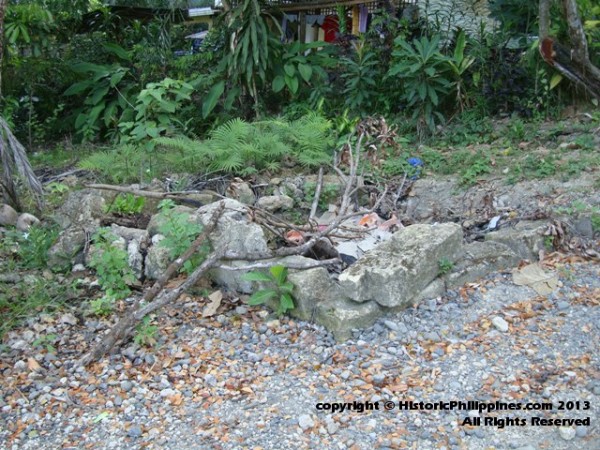
He told us that the Sanctuary and altar of the old church used to be where the current church’s steeple now stands – and that if we walked around the property we would see various pieces of masonry and stones that were part of the original church. He was late and had to go. We’re hoping to go back and spend sometime with him to get as much more information as possible and this location.
We started looking around the property and spotted a few things of interest:
The new steeple, which was built over the area where the original Sanctuary and Altar stood now houses the church bells, the Sacristy and a small work space for the Parish Priest.
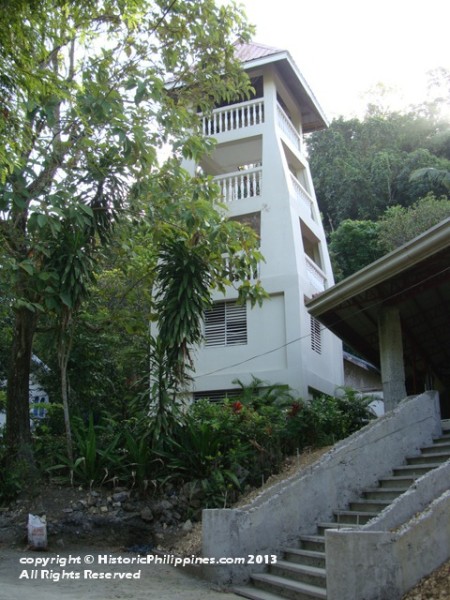
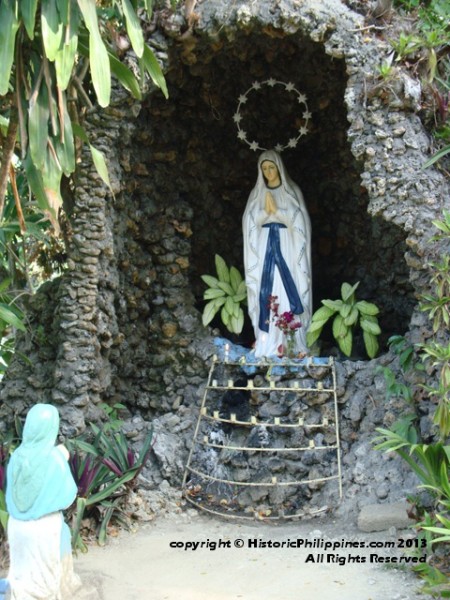
In one corner of the property we spotted a Grotto of Our Lady of Fatima which appeared to be quite old, but we’ll have to get that confirmed by Father Manuel when we see him again.
In addition, spread around the grounds were masses of limestone which could only have come from the original structure…
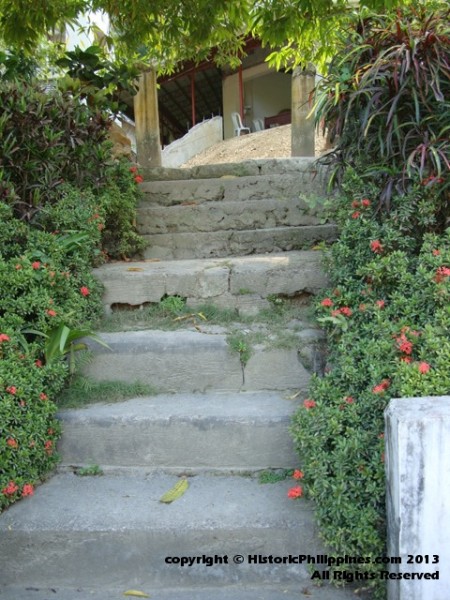
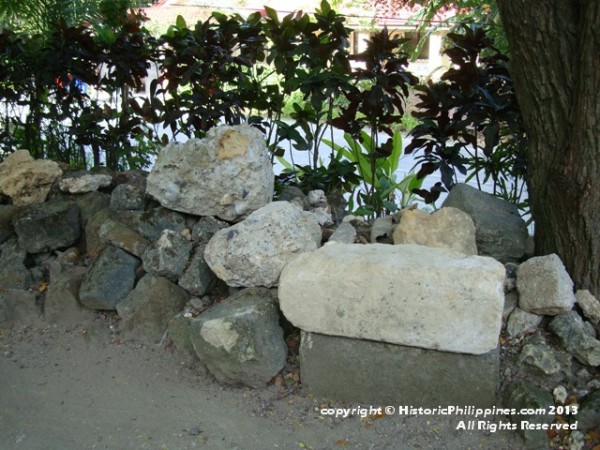
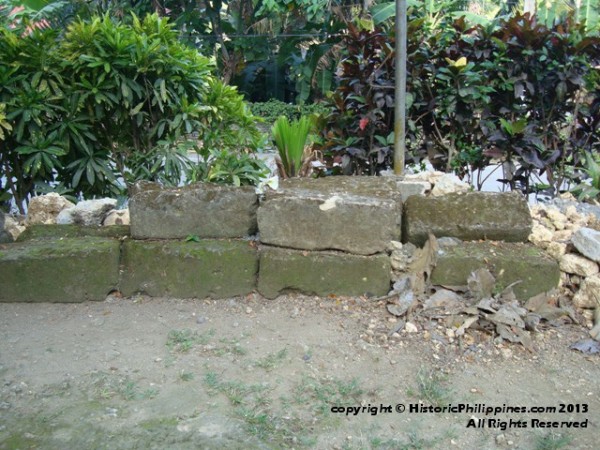
These steps are apparently from the old church. This is one of the entrances from the street level to what used to be the old church.
One last thing to note and remember is that in the late 2002 the Shrine at Balaan Bukid was placed under the administration of St John the Baptist Parish. The Shrine had until then been operated by Knights of Columbus.
The church is on our list of re-visits and more research, although the information is extremely difficult to come by – we are working on our next trip and trying to line-up some interviews and visits with “old timers’ from the area who might be able to provide us with more detailed information on the original church. We’ll report back as soon as we have done the job.
This church is on our list of re-visits and more research, although the information is extremely difficult to come by – we are working on our next trip and trying to line-up some interviews and visits with “old timers” from the area who might be able to provide us with information on the original church. We’ll report back as soon as we have done the job…

This work is licensed under a Creative Commons Attribution-ShareAlike 3.0 Unported License.