

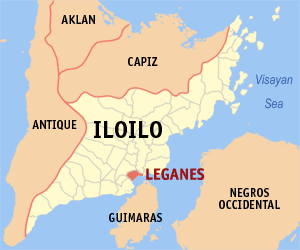

When Friar Martin Rada founded the parish of Oton in 1575, the area around Leganes was classed as a Visitas, wherein itinerant friars, from their base in Oton, served the needs of the faithful, on a fairly regular basis, in the Leganes area. The area was under the parochial care of various orders (the Jesuits (1678 – 1760), the Dominicans (1760 – 1863) and the Augustinians returned in 1863 and ministered to the faithful in the area until 1898. The priests would visit the area on a semi-regular basis to minister to the ‘flock’. This practise continued for until 1858 when the area was reassigned to the new Diocese of Jaro. The Parish of St Vincent Ferrer in Leganes was created and a resident priest was assigned in that year.
(It should be noted here or remembered that St. Vincent Ferrer himself was a Dominican Friar which likely accounts for the parish being named after him during the over 100 years [1760 – 1863] that the Dominicans ministered to the visitas and later the parish.)
It was in 1869, under the guidance of Friar Andres Naves (an Augustinian Friar), that the first stone and brick church was started. It was built to replace the original chapel which had been constructed of local indigenous materials and the new church which was largely built using tabigue, bamboo with some brick work was completed in 1889 under the tutelage of Friar Eladio Zamora. The adjoining Convento was built of mostly local wood (tabigue?) and the adjacent cemetery was enclosed by an extensive bamboo fence.
On May 10th, 1896 a massive typhoon seriously damaged the church and the convento was uninhabitable as a result. Friar Fulgencio Rodriquez partially rebuilt or rather repaired the damaged main church structure. In mid 1898 the parish was transferred from the Augustinians to secular priests who have tended to the needs of the parishioners ever since.
Disaster was to strike again, when our old friend, Lady Caycay struck the Visayas in the early morning of January 24th, 1948. If you recall, the 70 second long earthquake was measured at a strength of 8.1 on the Richter Scale and destroyed many of the Old Historic Churches on Panay Island. St. Vincent Ferrer was no exception. The church was severely damaged to the extent that repair and re-construction had to be put off until the mid-1950s. It is a that time also, that the separate bell tower was added with additional buildings added over the succeeding years.
The present church is the result of years of dedicated repairs and refurbishment.
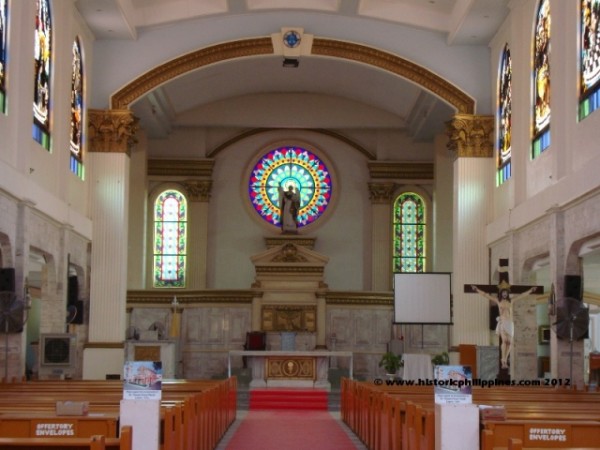
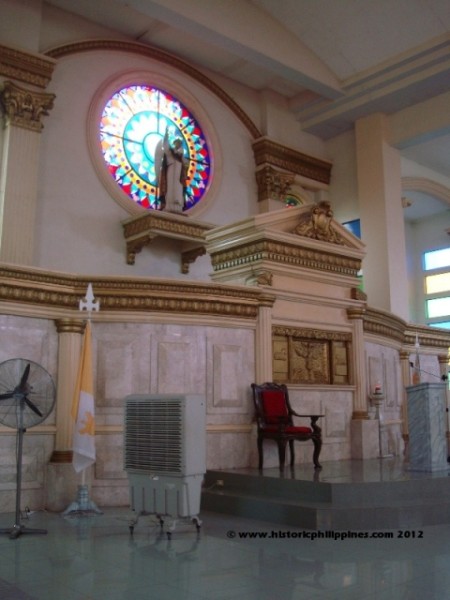
It’s façade is neo-classical in design and has semicircular arched entrances and several occuli filled with very colourful stained glass windows, spread throughout the church. As can clearly be observed in the photo of the back of the sanctuary included below:
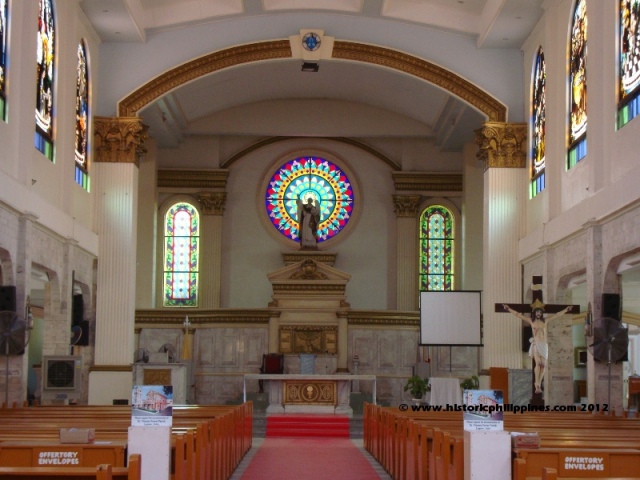
The church has a main centre nave, flanked by two single aisles on either side of the nave.
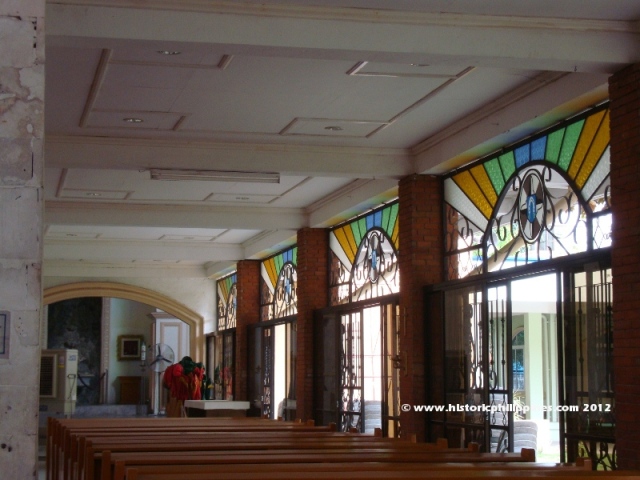
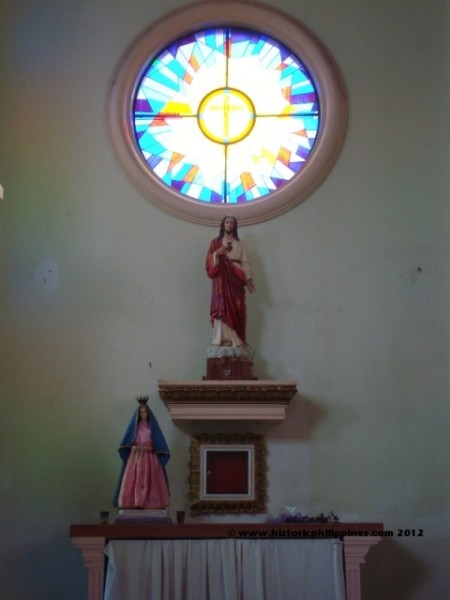
At the head of each of these side aisles is a very simple altar, such as the one pictured below:
The church is actually a marvel of simplicity which gives it its incredible brightness and magnificent beauty. The photo below clearly show that simplicity and beauty.
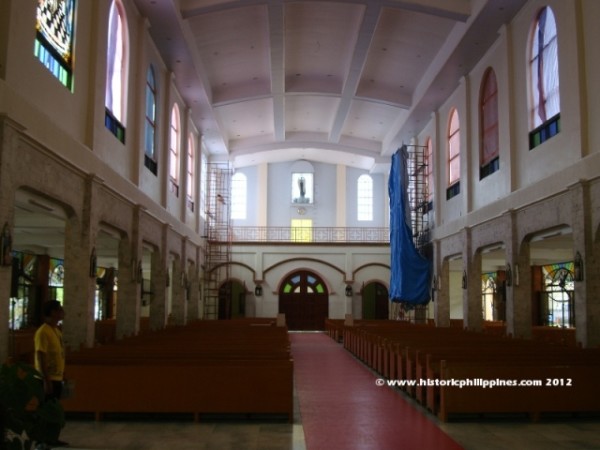
To enhance this simplicity and beauty, most of the windows are filled with the most colourful and magnificent stained glass windows. Four of which depict for stages of St Vincent’s life. His birth, his baptism, the apparition of the Virgin Mary to Him and His death…

The sanctuary is also simplicity itself, but it is also quite impressive with almost a full wall, in gold leaf containing the tabernacle behind the altar.
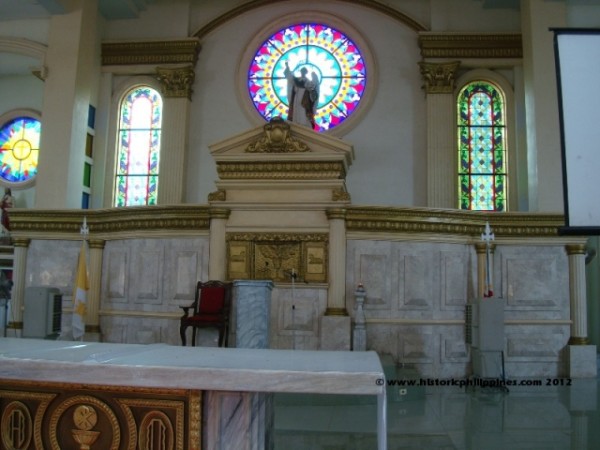
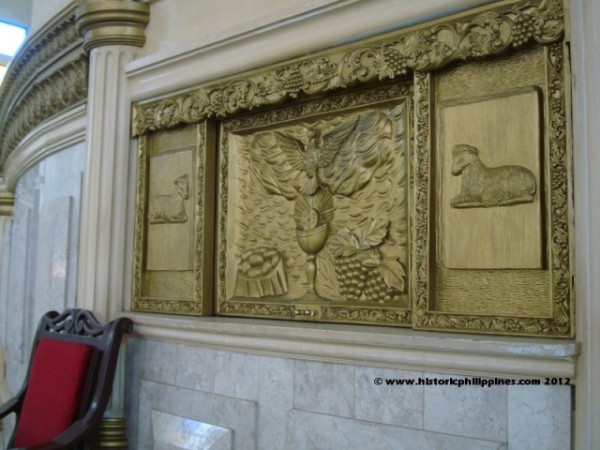
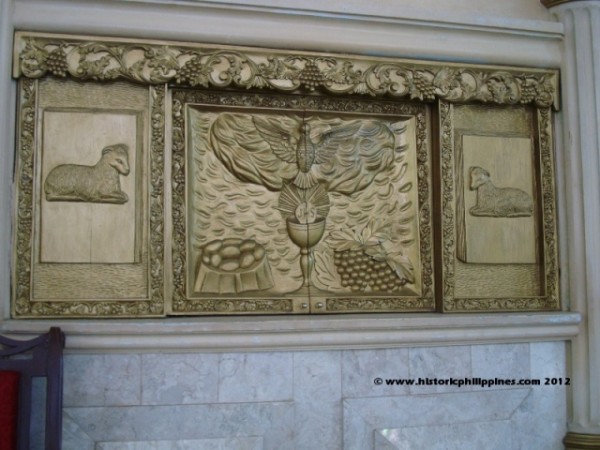
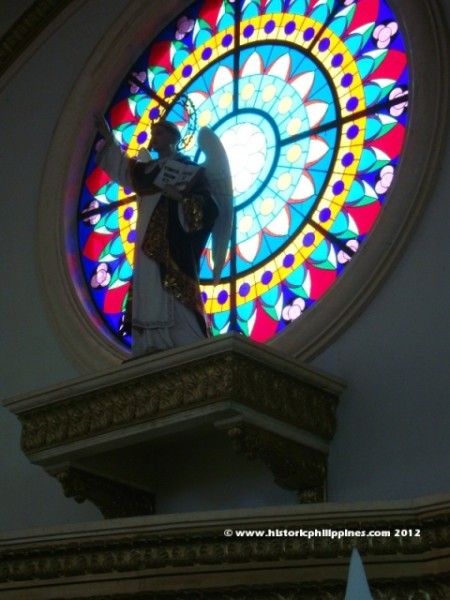
And above it all, backed by an occuli containing a very colour stained glass is a statue of the Saint himself.
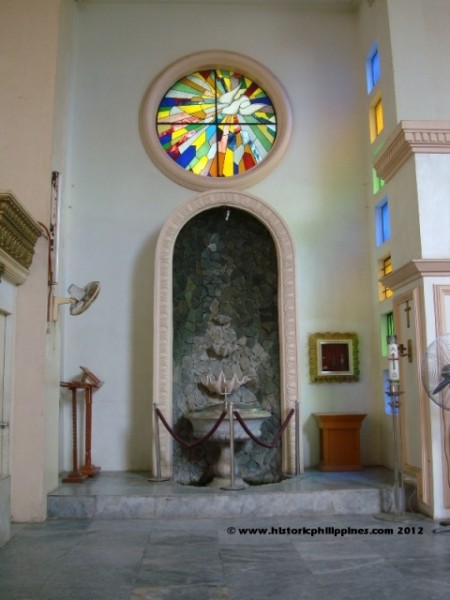
As we roamed through the church we marvelled at how true simply and spare it is, another classic example of this is the Baptistery:
Looking out to the east side of the church, on this rainy day we see the new modern Convento which was built in the early 1960s.
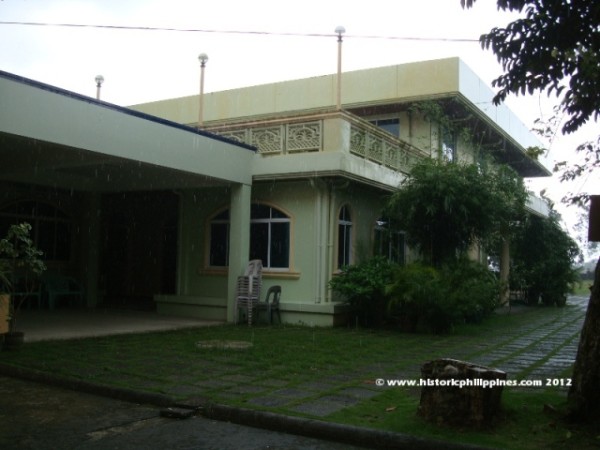
If we proceed to the west side of the church and walk into the courtyard we discover some equally interesting things. The Church was designated a Diocesan Shrine in April of 2008 by Jaro Archbishop Angel Lagdameo in honour of the miraculous works of St. Vincent Ferrer. Literally hundreds of thousands of people visit the shrine each year, making the church one of the most visited and honoured Pilgrimage site in the country.
On entering the courtyard from the church we see across from us the Parish Hall and Bell Tower, which also houses the St. Vincent Ferrer Museum opened in 2007 and which houses artifacts related to the historic and religious heritage of the parish and the saintly life of Vincent Ferrer.
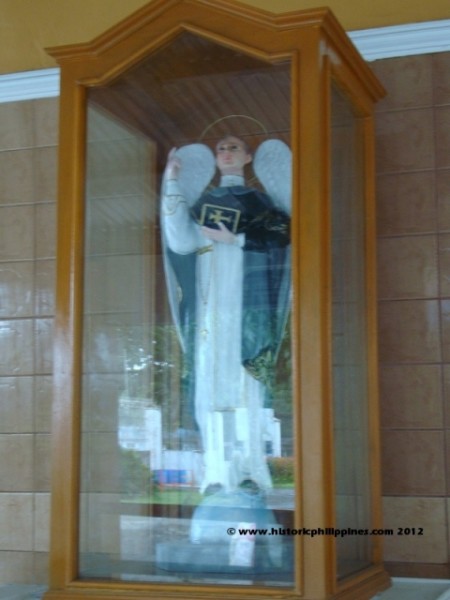
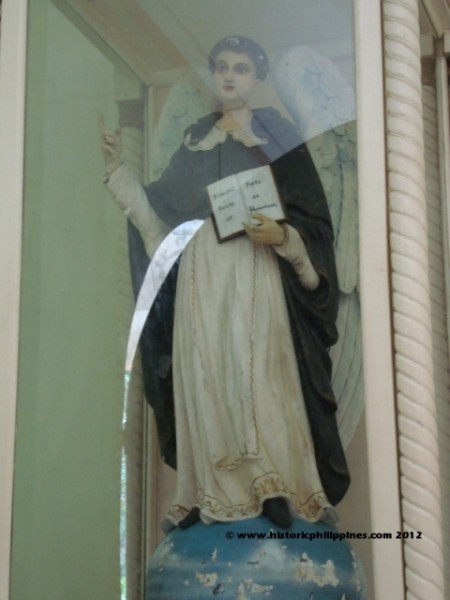
And in one corner of the property next to the parish centre is a Shrine to St Vincent Ferrer where the faithful can offer their prayers and entreaties to the Saint at the foot of his statue, encased in glass.
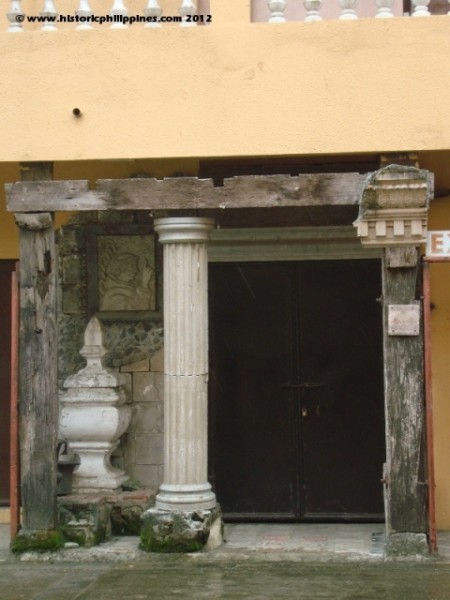
And as we leave the parish courtyard, we see re-constructed a portion of the exterior walls, pillars, lintel and doors of the original church that were salvaged after Lady Caycay’s 1948 visit. All in all this was a very rewarding exploration for our team – something enjoyable and quite instructive, thanks to our guide and escort Jerry M Anas, the Tourism and Information Officer for the Leganes LGU.

This work is licensed under a Creative Commons Attribution-ShareAlike 3.0 Unported License.



 Philippine Peso Exchange Rate