

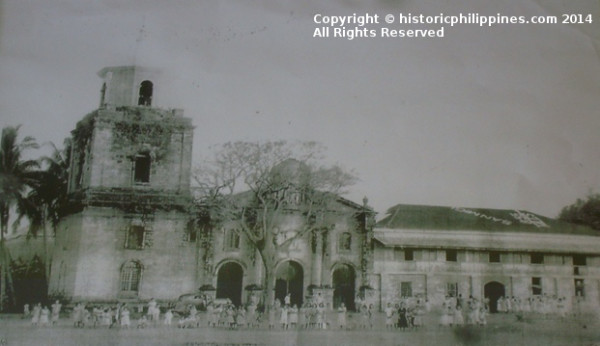
The Original Church and Convento built between 1875 and 1882
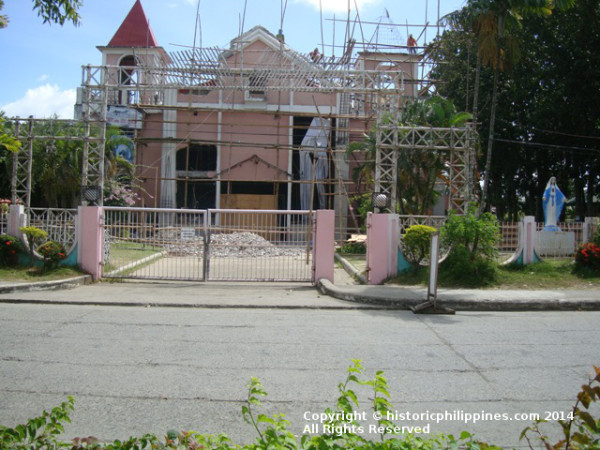
It was quite a surprise to arrive at St Michael the Archangel Church that Wednesday morning fully expecting to see this very colourful church which in the last photos I had seen was painted pink and trimmed in white and what did we find? A massive construction site.
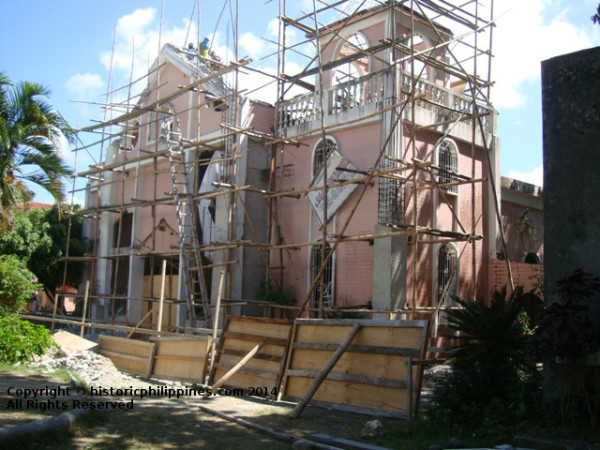
The Church as it appears today, under a massive renovations program.
Whoa, what’s happening here? Have we missed something? Was this one of the many churches damaged when Typhoon Yolanda passed through a few months ago? Afterall, we had heard reports following the storm of quite a bit of damage being suffered not so far from home. San Miguel is about 20 kilometres west of us and the limit of damages was principally centred about 20 to 30 kilometres away to the north, the damage was centred more towards Dumangas and the other coastal communities up that way.
This is clearly not due to Typhoon Yolanda. This is a major renovations program undertaken by the San Miguel faithful to restore their Church to its former glory. But, before we explore the renovations program, let’s take a look at the history of this place and of its church.
The area’s first inhabitants were the Aetas tribe who lived and foraged for a livelihood in the rich valley around the AgananRiver. They were eventually replaced by Malayans who arrived from Borneo settled in the area and effectively forced the Aetas into the surrounding mountains. It is said that it is the Malayans who really started the development of the area. The small villages of Bongol and Ambolong along the river and nearby Anggoy Brook were merged with with Anggoy Ranch which later, under Spanish rule became the town we know today as San Miguel.
The Spaniards amalgamated these small settlements in the much larger Encomienda of Oton, which was by then one of the main centres of commerce and administration in the region. As these settlements grew larger, there was a desire to separate from Oton and form another regional centre. This the Spaniards agreed to and the newest settlement area including Bongol, Ambolong and Anggoy Ranch were brought together in the settlement of Ermita, which is about 3 kilometers from the current town site. The inconvenience of having to travel 3 kilometers to the ‘town centre’ was brought home to the Spaniards and they finally agreed to move their centre of operations yet again, closer to the larger concentrations of population at Anggoy Ranch where a new stone church was built and a Town Plaza was developed. Anggoy became the centre of the new Community which has morphed over the years into the town of San Miguel.
Legend has it that when the church was completed, the Archdiocese of Jaro decided to separate the parishes of Alimodian, Leon, and San Migual. So Three(3) Patron Saints were sent to three parishes. They were Saint Catherine de Aragon, Saint Thomas de Villanueva as Saint Michael de Archangel carried by carts drawn by Carabaos. Upon arriving San Miguel, they decided to leave St. Thomas de Villanueva but the carabao carrying St. Michael de Archangel did not continue his journey to Alimodian. No matter how they beat and prod the animal to continue walking, it insisted to stay. Thus instead leaving St. Thomas to be the Patron Saint of San Miguel, St. Michal de Archangel becomes its Patron Saint.
The name San Miguel first appears in the early 1800s when it is said that on May the 8th, 1805 when 60 marauders and bandits under Magua-ay ransacked the convent and held Padre Nicolas de Concepcion prisoner. St Michael the Archangel was said to have appeared and ‘scared off’ the raiders sparing the town from further mayhem.
The big church was built in 1875 under Capitan Domingo Salovino and inaugurated in 1882 under Capitan Jose sales.
The Church we see above, suffered greatly over the years since it opened in 1882. Serious damage was suffered during the Revolution but most especially during the 2nd World War when the Church and Convento were in fact demolished to prevent the Japanese from using it. The ‘second iteration’ of the Church was constructed in the early 1950’s and this is what it looked like at the time.
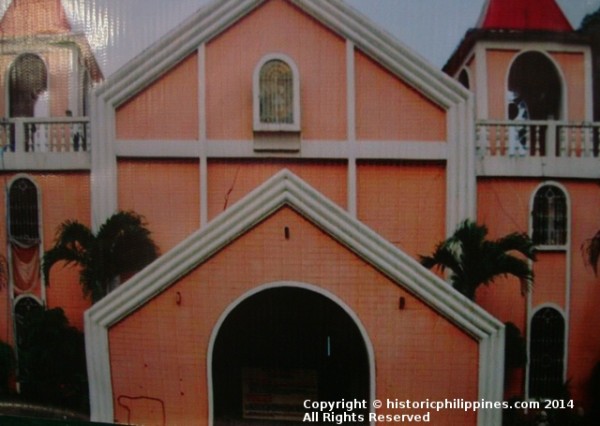
The Church as it was re-built in the early 1950s
Various renovations and changes were made to it over the years since to the point where as a result of the Massive Earthquake of October 15th, 2013, serious damage was caused to the façade and some areas of the interior to necessitate a major new renovation project. And that is what we see today…they project is underway and it is termed the “30:60” project.
The Parish Priest Monsignor Jose Marie Amado Delgado announced it as follows: The Church will be fully renovated by 2018 (60 month) and will raise the necessary funds, estimated at Php 30 Million by the time the project ends.
This is an update we saw posted on a bulletin board in the church lobby:
Here is what work on the site looks like when we visited during the last week of January 2014.
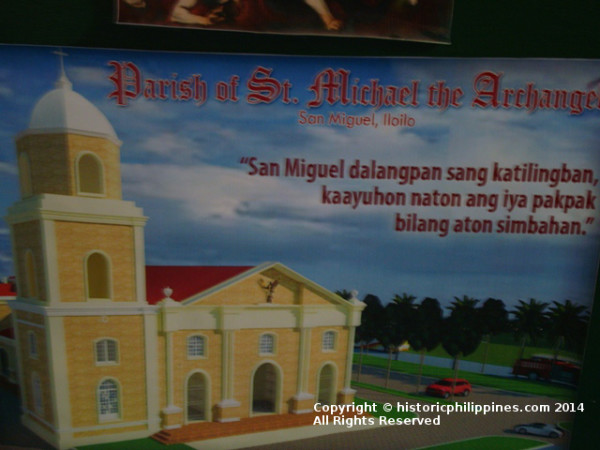
The plan we were told was to return the ‘look of the church’ to what it was in the early 1940s, something like this:
Minus the Convento, of course.
So what does it look like insude at the moment? Here, you are, take a look:
The parishioners are very generous people, not only are the contributing to the complete renovation of their Church, they are also providing support for those unfortunates who suffered majestic losses as a result of the Earthquake of October 2013 and the devastation of Typhoon Yolanda. What can you say about the generosity of people like this. It is truly awe inspiring.
But then, take a stroll outside and see what’s happening:
Unfortunately, for all of us, there is little or no written history of this Church or the original settlements in the area. We would have liked to have a more detailed historical exploration of this place, but it was simply not possible at this time. Just like many of the other places we have visited in the past, we’d like to have more information and details on the development of the place. That, we’re sorry to say, will have to wait for another time.
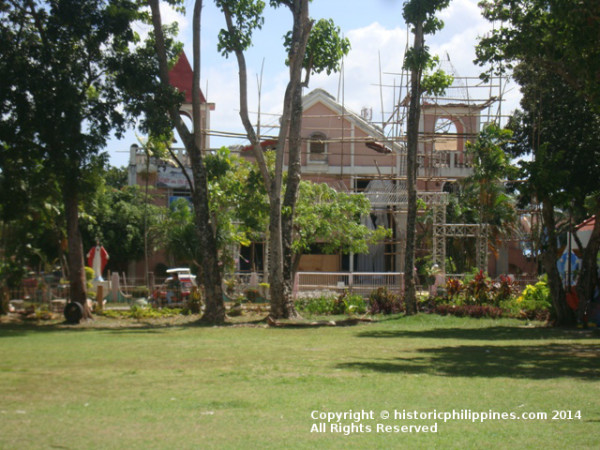
But, there is some saving graces. We mentioned that early on in the 1850s or 1860s that the first church was built and a Plaza laid out in front of it…well, here is the Plaza, or a part of it, as it stands today.
With that, it was lunch time and we headed back into town for a well deserved lunch break and we ended up at one of my favourite places in Iloilo:
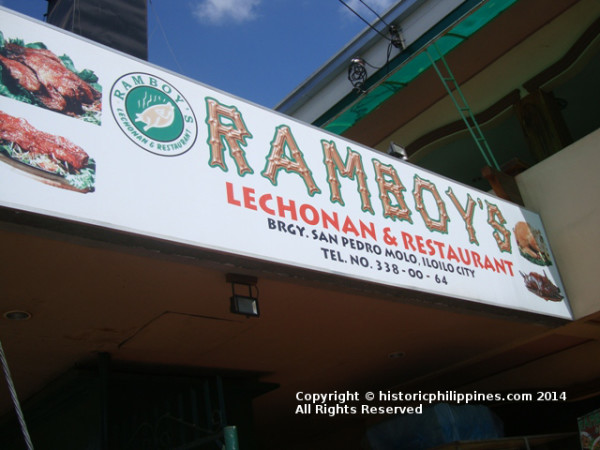
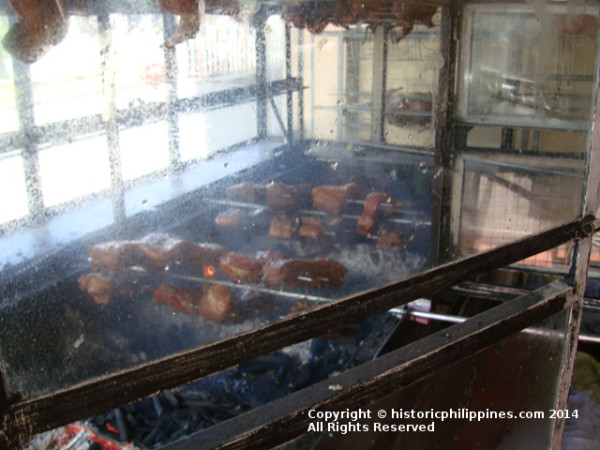
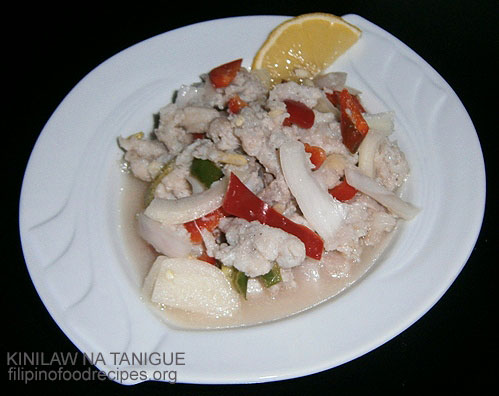
Wrong! Too much fat for someone with a heart condition…so I always settle for:

This work is licensed under a Creative Commons Attribution-ShareAlike 3.0 Unported License.
[feelbox]