

Heritage Rating:  for more information on rating press here
To listen to:
Bach’s Magnificat BWV 243 in D, Quia fecit mini magna click the arrow below
We drove from the port for no more than 5 minutes and arrived at the base of Balaan Bukid. Balaan Bukid translates from the Ilonggo dialect to English as “Holy Mountain”. On our way, since it was low tide, we passed an area where peoples’ homes were built over the water and the area surrounding them looked like a veritable garbage dump.
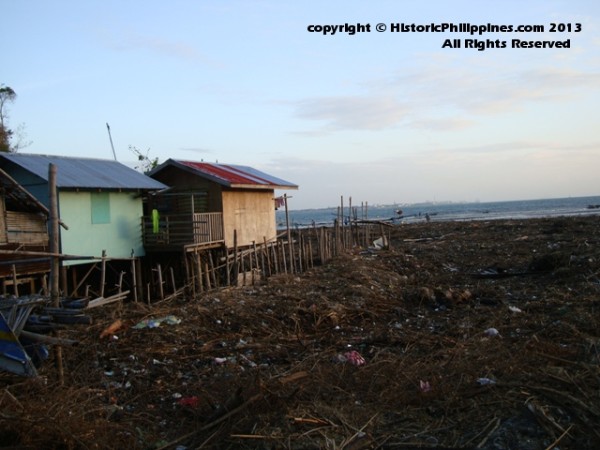
Home built along the shore, surrounded by what I thought was a garbage dump.
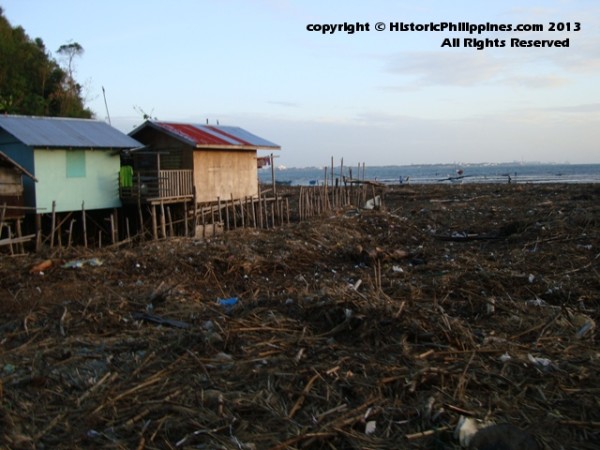
It’s actually a Mangrove Swamp.
I was absolutely flabbergasted by what I perceived were the almost inhumane conditions, these poor folks had to live in until just a few minutes later I discovered that this area was in fact a “mangrove swamp” which is being rehabilitated by the Island government and the Department of Natural Resources.
Just around the bend in the road ahead we arrived at another surprise, as usual I couldn’t figure it out and it took me several minutes during our walk up the trail to finally figure it out.
This is what I saw just as we entered the area of the Balaan Bukid Shrine, which had me puzzled.
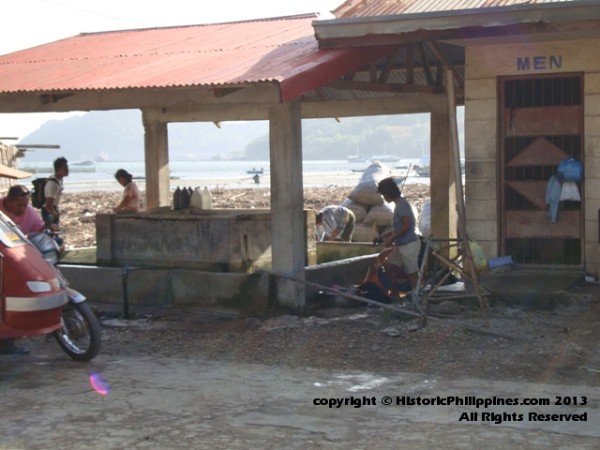
What on earth is it? Read on to find out…
And in the same area an elderly lady was cleaning up the Shrine’s sign which was overgrown with the most beautiful pink and red bougainvilleas; she was doing that just an ordinary pair of scissors.
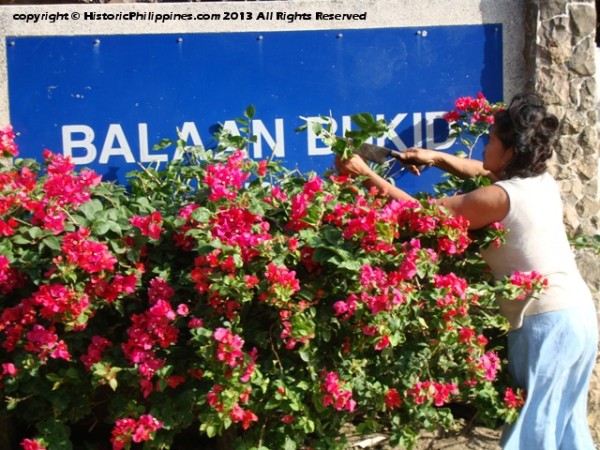
We headed up the road for no more than another couple of hundred yards to arrive at “the end of road” there was no parking area except the side of the road which already was not really wide enough to accommodate any more than one vehicle at a time, but Nilo, the pilot, simply parked there as close to the side of the road as possible and locked up.
“We’re going this way, Bro” he said and led us onwards. The trail we followed was not the best, and certainly not what I expected from a Shrine of national renown, but then again that’s Philippines.
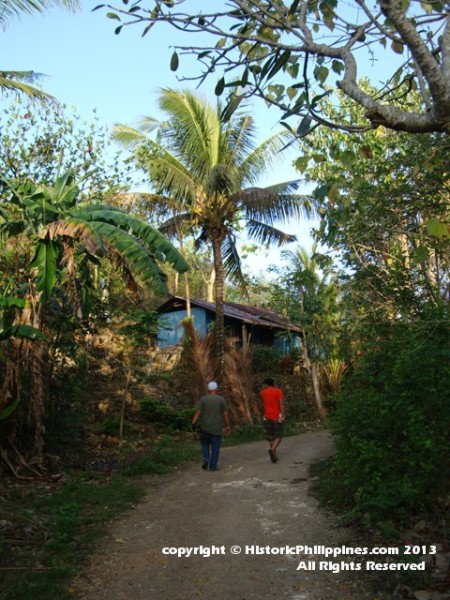
Nilo & Joemarie lead the way up the mountain.
It’s while we were trekking up the mountain that I realized what that building at the bottom of the hill was. After seeing people coming down the hill toting their towels and water cans and others heading up hill with wet hair and what looked like full water cans…it dawned on me. The building is a communal “bathroom” where the people who live on the mountain get their daily water supply and shower or bathe every morning or evening. There doesn’t appear to be any water available on the mountain although we did spot electrical poles so they do have electricity…interesting.
What I also found interesting was the huge number of children heading both ways, many of those heading down hill were already in their school uniforms so it wasn’t hard to figure out that they were on their way to school. It was great to be greeted by them all: “Good morninggg, Sir”. It was great by I felt that out of respect for them that I would not photograph them this time. That might have the makings of another interesting essay some time soon…
As we progress up the mountain we see the Stations of the Way of the Cross dotted about every 150 or 200 yards apart all the way up the mountain…they are old and need some renovations and refurbishing, but it quite something to experience.

In addition to that, several people are building new homes in the forests along the path, they are generally made of ‘hollow block’ which in itself must be an awful chore, having to haul everything up the mountain by brute human force…ain’t no trucks or other vehicles able to get up here…


By this point, I am starting to feel the strain – I’m supposedly, as my children enjoy calling me, “a grouchy, old fart”. Well I don’t really know about ‘grouchy’ but I’ll admit to ‘old fart’. On top of that I have a bit of a heart condition and as is the case with many people my age, I’m not in the best shape possible, although I do walk about 1 – 1.5 miles 5 days a week. I just have to take a break, a watering stop. Joemarie produces one of the water bottles “She who must be Obeyed” gave him before we left making sure the tell him to have me drink lots of it during the day…I sit on a tree trunk and take a look around…
Whoa… What a sight!


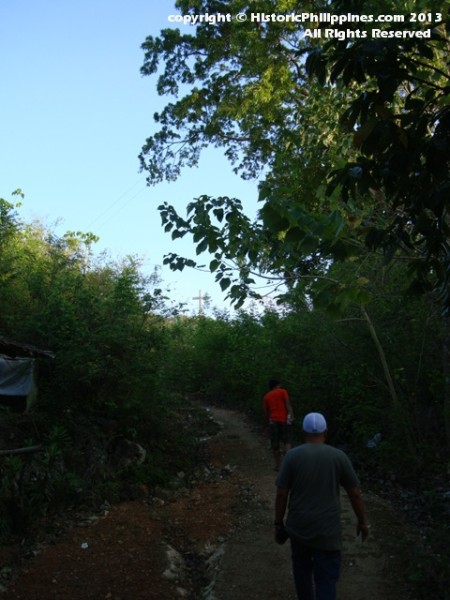
We’re off again and we can barely see the Giant Cross ahead through the early morning mist.
The climb is becoming steeper and more difficult for the “Old Fart” and I’m slowing down…can you imagine if we had done this climb in the middle of the day rather than just after sunrise – at least it’s a great deal cooler now and there’s a fresh breeze. This would be a true “Calvary” for anyone needing to do penance if they did it in the heat of the day.
We finally break out of the forest and this is the sight that greets us at the top of Balaan Bukind, the Ave Maria Shrine which was built in 1954 – the Marian Year.
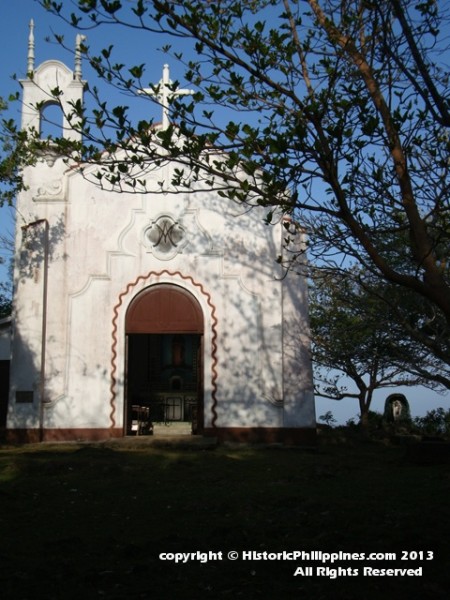
Before visiting the Chapel we decided to explore the top of the mountain enjoying the superb views of Iloilo City across the Guimaras Strait. What a lovely peaceful place.
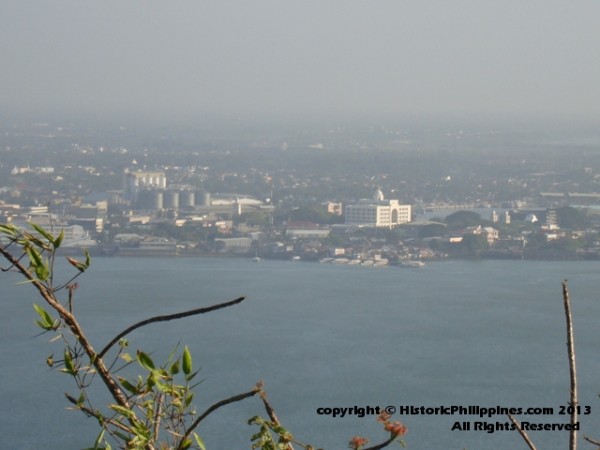
You can see Iloil0 City’s new City Hall across the Guimaras Strait.
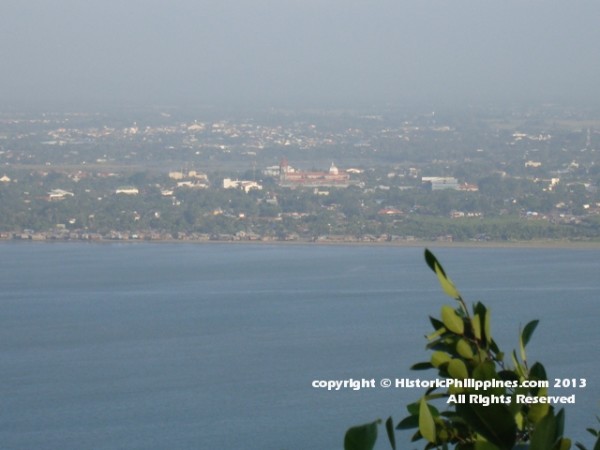
You can even see St Anne’s Church in Molo (the large red roof in the centre of the photo).
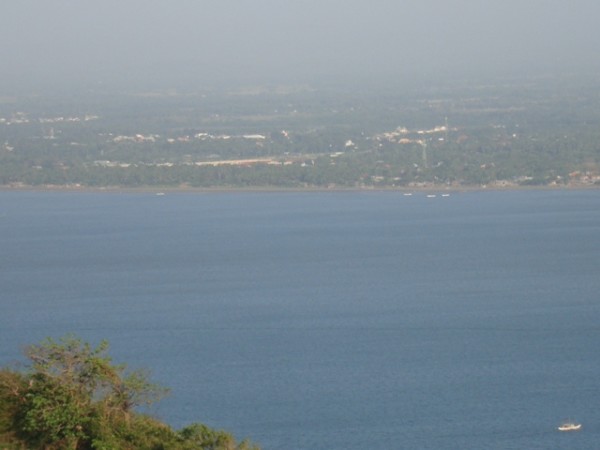
That’s Oton, in the distance to the left.
The land for this great spot was donated by The Heirs of the Late Don Raymundo Melliza Angulo in 1954.
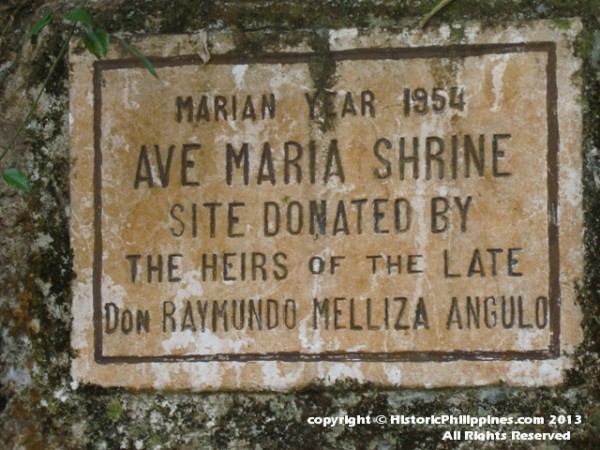
We learn more about who Don Raymundo was courtesy of a Privileged Speech made by Demy P. Sonza an SP Member for the 2nd District of Iloilo, during the regular session of the Sangguniang Panlalawigan of Iloilo, held at the Provincial Capitol, IloiloCity on February 1, 2011.
The speech reads as follows:
“THE opening of the port of Iloilo to international trade in 1855 spurred the development of the incipient sugar industry in Iloilo and Negros. The “Sugar Boom” started in the 1860’s. By the 1880’s, many Ilonggo families were already rich enough to send their children to college in Manila and some even to schools in Europe.
Among the young Ilonggos who studied abroad was Raymundo Melliza who was born in Molo on March 15, 1854. His parents were Cornelio Melliza and Gregoria Angulo. Don Cornelio Melliza, was a rich trader and shipowner.
Raymundo obtained the bachelor of arts degree from the University of Sto. Tomas in 1873. Sailing to Spain for further studies, he enrolled at the University of Barcelona. The following year he transferred to the University of Sevilla. From this university he got the licenciate in law, and finally the doctorate (doctorada en leyes y canones ecclesiasticus) in 1879 when he was 25 years old.
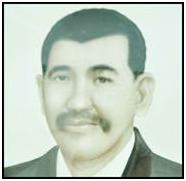
Don Raymundo Melliza in about 1906.
Unlike Graciano Lopez Jaena who suffered from penury while in Spain, Melliza enjoyed la dulce vida en España because he had enough money. Felix Roxas of Batangas who was also in Spain at the time, wrote with a tinge of envy that Melliza “bought four splendid Andalucian horses for breeding purposes when he returned to Iloilo.”
Back in Iloilo in 1880, Don Raymundo was appointed promotor fiscal of Negros Occidental. He was made a judge of the Court of First Instance in 1883 and served in different provinces until 1886. But perhaps because of the meager salary, he did not stay long in government service. He resigned to practice law and engage in business.
Iloilo did not participate in the Revolution of 1896. By March 1898, however, a group of Ilonggo ilustrados, including Don Raymundo Melliza, met in Molo and formed the Comite Conspirador to prepare for the Revolution. As an offshoot of the Spanish-American War, Commodore George Dewey destroyed the Spanish naval force in Manila Bay on May 1, 1898. General Emilio Aguinaldo launched the second stage of the Philippine Revolution later in that month and on June 12, proclaimed Philippine independence in Kawit, Cavite.
In an effort to keep the Ilonggos loyal to Spain, General Diego de los Rios, commanding general of the Spanish forces in Southern Philippines, created the Council for Reforms. He named the following as members of the council: Raymundo Melliza, Victorino Mapa, Fernando Salas, Jovito Yusay who were all lawyers, and Venancio Concepcion, businessman. Unknown to De los Rios, all these prominent men were members of the Comite Conspirador.
Manila fell into the hands of the Americans on August 13, 1898. The Spanish colonial government transferred its capital to Iloilo City and named Diego De los Rios as the new Governor General. The Revolution flared up in Iloilo in October. On November 17, the Ilonggo leaders convened in Sta. Barbara and organized the Revolutionary Government of the Visayas with Roque Lopez as president. General Martin Delgado was formally designated commander of the Revolutionary Army which was referred to as the Ejercito Libertador.
By the middle of December, the Ejercito Libertador was laying siege to Iloilo City. When General De los Rios learned that the Treaty of Paris ending the Spanish-American War was signed on December 10, he lost the will to fight and negotiated for peace. On December 24, he sailed with his troops to Zamboanga enroute to Spain. The following morning, Christmas day, General Delgado’s Liberating Army staged a victory parade into la muy leal y noble Ciudad de Iloilo.
The Ilonggos reorganized the local government of Iloilo City and Juan de Leon was chosen the local president or city mayor. Raymundo Melliza was named local president of Molo.
The last Spanish governor-general sailed away on December 24, but on December 28, four American warships arrived at the Iloilo harbor from Manila. The commander of the expedition, Gen. Marcus Miller, requested permission to land saying that they had come as friends. But the Ilonggo officials refused to grant his request without expressed instructions from General Emilio Aguinaldo of the Philippine Revolutionary Government.
Miller could not force his way because U.S. President William McKinley had ordered that armed conflict with the Filipinos should be avoided while the Treaty of Paris was pending ratification by the U.S. Senate. One day, Gen. Miller tried diplomacy. He sent his army surgeon, Dr. Henry DuR. Phelan, to negotiate with the Ilonggo officials.
“We have sacrificed lives and money to destroy the power of Spain,” Phelan told the Ilonggo leaders.
Melliza who was the Ilonggo spokesperson replied, “We have also made great sacrifices in lives.” He paused for a moment and added, “We have the power to govern ourselves and need no assistance.”
Failing to persuade the native officials to let the American ships land, Phelan dropped a threat. He said the Americans could destroy Iloilo any time with the big guns from their ships. Melliza stood up and forcefully answered, “We will withdraw to the mountains and repeat the North American Indian warfare. You must not forget that.”
On January 17, 1899, Roque Lopez resigned as president of the Federal State of the Visayas in order to take command of a brigade of the Revolutionary Army. Raymundo Melliza was elected the new president, with Nicolas Jalandoni as vice president.
The Filipino-American War broke out in Luzon on February 4, and on February 11 General Miller bombarded Iloilo and landed his troops. The Filipino forces fell back to their line of defense outside Jaro and checked the American advance. The Filipino forces held this line for eight months. It was only in November when more troops had arrived from the United States, that the Americans broke through the line. Gen. Delgado resorted to guerrilla warfare which lasted more than a year.
Melliza was not able to flee when the Americans took Iloilo City. He surrendered. On May 29, 1899, Gen. Elwell Otis, the Military Governor of the Philippines, reorganized the Supreme Court. He named Melliza president of the Military Branch of the Supreme Court with Ambrosio Rianzares, Julio Llorente, Major R.W. Young, and Captain W.E. Brikhimer as magistrates.
Melliza served on the Supreme Court from May 29, 1899 to May 4, 1900 when he resigned because of ill health. He returned to Iloilo. Guerrilla warfare was still raging in the province. In November that year, the American authorities asked him to join the Peace Committee that would appeal to Gen. Delgado and his guerrilla leaders to surrender. The other members of the Peace Committee were Gen. Pablo Araneta, Cornelio Melliza, Victorino Mapa, Jovito Yusay, and Juan de Leon.
Gen. Delgado formally surrendered on Feb. 2, 1901 during the fiesta of Jaro. On April 11, he was installed as the first governor of Iloilo Province and in the first local elections held on March 3, 1902, he was elected to the same position.
Melliza, on the other hand, founded the Instituto de Molo in 1901 with Manuel Locsin, a fellow lawyer. Melliza also became first vice president of the Asociacion de Agricola de Panay y Negros that was formed on October 11, 1903. The other officers of the Asociacion were Juan de Leon, president; Ruperto Montinola, second vice president; Benito Lopez, Francisco Villanueva, Manuel Locsin, Claudio Lopez, Juan Araneta, Martin Delgado, board members; Esteban de la Rama, treasurer; and Jose Lopez Vito, secretary.
In 1904, Delgado did not run for reelection as governor. He opted to run for, municipal president of Sta. Barbara. Melliza decided to run for governor. His opponents were Juan de Leon and Benito Lopez, the president and vice president, respectively, of Iloilo City. Don Raymundo won and became the second governor of Iloilo.
Even when he was already governor, Melliza remained active in agriculture and business. He was elected president of the Iloilo Chamber of Commerce and Agriculture. In this capacity, he sent a petition to the U.S. Congress to remove the import duties (Dingley Tariff) on Philippine sugar entering the United States. This was probably the first formal petition sent to Washington D.C. on the subject. The Filipinos campaign for the lifting of U.S. import tax on Philippine sugar finally succeeded in 1909 when the U.S. Congress approved the Payne-Aldrich Tariff Act.
Benito Lopez prepared well for his return bout with Governor Melliza. In the election of February 1, 1906, 28-year old Lopez beat the 52-year old incumbent with an overwhelming majority. The following year, Melliza ran for assemblyman in the Second District, but lost to a young lawyer, 25-year old Nicolas Jalandoni who subsequently became the speaker protempore of the First Philippine Assembly.
Don Raymundo devoted his time to the Instituto de Molo which produced such luminaries as Assemblyman Francisco Varona, poet laureate Flavio Zaragoza Cano, Concon Delegate Delfin Gumban, Governor Timoteo Consing, Mayor Serapion Torre, and Assemblyman Jose D. Evangelista. Melliza also remained active in community affairs. For instance, he was on the board of the Asociacion de los Veteranos de la Revolucion. One of the projects of the veterans association was the construction of the monument to Lt. Col. Francisco Jalandoni that stands in front of the Iloilo National High School.
Melliza retired from politics. But in 1935 when he was already 81, he was persuaded to run again in the first presidential elections under the Philippine Commonwealth. The Nacionalista Party put up Manuel Quezon for president and Sergio Osmeña for vice president. Melliza ran for vice president together with General Emilio Aguinaldo. The third tandem was composed of Bishop Gregorio Aglipay and Juan Nabong.
As expected, Quezon and Osmeña won. Why did two old men, Aguinaldo and Melliza, run when they knew they did not have any chance to win? My own guess is that they ran because they believed that in a democratic election, there should be more than one candidate to a position.
Raymundo Melliza was married to Germana Conlu. Their children were Pio Sian Melliza, Vicente Sian Melliza, Remedios, married to Eusebio Villanueva, and Teresa who was married to a Valdevarona. Don Raymundo died on November 11, 1945 at age 90 years and nine months and was buried at the Molo Catholic Cemetery.
To continue on our exploration of Guimaras Island, come back for Part III of the story to follow soon
…

This work is licensed under a Creative Commons Attribution-ShareAlike 3.0 Unported License.