
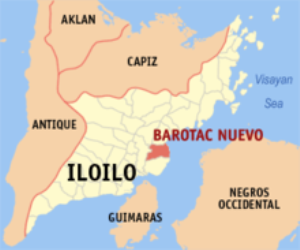
The driving distance from our jumping off point at the SM City parking lot in Iloilo to the Church of St Anthony’s Church in Barotac Nuevo is approximately 35 kilometres. This translates into a driving time of about 1 hour to 1½ hours.
HP Heritage Rating:  for more information click here
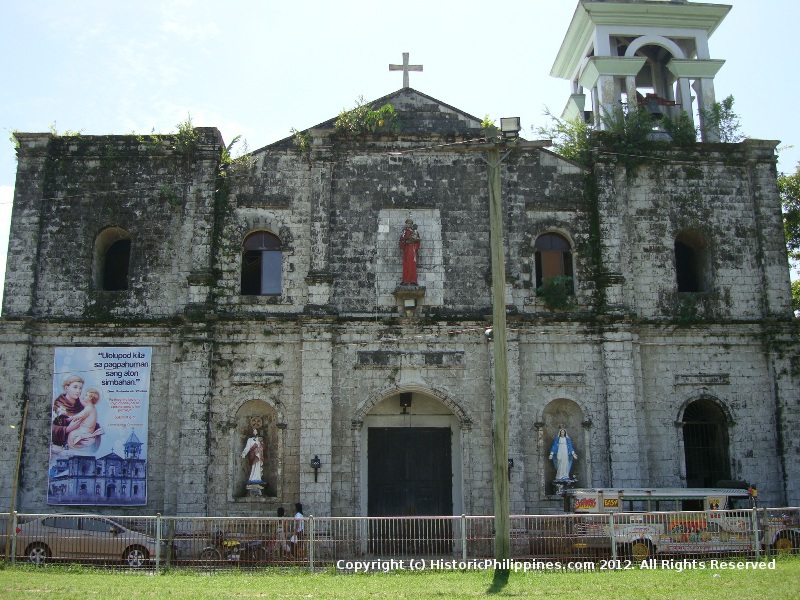
In the late 16th century, Conquistadores arrived in the area of Barotac Nuevo, which was then called Ginhawa-an, and after pacifying the natives established a settlement on the banks of the river Jalaur and set about spreading the gospel. It was at this time, during 1573 that they built the first bamboo and nipa chapel in the settlement.
The area prospered as a result of the trade that was established with neighbouring islanders who came to Ginhawa-an to barter goods and to trade with the local residents. The soldiers left the area in 1574 and the natives rebelled burning the chapel and murdering the resident friar. When this disturbing news reached the commanders of the military forces, they ordered a squadron of Conquistadores to return to Ginwaha-an and as a result of their retaliatory action the settlement was burned and the native including their leader Sugaob were all killed.
Additional soldiers arrived in 1581 along with Friar Juan de Peñanosa, who was the parish priest of Dumangas. Together, they reinstituted the campaign of Christianization and in fact murdered those who refused to “get with the program”. It was at this time that Ginhawa-an became a sitio of Dumangas, which had by now attained the status of a Pueblo.
Between 1589 and 1595 Friar Bartolome de Castillo and others built a pathway between Gihawa-an and the town site of Dumangas. This development assisted in the further development of the area around Barotac Nuevo (Ginhawa-an) and eventually led to the naming of the settlement as a sitio of Dumangas in about 1600.
The settlement’s name changed to Barotac during this time when a volcanic event covered the entire area with ash and destroyed the crops and as a result residents from far and wide referred to the place as Mulatac which in 1701 became a Pueblo still attached to Dumangas.
Bario Mulatac became a full fledged parish in 1710 and Friar Luis Gomez de Padilla became the parish priest.
The building of the church was undertaken at this time and the new structure was built in the Romanesque Style. It took almost 40 years before the work on the church was completed in 1750. Unfortunately, a massive earthquake in 1758 levelled the church. Reconstruction started almost immediately under Friar Ramon Piaguda y Araujo who built the church of coral stone and bricks and added a Convento on the east side of the church. Both were completed in 1802.
The name Mulatac was changed to Barotac Nuevo in March of 1812. The name is “derived from the Spanish words for Mud which is Baro and Lutac which is the same as Mud”. The second part of the name Nuevo was added to distinguish the town from the other Barotac 30 kilometers away.
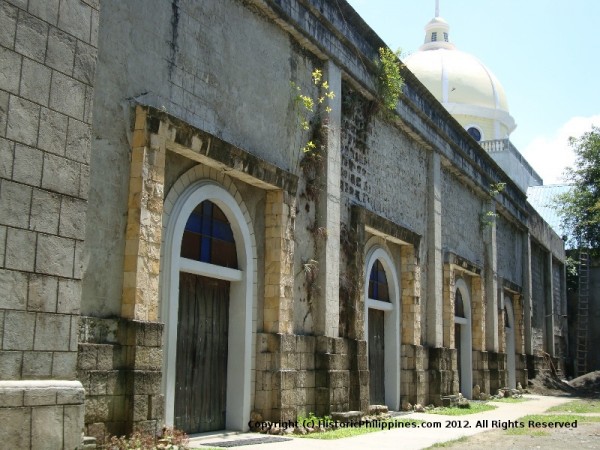
In 1849 Friar Araujo order the first bell for the belfry and it arrived from Mexico a year later and was installed in the bell tower, where it remains to this day. Several years later in 1872 Father Julian Alonzo, SJ order another bell, this time from Manila which was subsequently installed it in the bell tower, where it is today. In 1885 another bell was added by Fr Calixto Gonzales. As a side note: Fr Gonzales was summarily executed by Filipino solders in 1896 (during the War of Independence) because he apparently provide Spanish soldiers sanctuary in the Church. Finally, in 1896 another bell was installed by Father Antonio Fernandez unfortunately, for some reason, this bell went missing in 1960 and cannot be located.
In 1907 a fire destroyed the church. It was determined to have been a case of arson and the two accused in the case, got off, because the case was dropped for lack of evidence.
The new church built under the guidance of Fr Mariano Conjugacion was completed in 1910.
During World War II Colonel Macario Peralta Jr. ordered that the church and 9its ancillary building be burned in keeping with the Scorched Earth Policy of Filipino forces in order to deny their use to the Japanese occupiers. The Church was spared, but the fire completely destroyed the Convento. In any event, the Japanese used the Church as a garrison between 1942 and 1944.
On June 13th, 1944 the town celebrated its first fiesta since the beginning of the War. Juan Maquiling, a deep penetration agent, planted by Filipino forces in the Japanese garrison attacked those soldiers in the garrison (inside the church) killing them all. The war ended and unfortunately the church was not used until during 1947.
In 1966 a modern belfry was added. In the 1970 major reconstruction work was initiated to bring the church up to standard and it was in fact rebuilt in the Gothic Style.
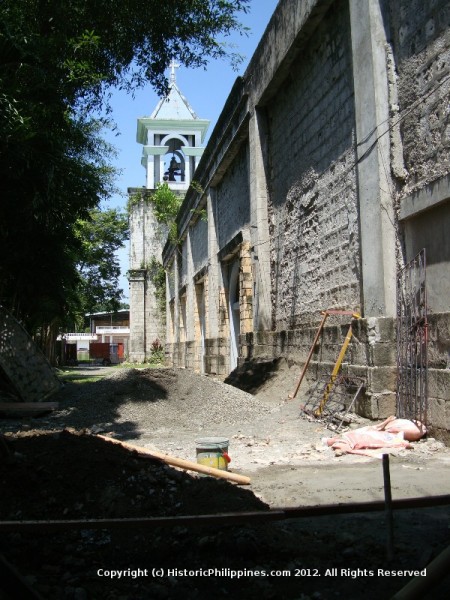
In 1998 under Msgr. Jesus Enojo with the invaluable assistance of Congressman Narciso Montfort the church was declared a National Historic Landmark and government funds were made available for a major re-construction of the church.
The plan involved:
- The removal of the columns in the main aisle of the church,
- The installation of side posts to reinforce the supports of the main roof trusses,
- The installation of a new ceiling throughout and granite floor tiles.
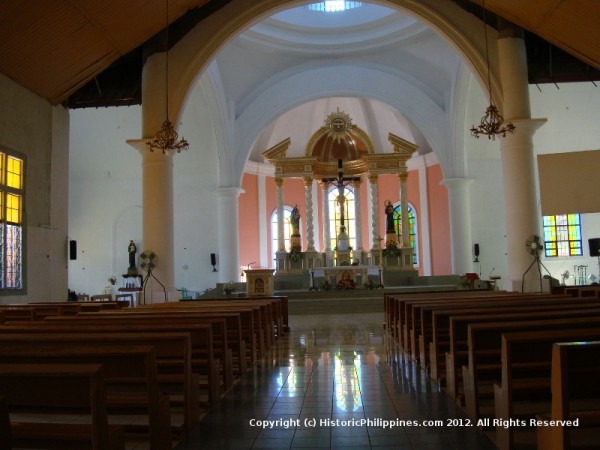
In 2002 under Msgr. Ramon A Pet a Church Building Comission was organized and registered with the SEC in October 2005. The oirganization was tasked with the construction of a new altar with a dome at the end of the church along with:
- A new Convento,
- An Adoration Chapel,
- A new Parish Hall,
- Quarters for the Altar boys,
- A Boutique and the main parking area, and
- Finally, The Cemetery Chapel, Memorial Park and New Niches.
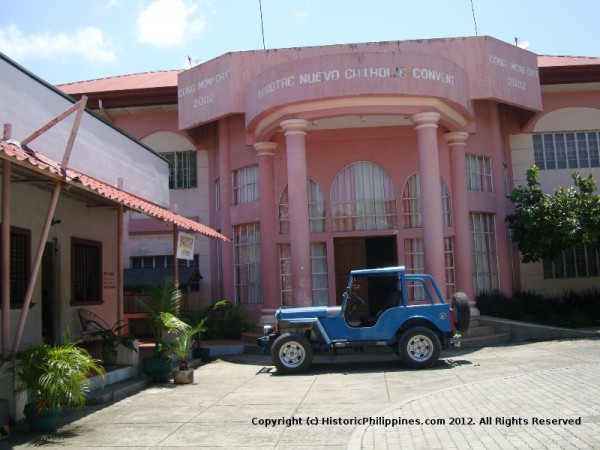
New Convento & Parish Offices
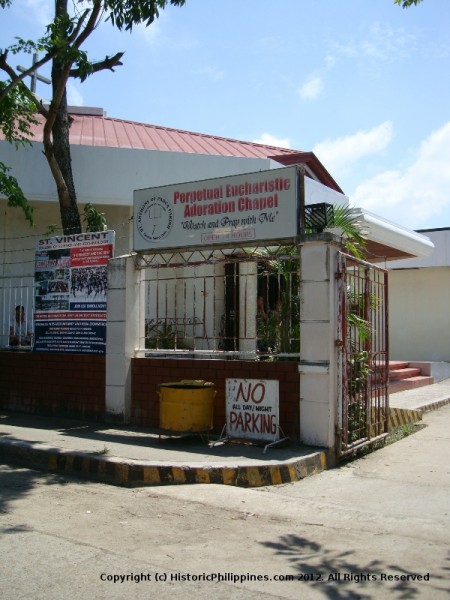
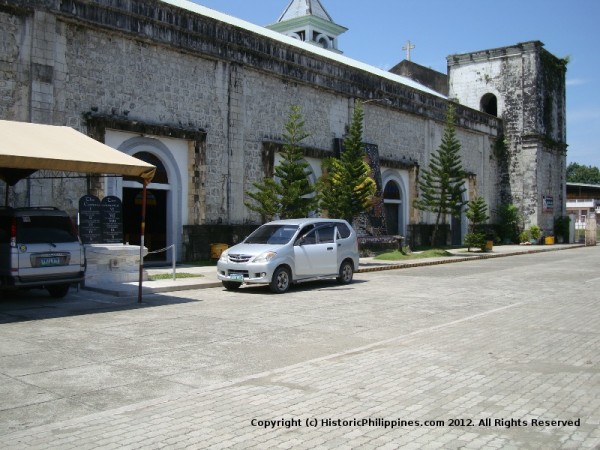
In walking through the church I was impressed by the renovations that had been undertaken, which are for all intents and purposes complete.
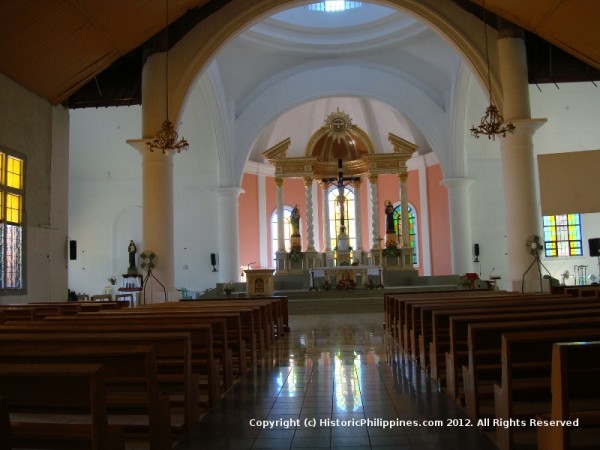
view towards the altar from the rear of the church
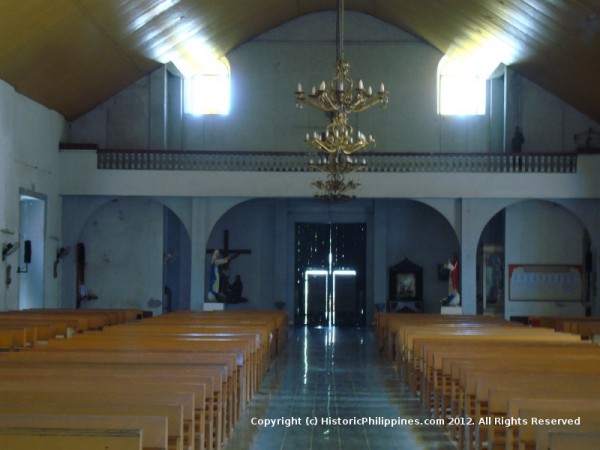
view towards the main entrance from the front of the church
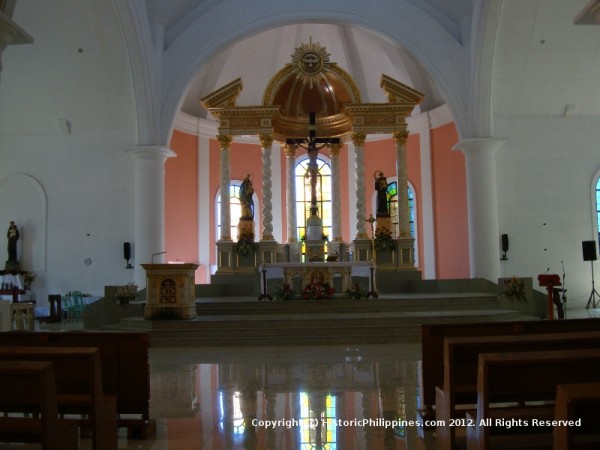
closer view of the new Altar
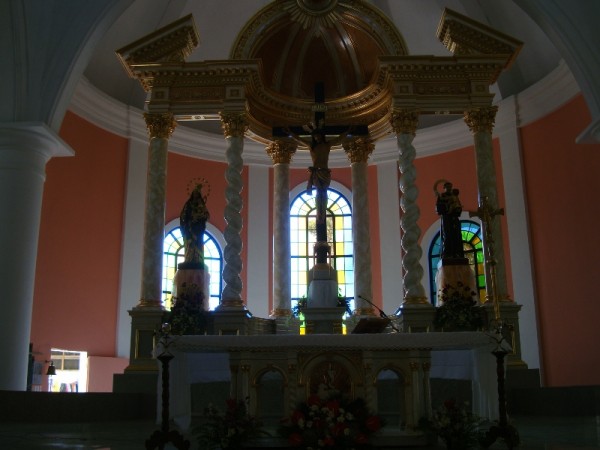
close-up view of the new sanctuary
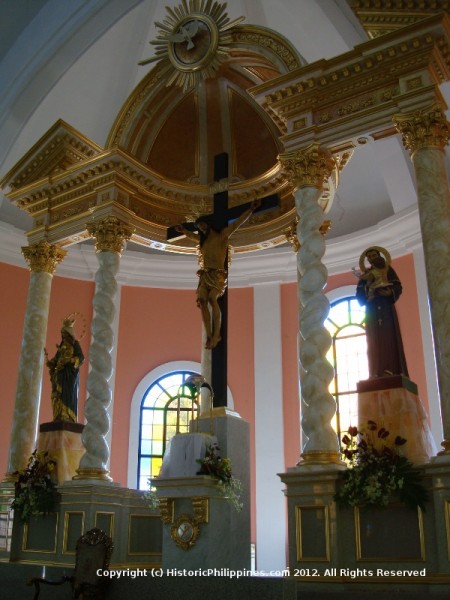
note the dome above the altar
The statues flanking the crucifix are, to the left Mary Queen of the World and to the right St Anthony.
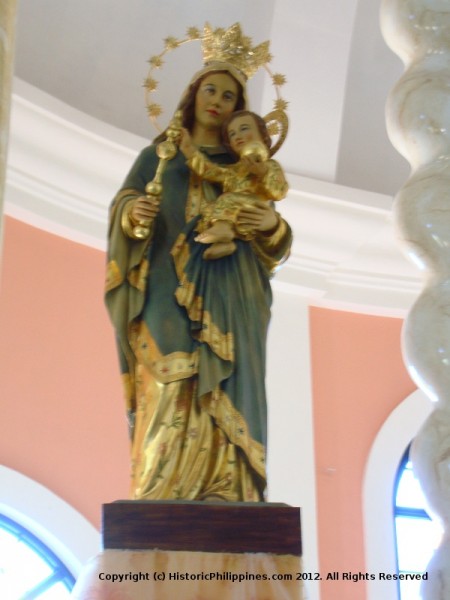
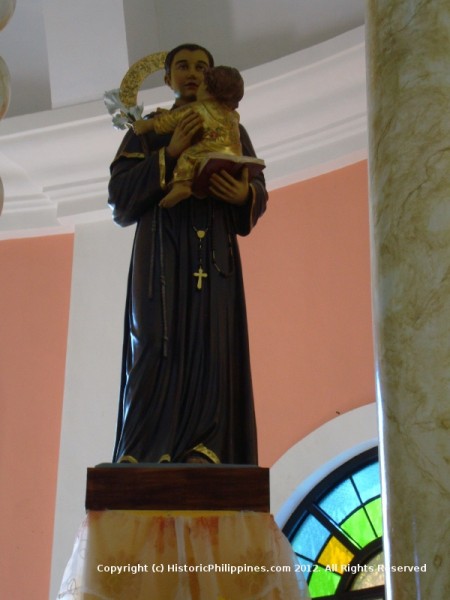
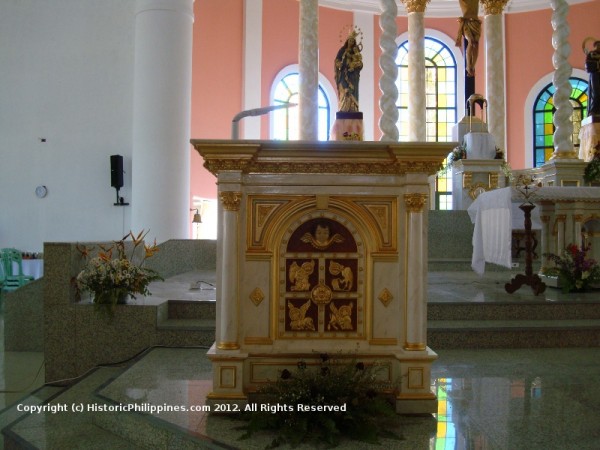
the new pulpit
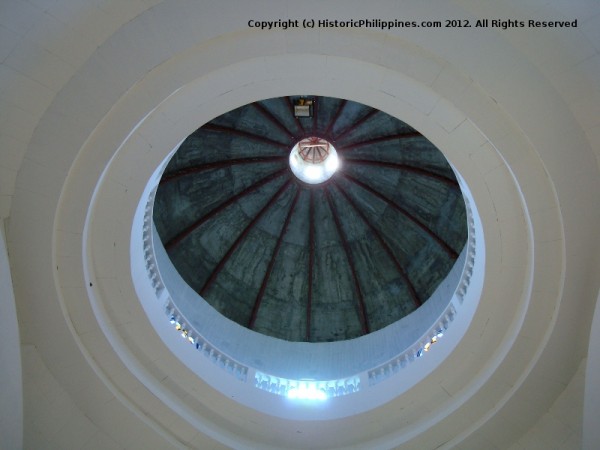
the inside of the dome
Exploring the back of the church in the area of the main entry we found some very interesting items.
a reliquary containing relics of St Anthony
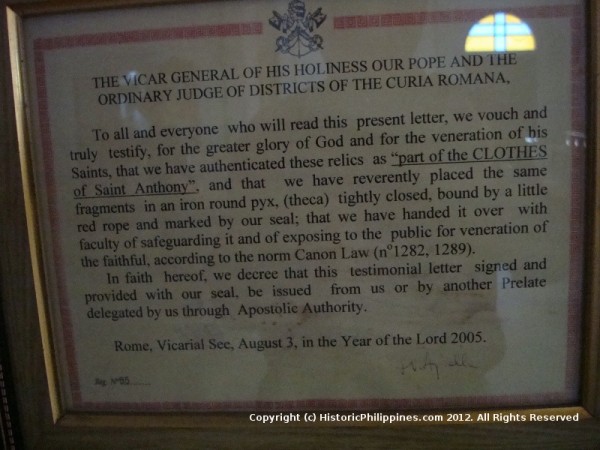
plaque explaining the relics
The plaque reads as follows:
The Vicar General of His Holiness our Pope and The
Ordinary Judge of Districts of the Curia Romana
To all and everyone who will read this present letter, we vouch and
Truly testify, for the greater glory of God and for the veneration of his Saints, that we have authenticated these relics as “part of the CLOTHES of St Anthony” and that we have reverently placed the same Fragments in an iron round pyx, (theca) tightly closed, bound by a little red tape and marked by our seal, that we have handed it over with faculty of safeguarding it and of exposing to the public for veneration of the faithful, according to the norm Canon Law (No 1282, 1289).
In faith hereof, we decree that this testimonial letter signed and provided with our seal be issued from us or by another Prelate delegated by us through Apostolic Authority.
Rome, Vicarial See, August 3 in the year of the Lord 2005
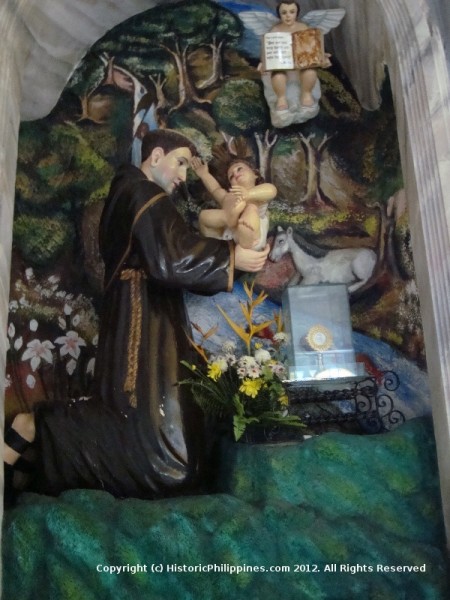
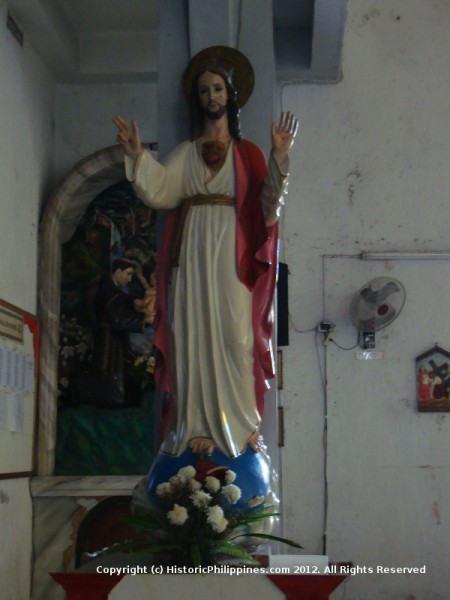
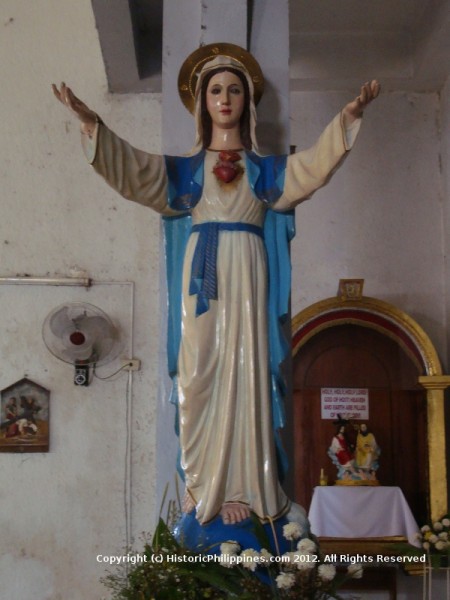
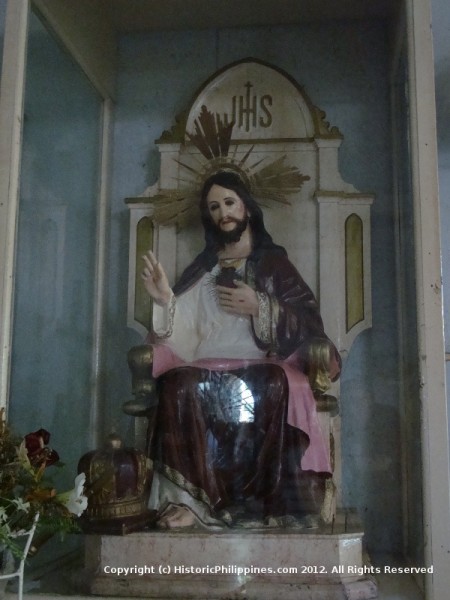
Additional statues are displayed in the area including:
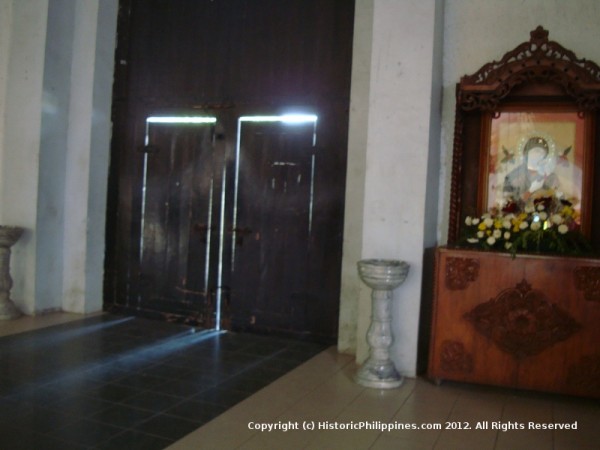
view of the main entrance from inside the lobby
While the interior work in the church is virtually complete, workmen were finishing the laying of the granite floor in the area of the Apse behind the Altar a great deal of work is still being done on the outside, specifically on the east side of the church where we observed workmen reinforcing the wall of the Transept and its entrance. A look at that side of the church indicates a need for some beautification, which is in the plans for this year.
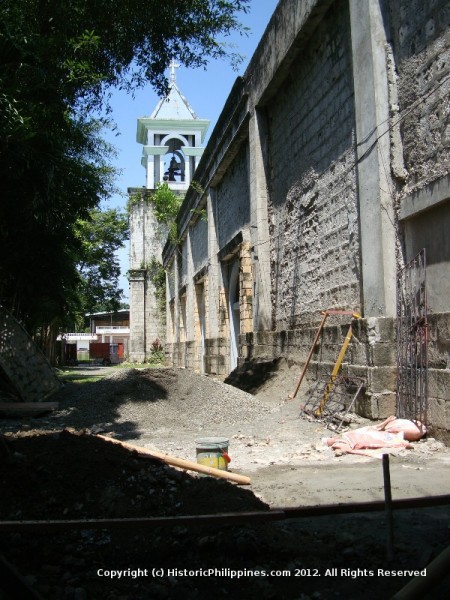
On the west side of the church, where work was completed some years ago there are a few items of interest.
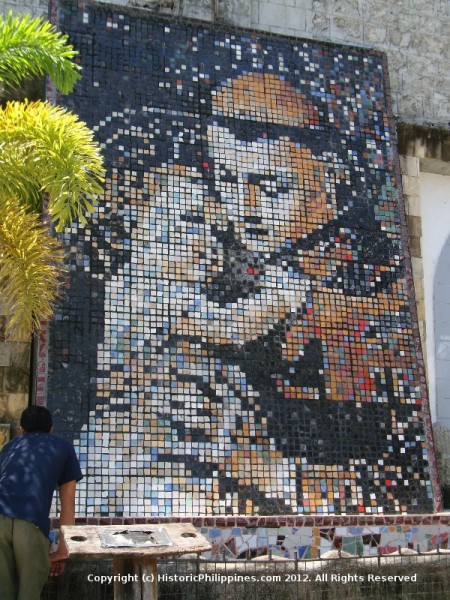
One of the is the very large mosaic of St Anthony adjacent to one of the principal side entrances:
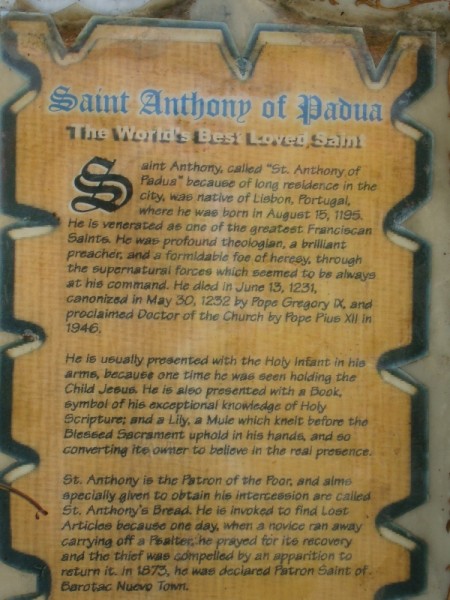
And the accompanying plaque:
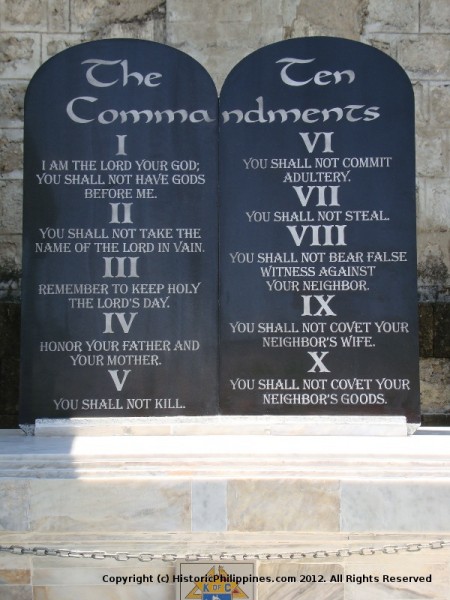
And then the 10 Commandments, placed there by the Knights of Columbus:
As we leave the church, a look at the very plain Gothic Style façade shows us three niches containing the following statues:
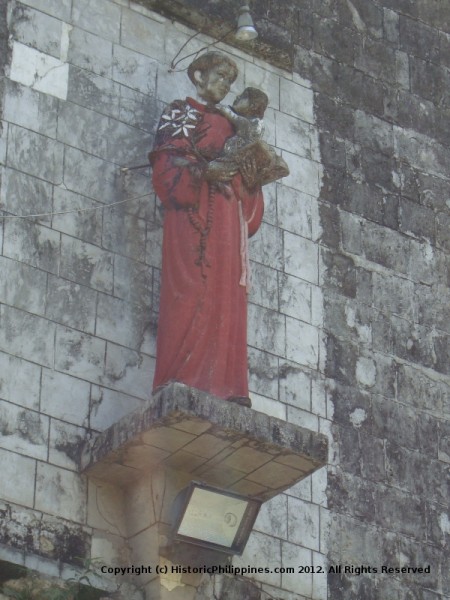
St Anthony of Padua
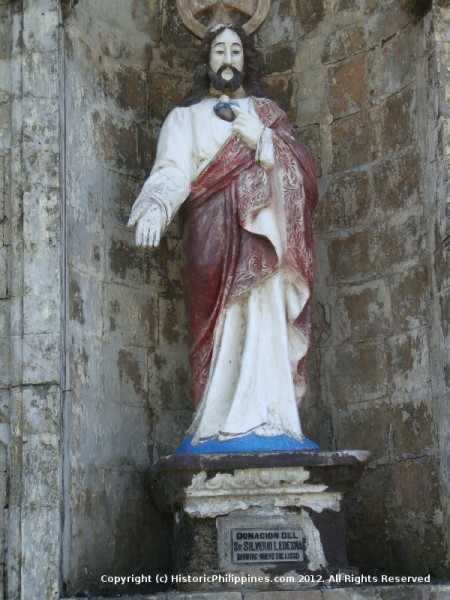
Sacred Heart of Jesus
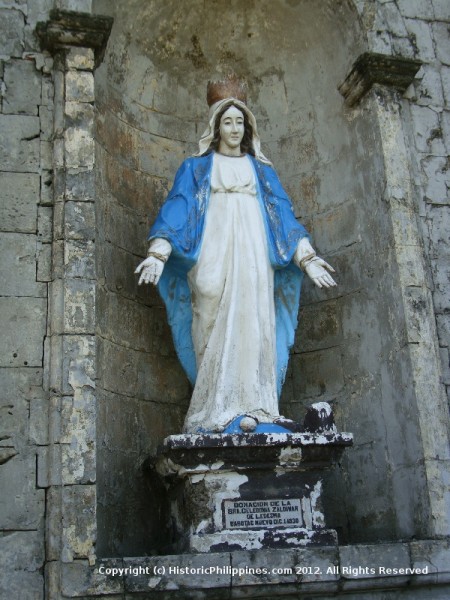
Blessed Virgin Mary

This work is licensed under a Creative Commons Attribution-ShareAlike 3.0 Unported License.


 Iloilo Time