
HERITAGE RATING:  for more information on ratings press here
To listen to:
Bach’s Magnificat BWV 243 in D, Et Misericordia click the arrow below
Last time, we read that the land for the Ave Maria Shrine atop Balaan Bukid had been donated by the heirs of Don Raymundo Melliza Angulo in 1954.
The story continues. The Chapel itself was built by: Dona Ana Ledesma de Lopez, Victoria Lopez de Araneta, Eduardo Lopez and Cesar Lopez. The inscription on the commemorative plaque placed on the exterior wall of the chapel reads:
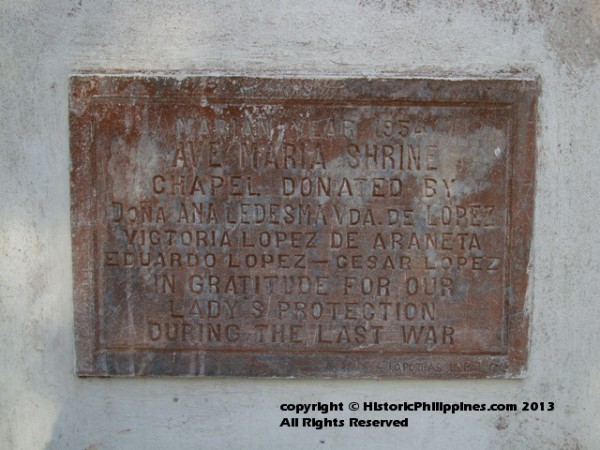
Marian Year 1954, AVE MARIA SHRINE, CHAPEL DONATED BY: DOÑA ANA LEDESMA VDA. DE LOPEZ, VICTORIA LOPEZ DE ARANETA, EDUARDO LOPEZ & CESAR LOPEZ, IN GRATITUDE FOR OUR LADY’S PROTECTION DURING THE LAST WAR
Roaming around the hilltop there are two small grottos overlooking the sea. One of them has a statue of Santo Nino and the other a statue of St Vincent Ferrer.
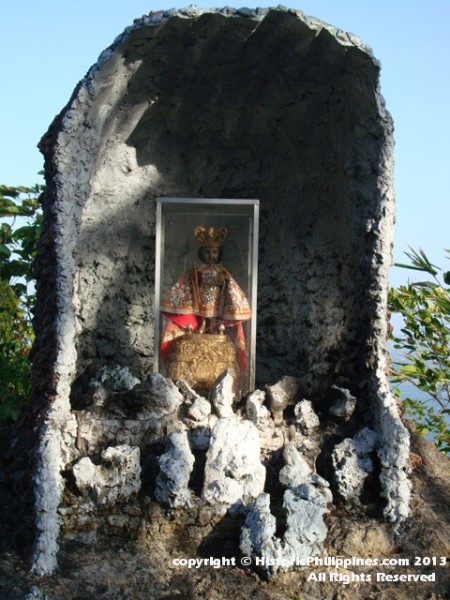
Santo Nino Grotto
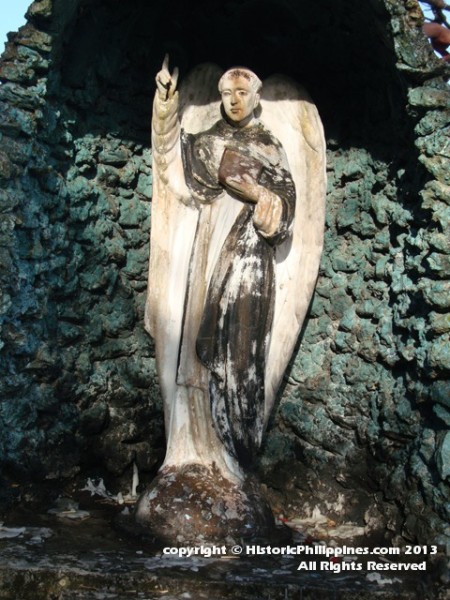
St Vincent Ferrer Grotto
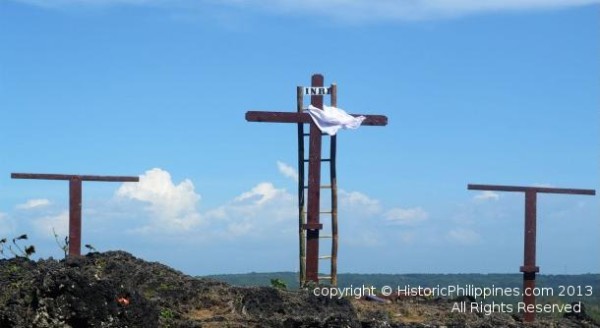
At the other end we come to the Cross that dominates the skyline of Iloilo. It can be seen from any point Iloilo City Proper. It was built in the mid-1950’s as was the Chapel from donations made by interested citizens throughout the Iloilo Region and farther abroad in the country.
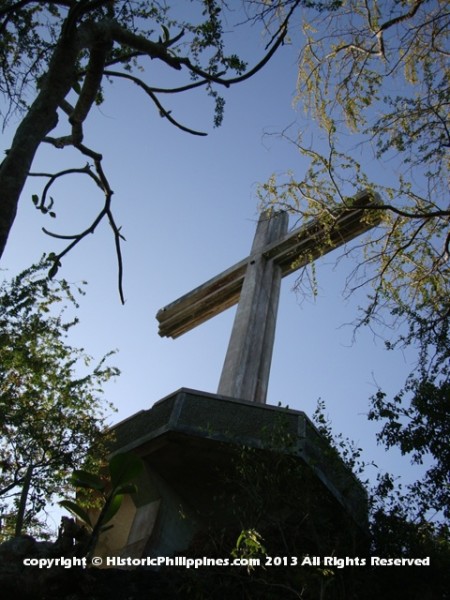
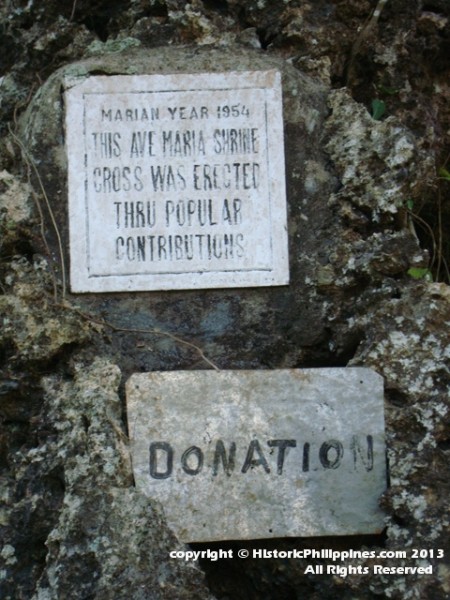
If we turn back towards the Chapel we can see the care taken by the builders and the present day caretaker a young teenage boy who lives just steps away and who opened the Chapel for us to view and examine the interior. The Chapel had been under the care of the Knights of Columbus until recently when it was turned over, by Archbishop Lagademo of the Jaro Archdiocese to the Parish of St John the Baptist in Jordan, Guimaras.
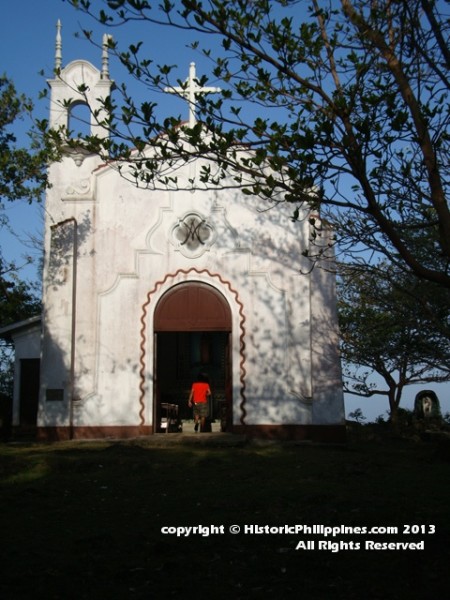
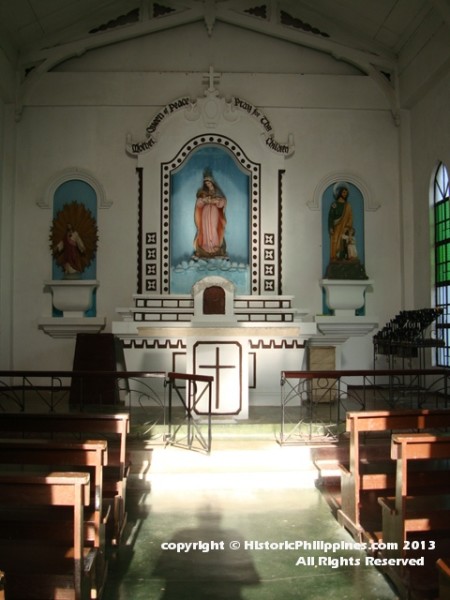
The interior is quite plain and simple and it’s obviously quite small. But a beautiful little Chapel it is.
There is Proclamation on one wall made and signed by the then Archbishop of Jaro (Iloilo) José Maria Cuenco that reads:
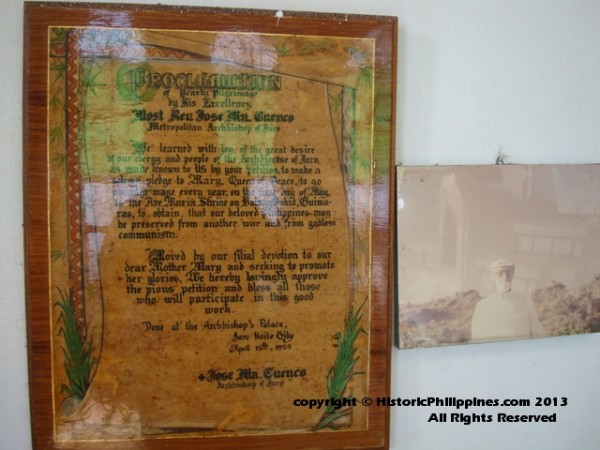
Proclamation of Yearly Pilgrimage by His Excellency Reverend José Ma. Cuenco, Metropolitan Archbishop of Jaro
We learned with joy, of the great desire of our clergy and people of the Archdiocese of Jaro as made known to us by your petition to make a solemn pledge to Mary, Queen of Peace, to go on Pilgrimage every year on the first day of May to the Ave Maria Shrine on Balaan Bukid, Guimaras, to obtain that our beloved Philippines may be preserved from another war and from godless communism.
Moved by our filial devotion to our dear Mother Mary and seeking to promote her glories. We hereby loving approve the pious petition and bless all those who will participate in this good work.
Done at the Archbishop’s Palace, Jaro, IloiloCity , April 15, 1955
+ José Ma. Cuenco, Archbishop of Jaro.
The photograph next to the Archbishop’s Proclamation to the best of our knowledge is that of the Priest who discovered (?) the Shrine in 1956. He was the Dominican Friar Bergil Pixner, OSD, and was Prior of the Dormition Abbey on Mt. Zion in Jerusalem.
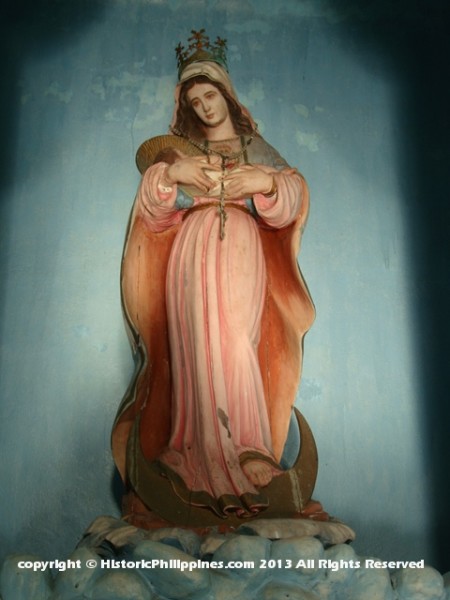
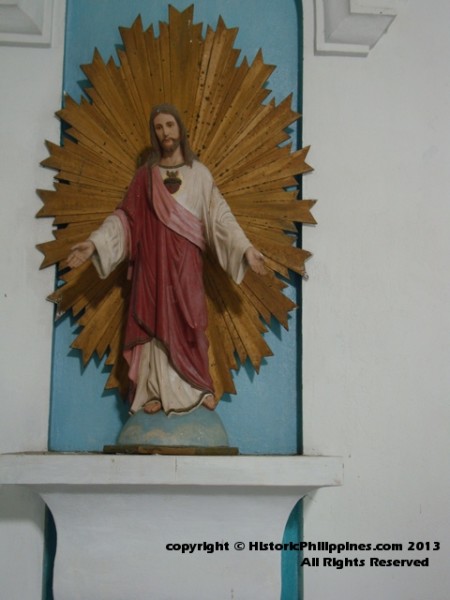
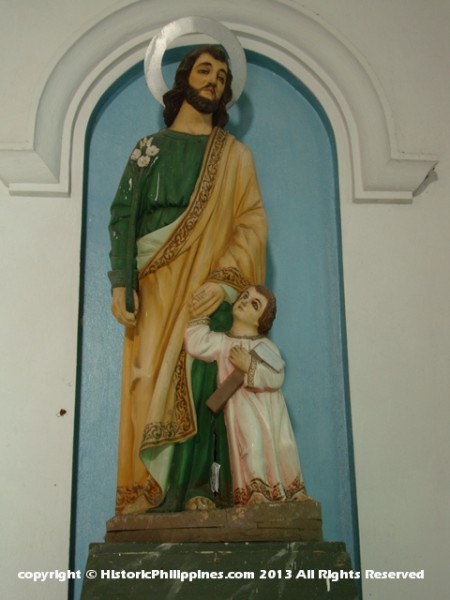
There are three statues in the church: the first over the altar is of Mary, Queen of Peace, the statue to the right of the altar is of St Joseph and his son Jesus, and to the left is a statue of the Sacred Heart of Jesus. Apparently, the statue of Mary Queen of Peace was produced by Crisogono Domingo, a patient at the Sta. Barbara Leprosarium.
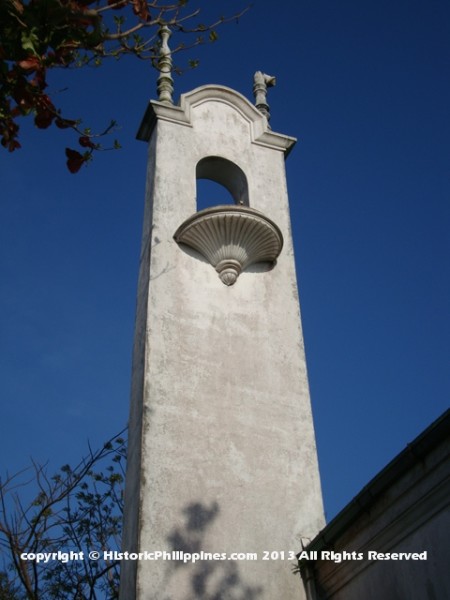
 As we head back down the hill and look back at this beautiful little church, we see the bell tower at the back of the church is still largely intact except for a small piece of one of the decorative peaks which appears to have been broken off. The bell tower is definitely a work of art in itself.
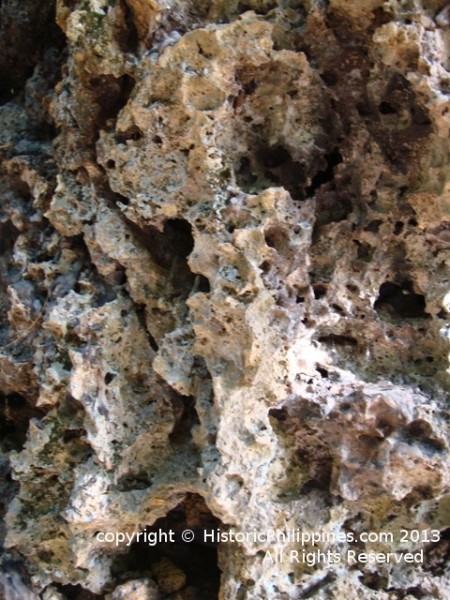
On our way to the hill I am struck by the rock formations along the path. It appears to me that they may be volcanic in origin or some might say that they are actually coral that was deposited there millions of years ago. We are attempting discover what it is through contacts we made later in the day at the Guimaras State College’s Research and Development Centre.
The rock formations are quite interesting and as “geographer” who studied geology at University a very long time ago I feel that these formations are volcanic in origin. But we shall see what the experts have to say. Here is what they look like at various locations on the walk down the mountain. We got a report from the good folks at Guimaras State College who report: “On the rock formations, I think it looks like a coral formation (first 3 pictures), while the second one is not so distinct but I think it is a lime rock formation. Guimaras is a limestone island.”
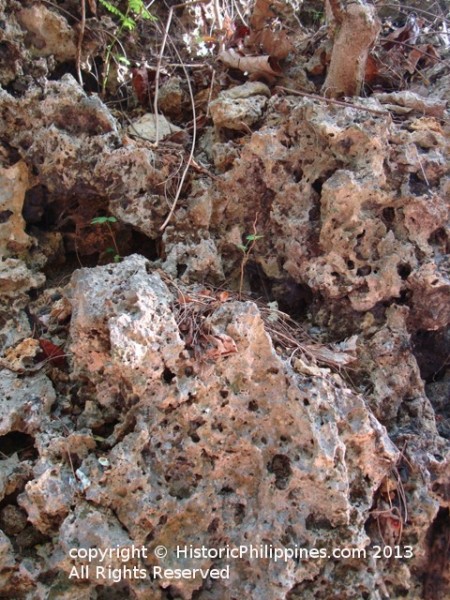
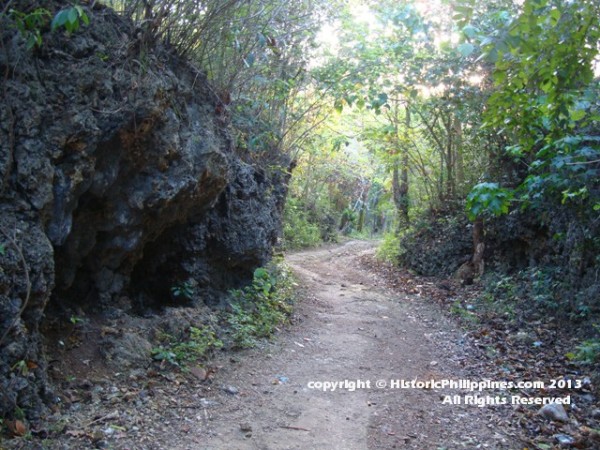
The Path to the top of Balaan Bukid and the Ave Maria Shrine.
That entire excursion to the top of Balaan Bukind took just over an hour on the trip up including a couple rest stops for the “OF” and only about 30 to 35 minutes coming down. It’s not a climb that should harm you if you take your time, rest and drink lots of water and if you don’t do it during the ‘heat of the day’.
It was now only about 8:00am and we decided to head to St John the Baptist Church in Jordan which is only a short 10 to 15 minutes drive away.
We got there and the first thing that struck me was just across the street. It’s billed as the smallest Plaza on Guimaras and just across the street from that is a workshop and office of the Pagtaltal. Pagtaltal is the re-enactment of the Passion of Christ held annually on Good Friday and it culminates at the top of Balaan Bukid. Re-enactors in full costume ‘parade’ up Balaan Bukid with one of them playing the role of ‘Jesus’ carrying the Cross all the way up the mountain and ultimately and actually being crucified to end the annual Pageant.
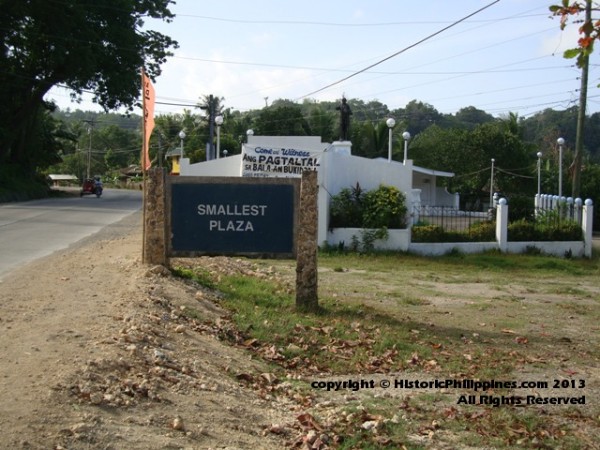
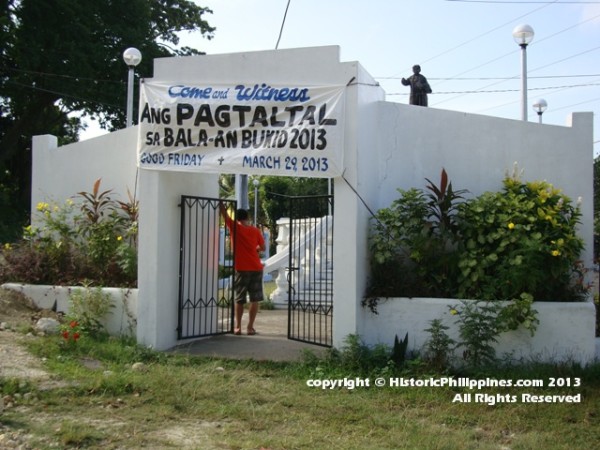
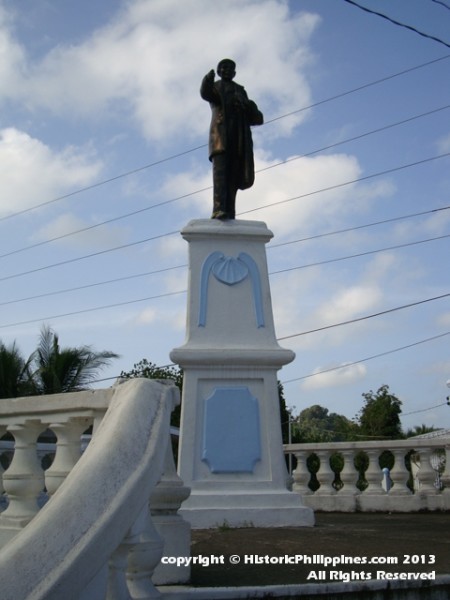
The Statue of Jose Rizal in the Plaza

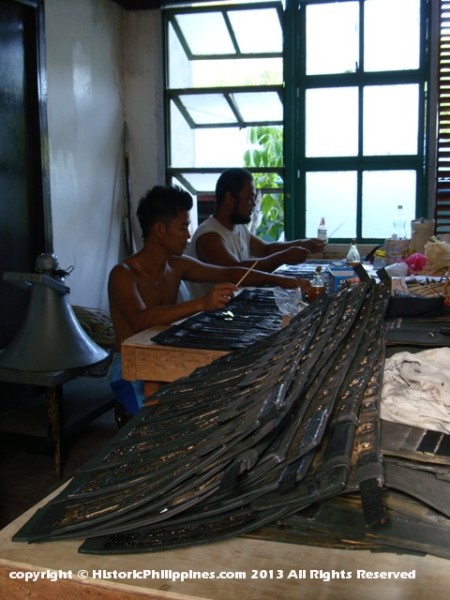
As mentioned the Offices and workshop of the Pagtaltal Pageant Foundation is just across the street from the tiny Plaza. When we went to see what it was all about we found a couple artisans busily working on the costumes for the Pageant…
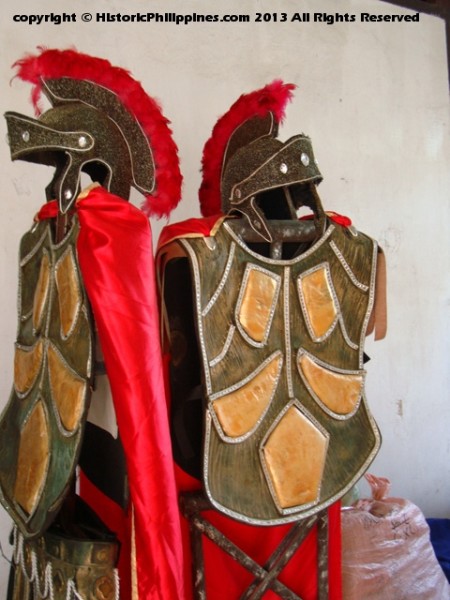
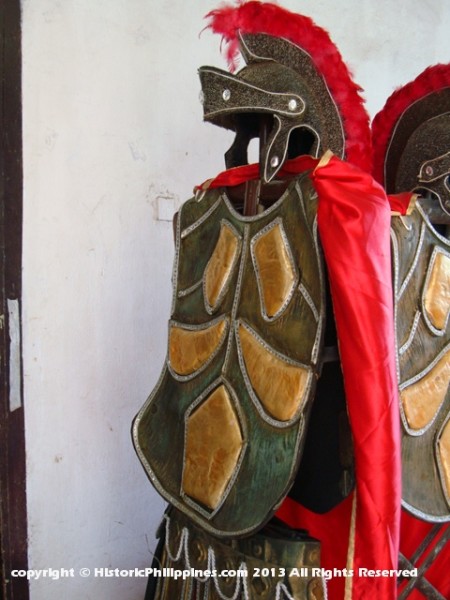

The Preatorian Guard during Pagtaltal.
courtesy of: www.exploreiloilo.com
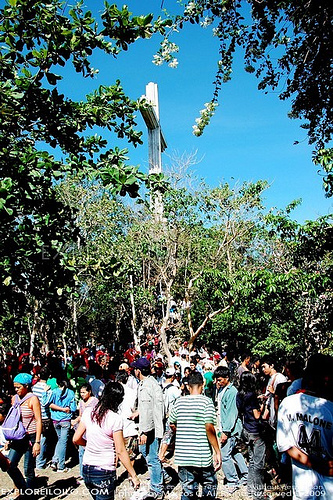
Crowds of the faithful for Pagtaltal on Balaan Bukid.
courtesy of: www.exploreiloilo.com
To continue on our exploration of Guimaras Island, please come back for Part IV of the saga, coming soon.

This work is licensed under a Creative Commons Attribution-ShareAlike 3.0 Unported License.